Our Range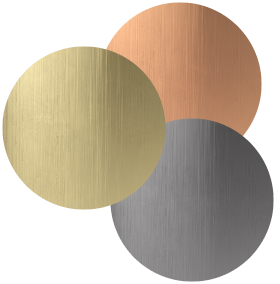


















Shaker Style Kitchen: Your Guide to Achieving the Look
Few designs have endured or evolved quite like the shaker style kitchen. Defined by its framed cabinetry and restrained detailing, shaker design is the antithesis of trend-driven interiors. It’s timeless by nature, versatile by design, and has the rare ability to feel both traditional and contemporary at once.
While often associated with Hamptons homes, shaker design is far more adaptable than its coastal roots suggest. When applied thoughtfully, its elegant symmetry and tactile craftsmanship complement everything from pared-back country spaces to modern urban homes.
The look isn’t about making a loud statement; it’s about quiet, lasting confidence. Whether in a compact apartment or a spacious house, we explore how to thoughtfully incorporate the classic shaker aesthetic into your kitchen.
Origins of the Shaker Style
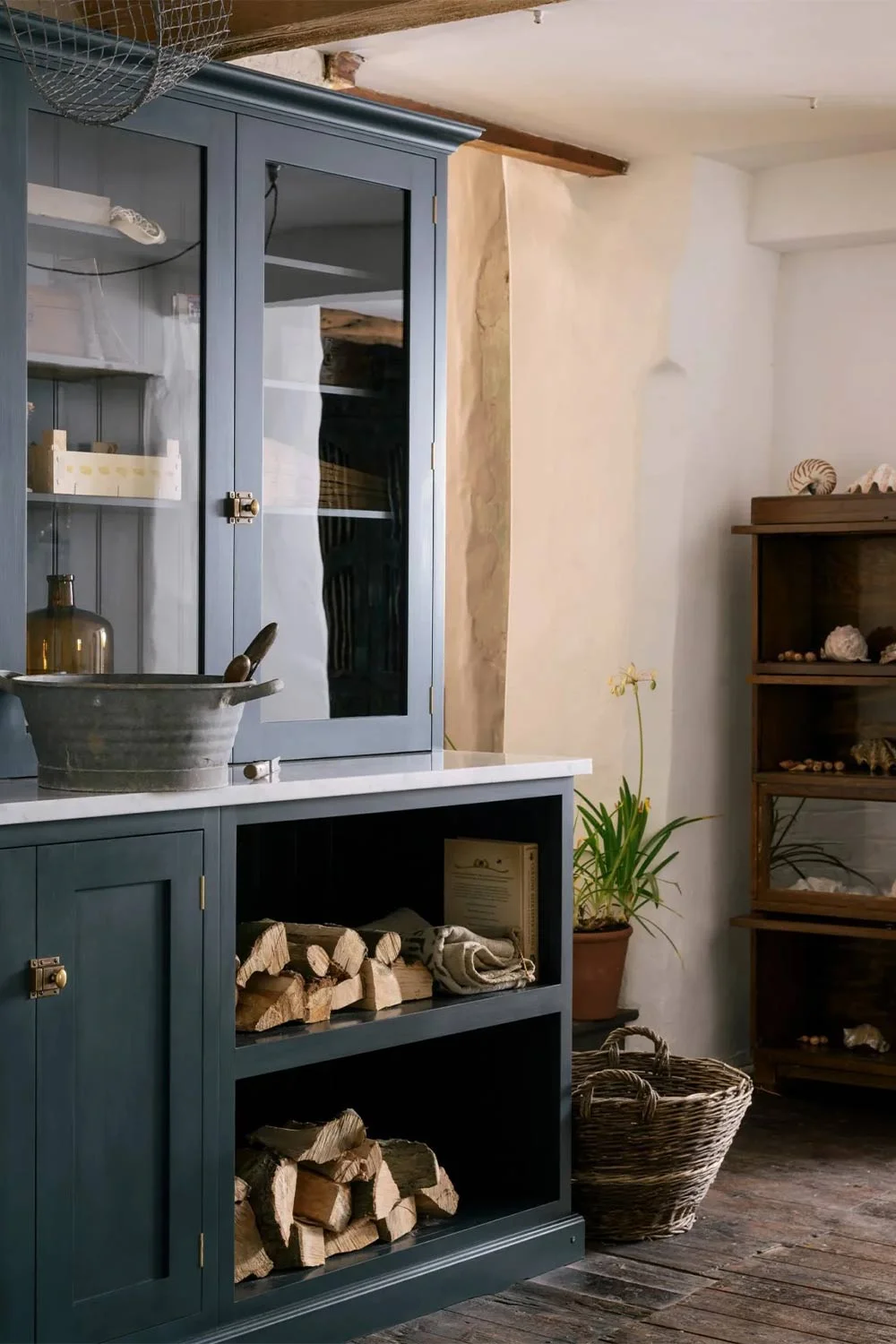
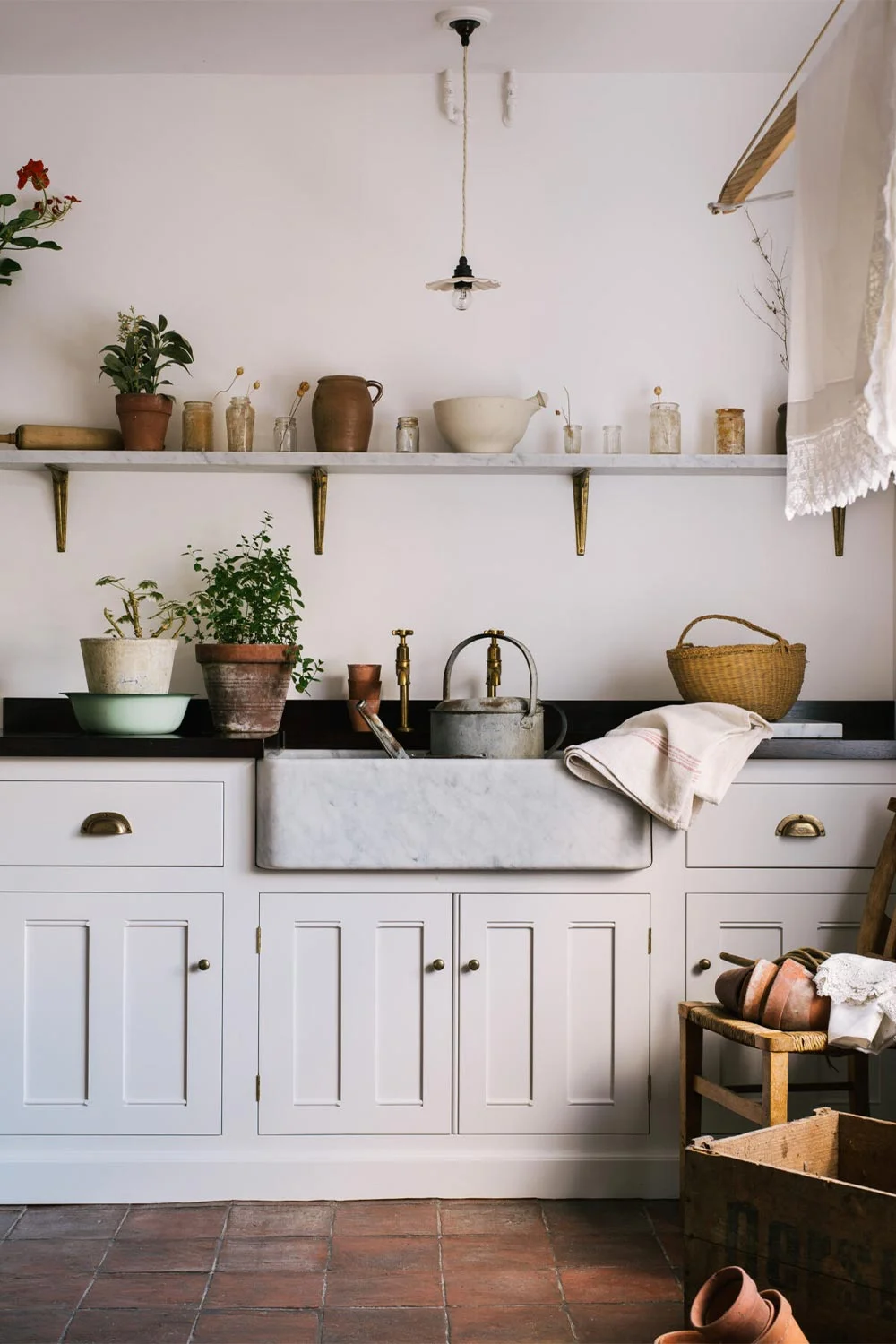
The origins of shaker style are as understated as the aesthetic itself. In the late 1700s, the Shakers — a self-sufficient religious community in England and the United States — began crafting furniture and interiors based on simplicity, durability, and utility.
They believed that beauty lay in function, not ornamentation. This philosophy is still embedded in shaker cabinetry today: clean lines, recessed panels, and a sense of order that feels intentional — never embellished.
A Modern Take on the Shaker Style Kitchen
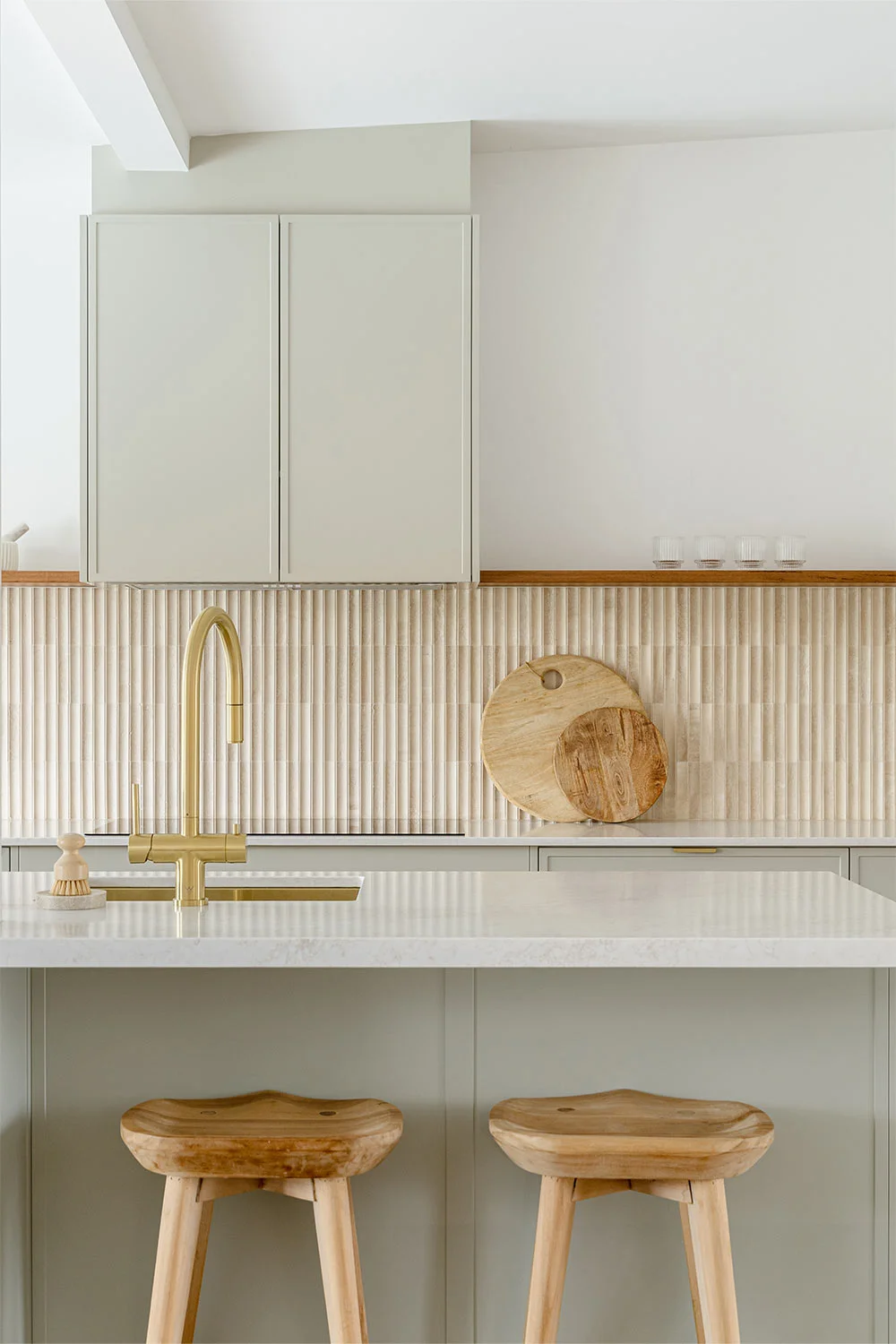
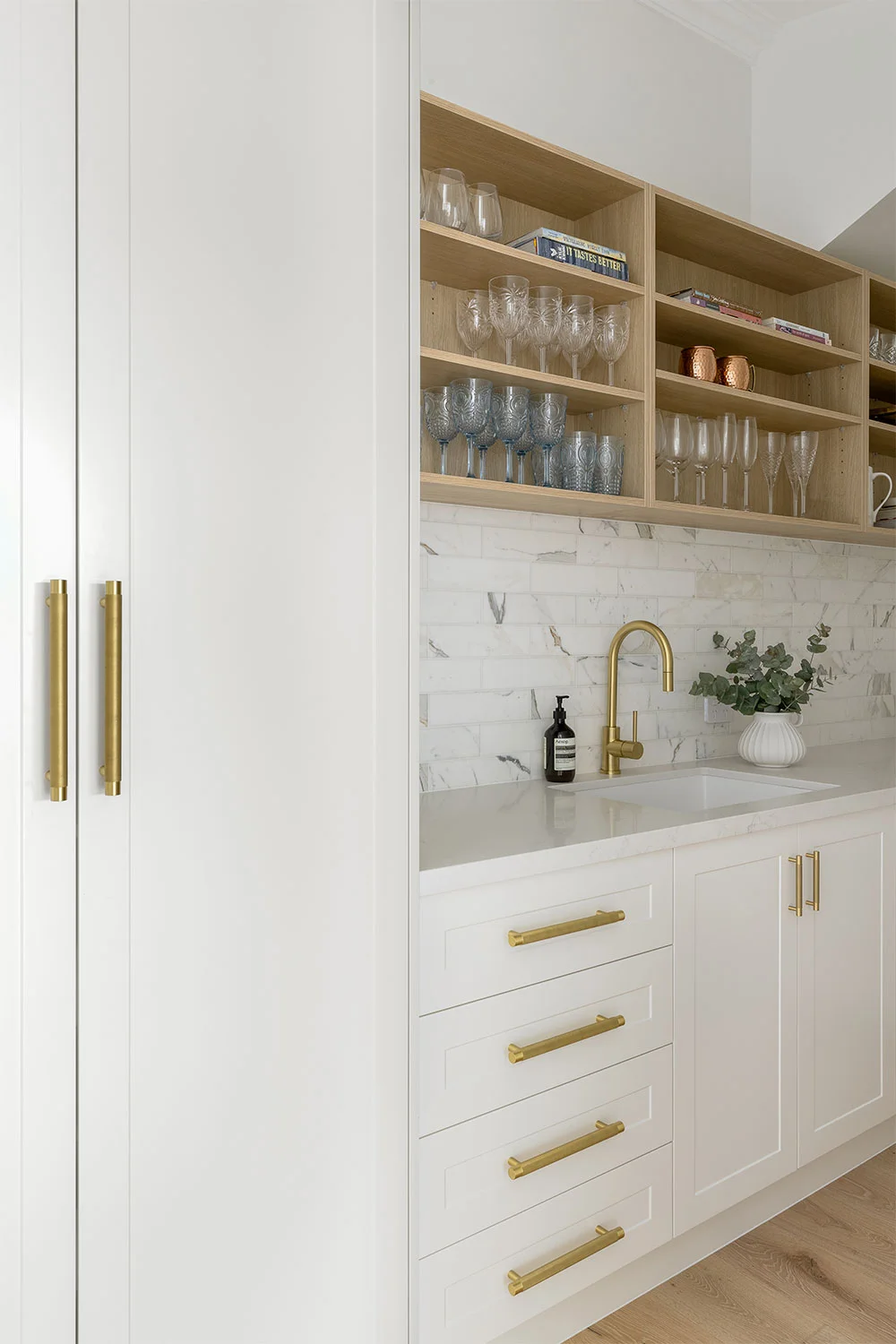
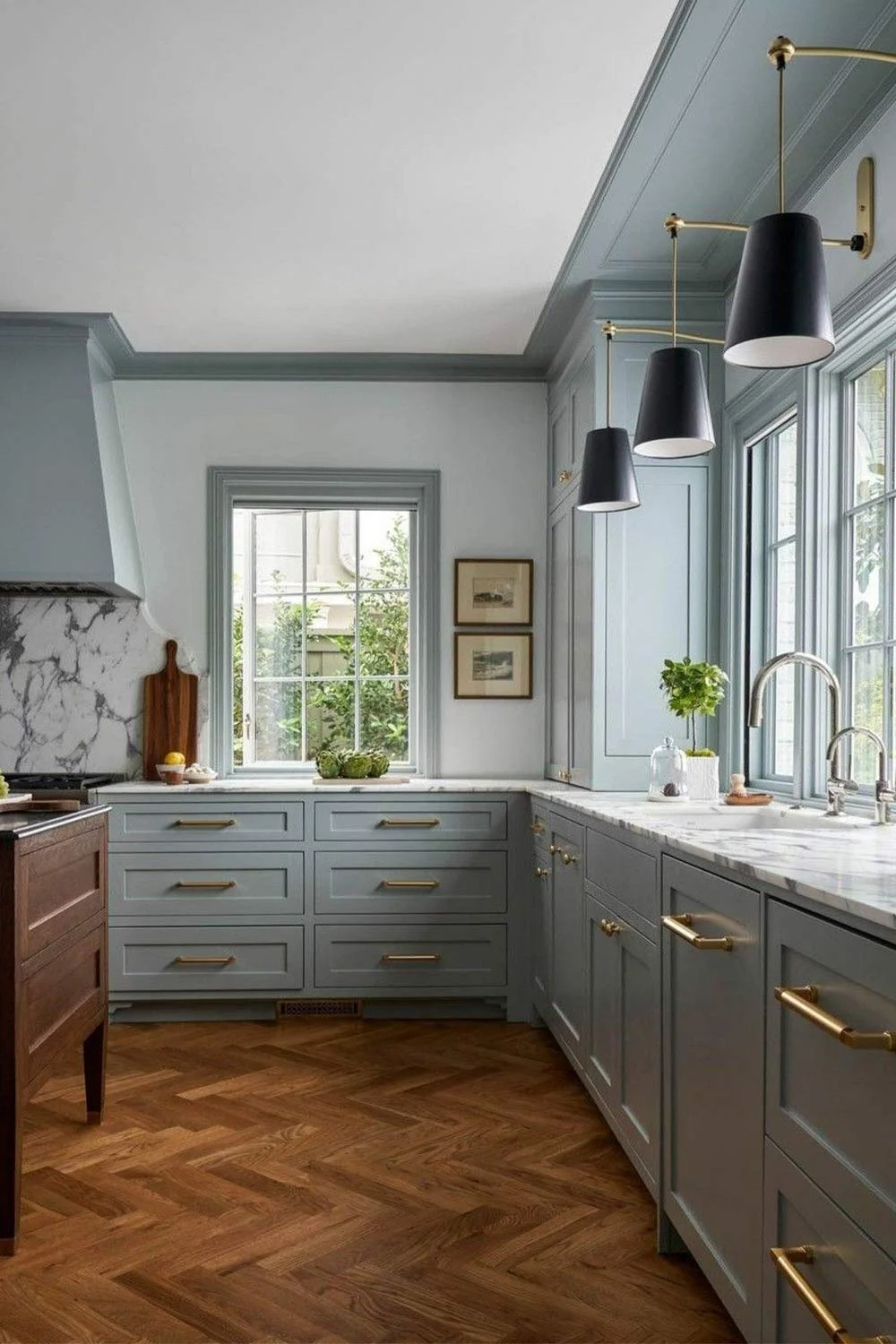
A contemporary shaker style kitchen doesn’t require rigid historical references. Instead, it reinterprets the principles — clean lines, natural materials, and a gentle colour palette — to suit today’s lifestyles.
At the heart of it all is cabinetry. Classic recessed fronts provide the foundation, while thoughtful details — fluted panelling, glass inserts, or gentle textural shifts — introduce visual depth. These elements add personality without compromising the calm, composed nature of the style.
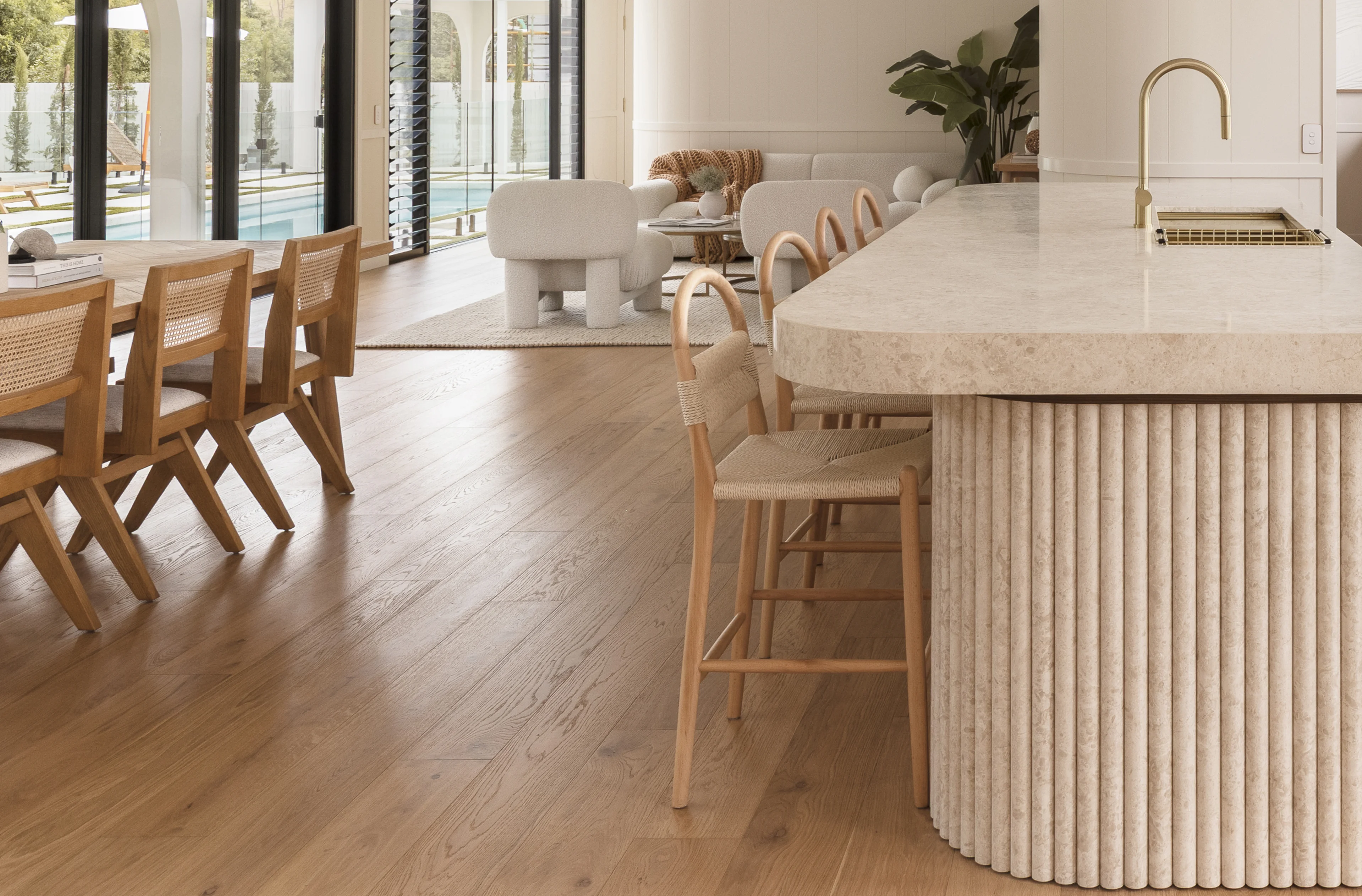
Neutral tones remain central, but restraint doesn’t mean predictability. Modern shaker design thrives on subtle contrasts: think grey cabinetry paired with pale benchtops, white surrounds framing a darker island, or the interplay of materials like mosaic tiles, open timber shelving, and softly veined natural stone like marble and travertine.
Even the decorative elements should be carefully considered. Beams, brass pendant lights, or exposed brick will add character while keeping the overall aesthetic grounded and cohesive.
Shaker Colour Palette
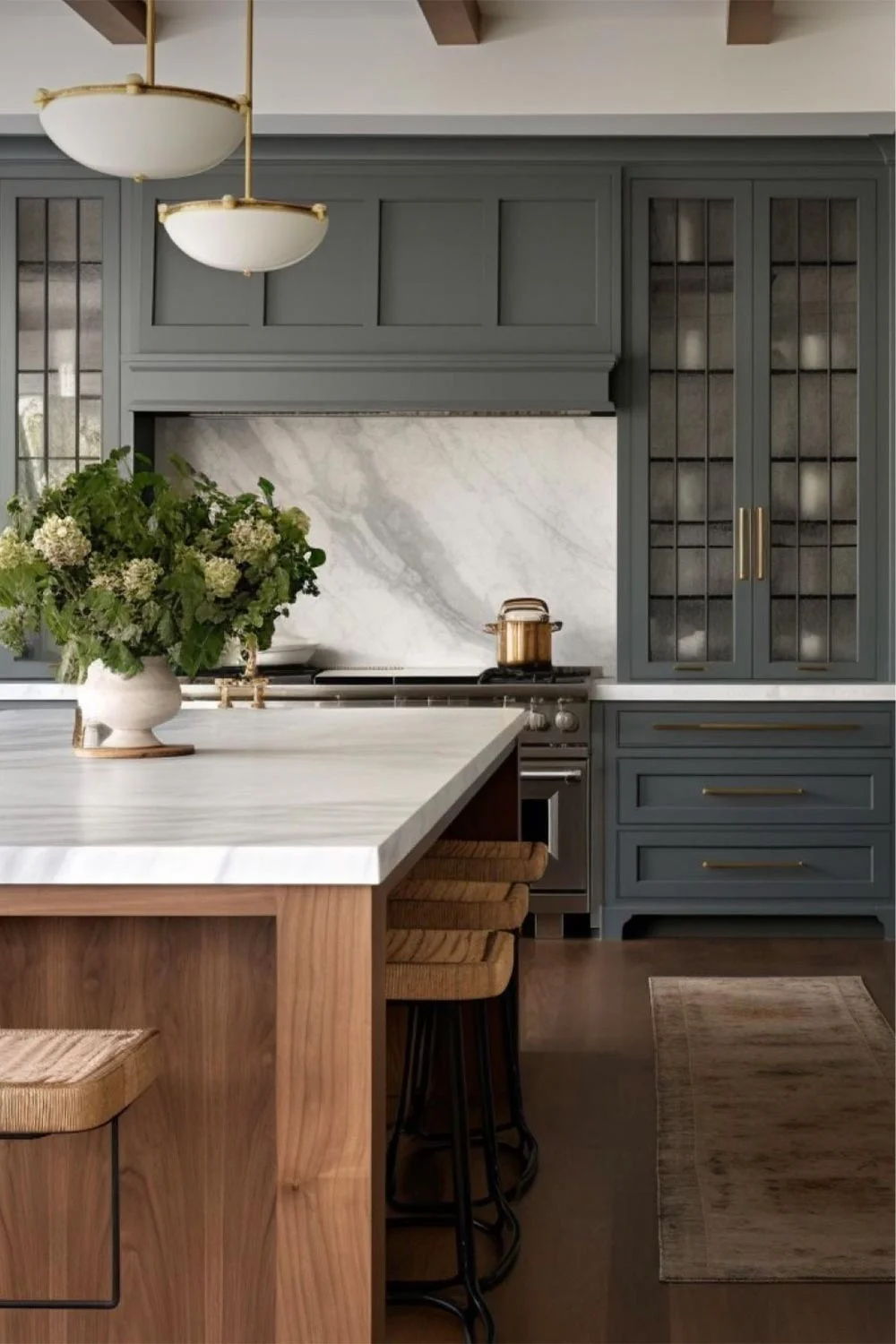
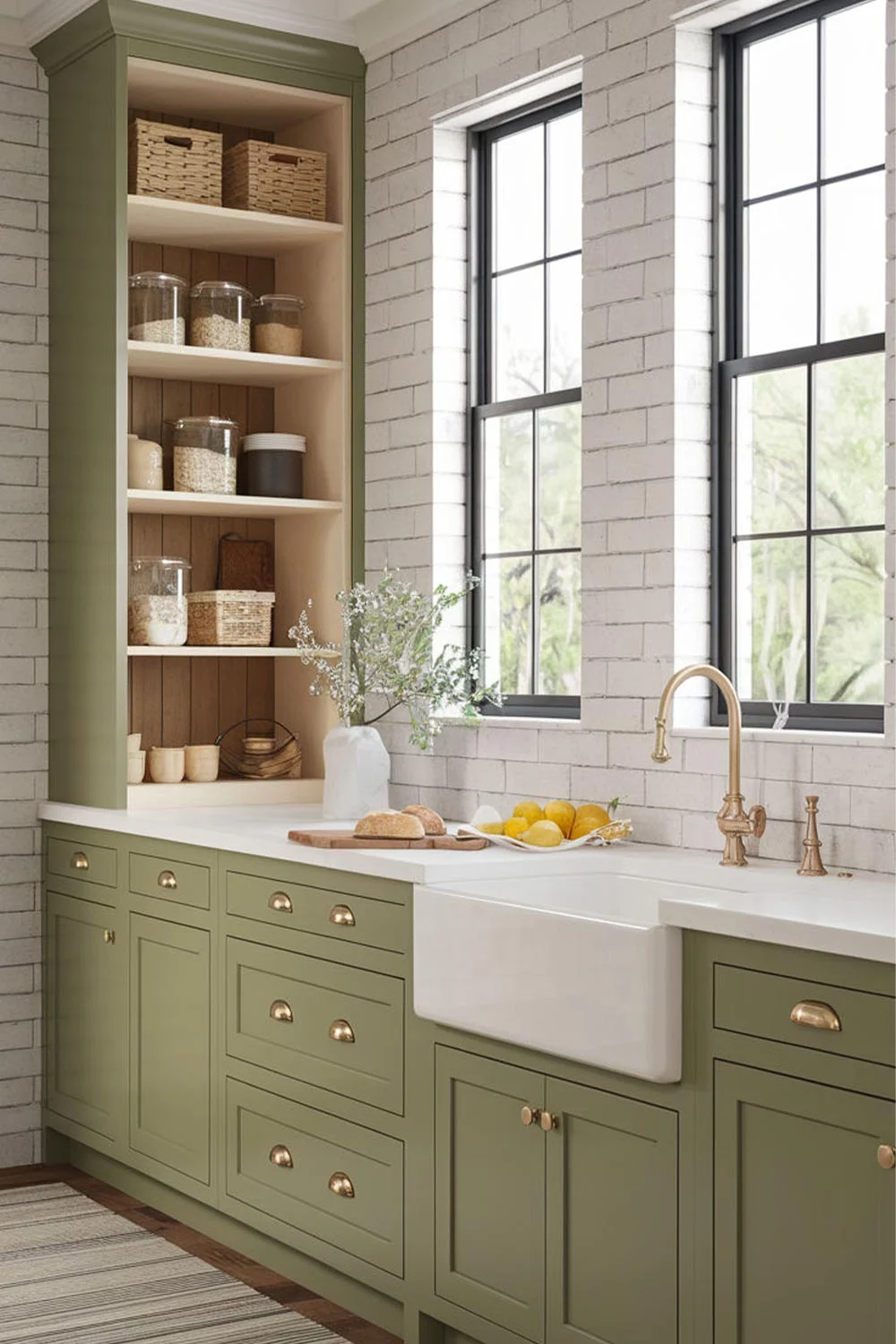
While whites, greys, and soft neutrals remain synonymous with shaker kitchens, the style is far from limited in its palette. In fact, one of the most exciting evolutions of modern shaker design is its confident embrace of colour — offering a more personalised and expressive take on a classic form.
Earthy Greens
Muted olive, sage, and eucalyptus greens work beautifully in a shaker style kitchen, particularly when paired with warm timber accents and brushed brass tapware or brushed copper tapware. These grounded tones bring a sense of calm and connection to nature, making them ideal for coastal, country, or heritage-style homes.
Deep Blues
Navy and ink blue shaker kitchens create a moody, sophisticated atmosphere — particularly when contrasted with crisp white benchtops or brushed nickel cabinet handles. This palette feels both timeless and bold, offering a sense of structure while still allowing for creativity. Lighter duck egg or powder blues can also work beautifully in smaller spaces, adding colour without overwhelming the room.
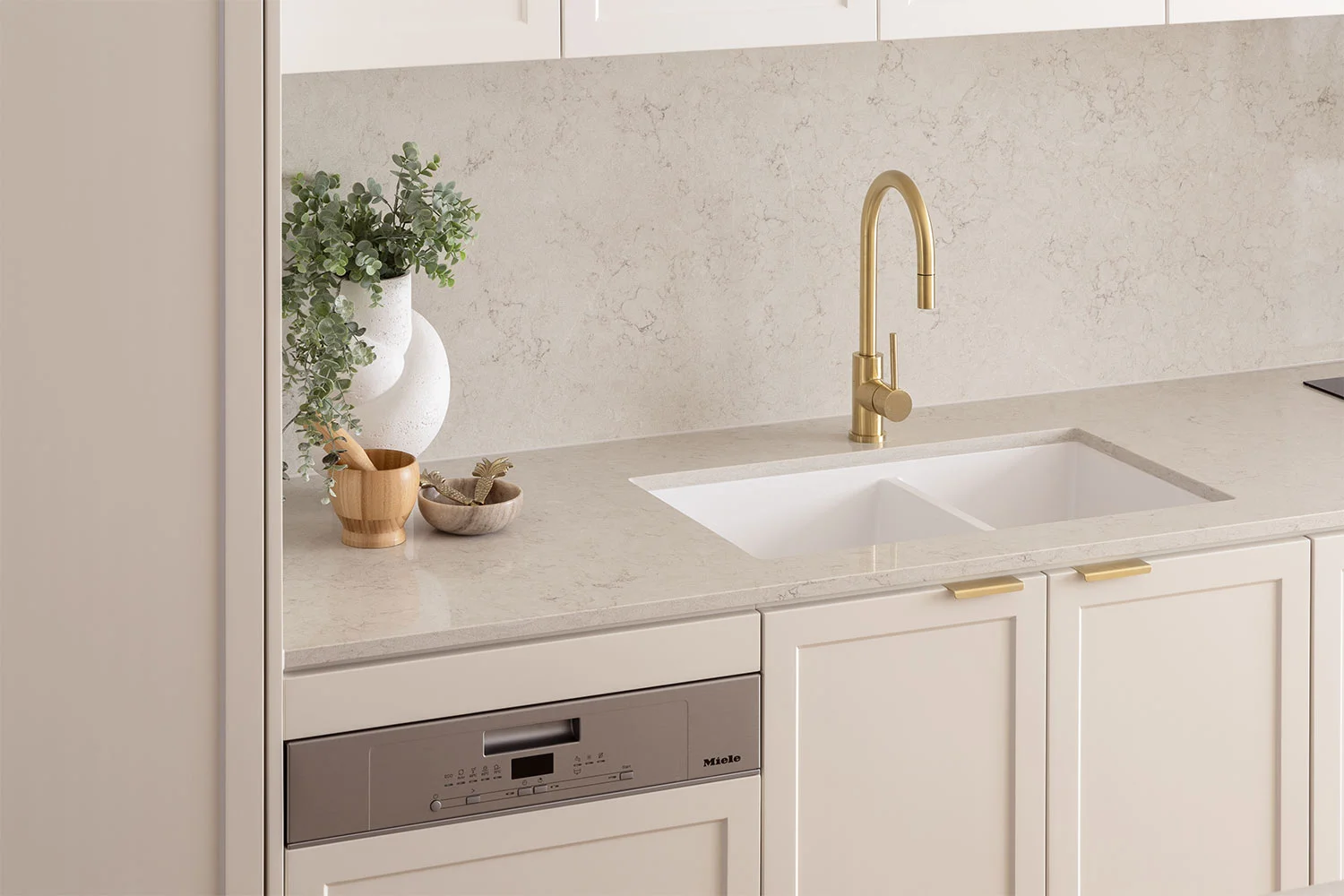
Warm Neutrals and Taupes
For those who want to stray from traditional whites but keep things soft and warm, taupe, mushroom, and sandy beige tones offer a beautifully understated alternative. These hues add depth and richness without feeling heavy — especially when layered with tactile materials like fluted timber or soft veining in natural stone.
High-Contrast Moments
If you’re drawn to a more dramatic aesthetic, consider pairing darker cabinetry (such as forest green, charcoal, or deep blue) with bright white walls, pale stone surfaces, matte black tapware, or brushed gunmetal cabinet hardware. This contrast highlights the clean lines of shaker joinery while giving the kitchen a modern edge.
Shaker Kitchen Decor
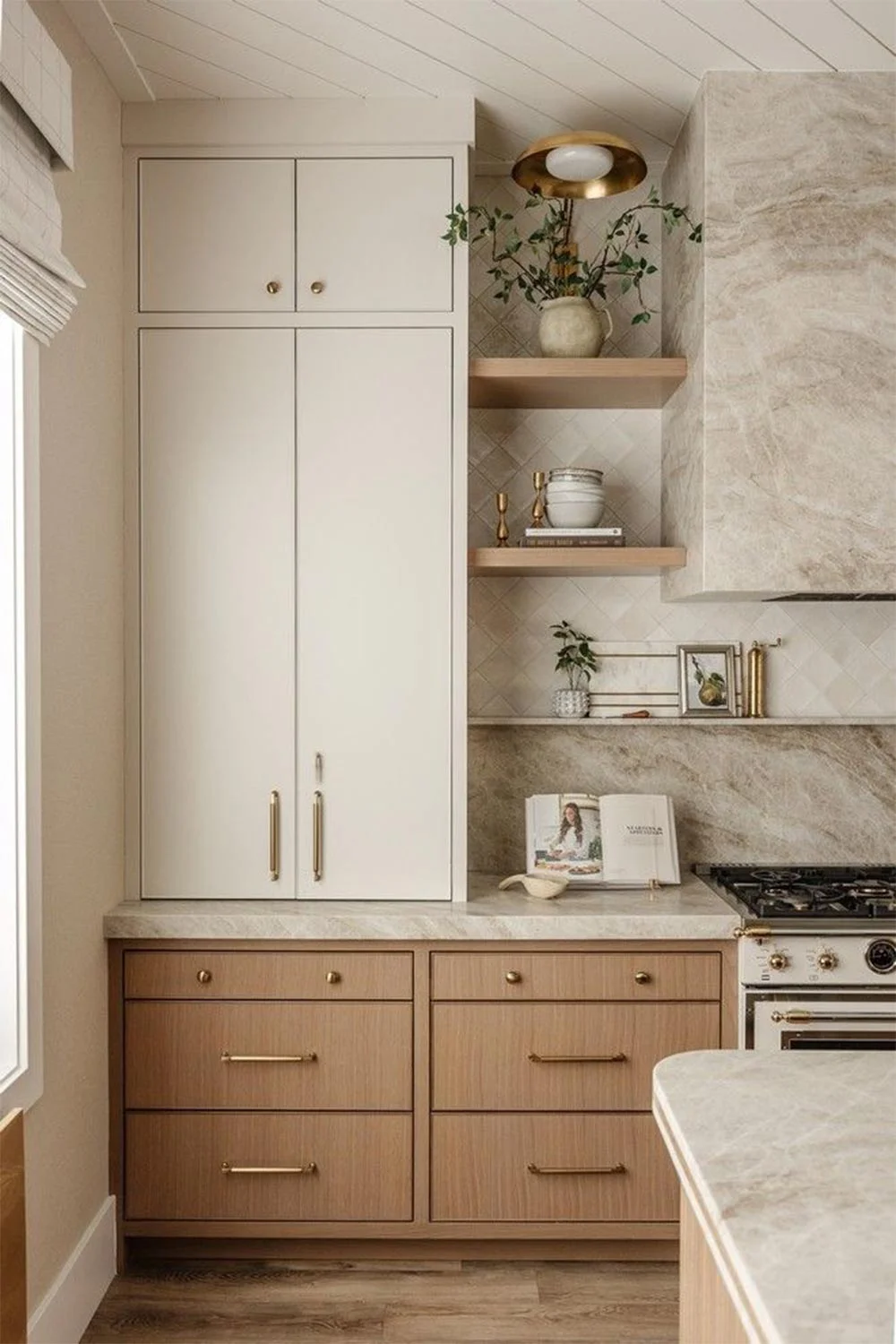
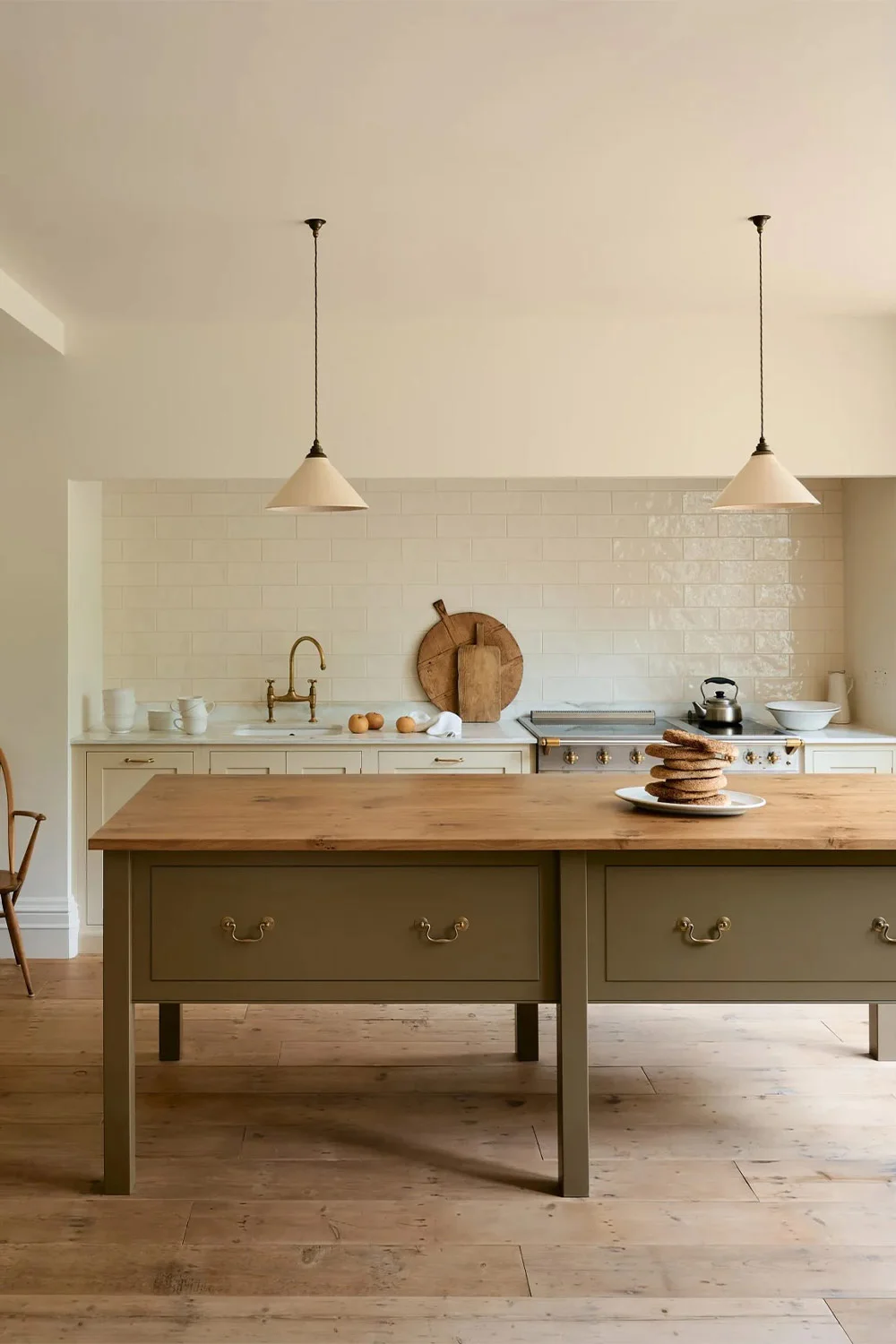
Minimalism in shaker design doesn’t mean sparse; it means intentional. The right decorative elements can add character without compromising the clean lines of a shaker style kitchen.
Think pendant lighting, exposed timber beams, or a soft contrast like open shelving in natural wood. Organic details like potted herbs, hanging greenery, or a small stack of cookbooks bring warmth and life.
Keep benchtops clutter-free with purposeful accessories such as a magnetic knife rack or integrated storage solutions — practical accents that align with the shaker philosophy of form meeting function.
Tapware for Shaker Style Kitchens

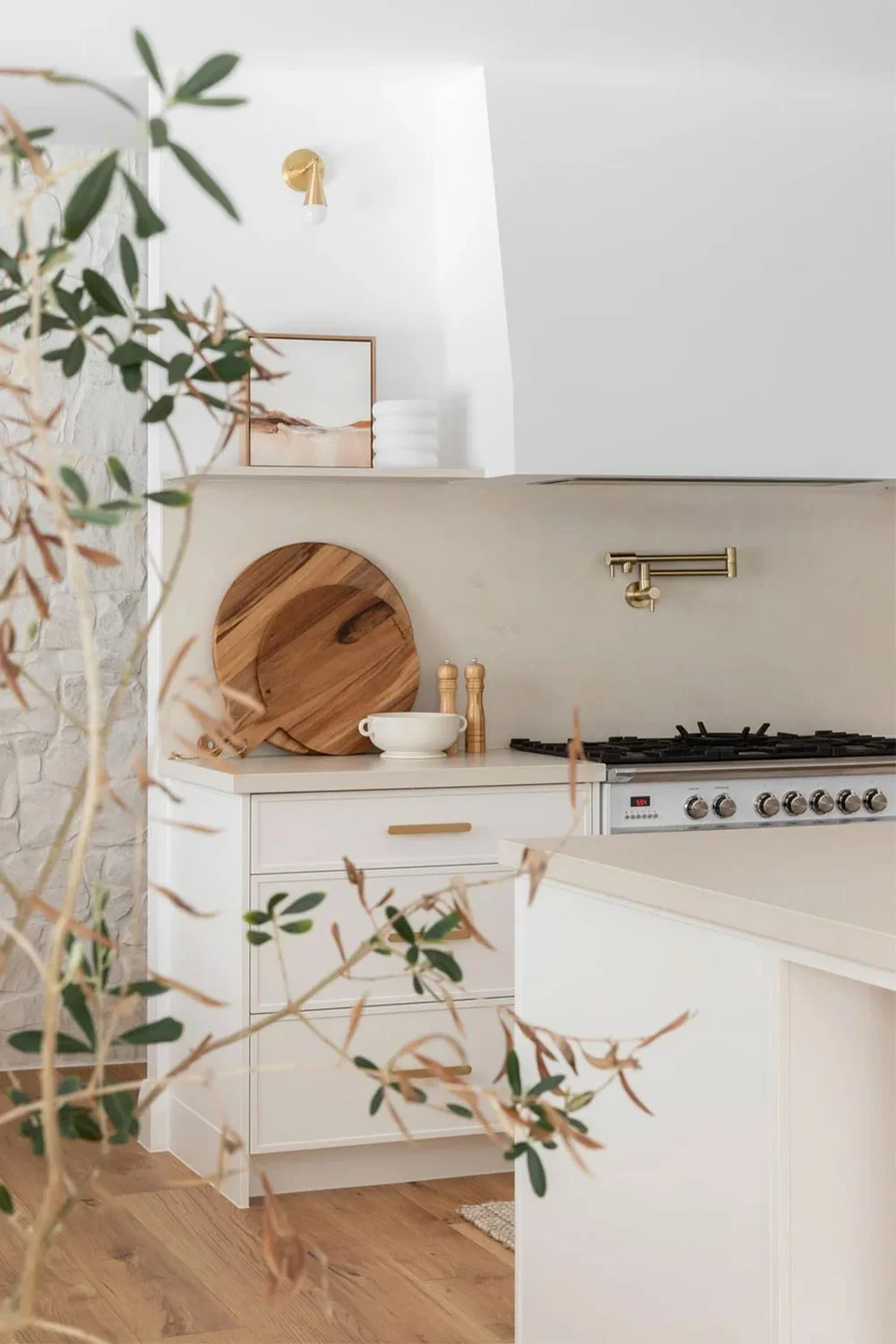
Tapware may be a functional necessity, but in a shaker style kitchen, it also offers a moment to elevate the design. With the right choice, this everyday fixture can become a defining feature — adding contrast, character, or a touch of unexpected polish.
Sculptural gooseneck styles like our Elysian Commercial Pull-Out Kitchen Mixer pair beautifully with the clean lines of modern shaker cabinetry, introducing gentle curves that soften the space. For a more traditional or farmhouse-inspired look, consider the Kingsley Provincial Collection — a timeless option that channels the charm of classic provincial kitchens while still feeling refined.
Our Elysian Pot Filler is a practical and elegant addition that further enhances functionality. Mounted above your stove, it streamlines cooking by allowing you to fill pots directly at the cooktop — a small detail that makes a big difference in everyday ease.
For more kitchen design inspiration, read these blogs:
The Art of Achieving a Luxury Modern Kitchen Design
How to Master Modern Farmhouse Design
6 Kitchen Splashback Tiles Ideas That Will Redefine Your Space