Our Range

































Hotel Interior Design: Standout Spaces From Around the World
Have you ever marvelled at some hotel interior design and thought, “I could live here”? The best hotel interiors offer more than just comfort; they're a heightened home away from home that captures the true essence of luxury living.
But what exactly makes these interiors unforgettable and ready to move into? We deconstruct the key design elements, explore emerging trends in luxury hotel interior design, and highlight some standout spaces worldwide to understand their power better.
Why Hotel Interiors Matter
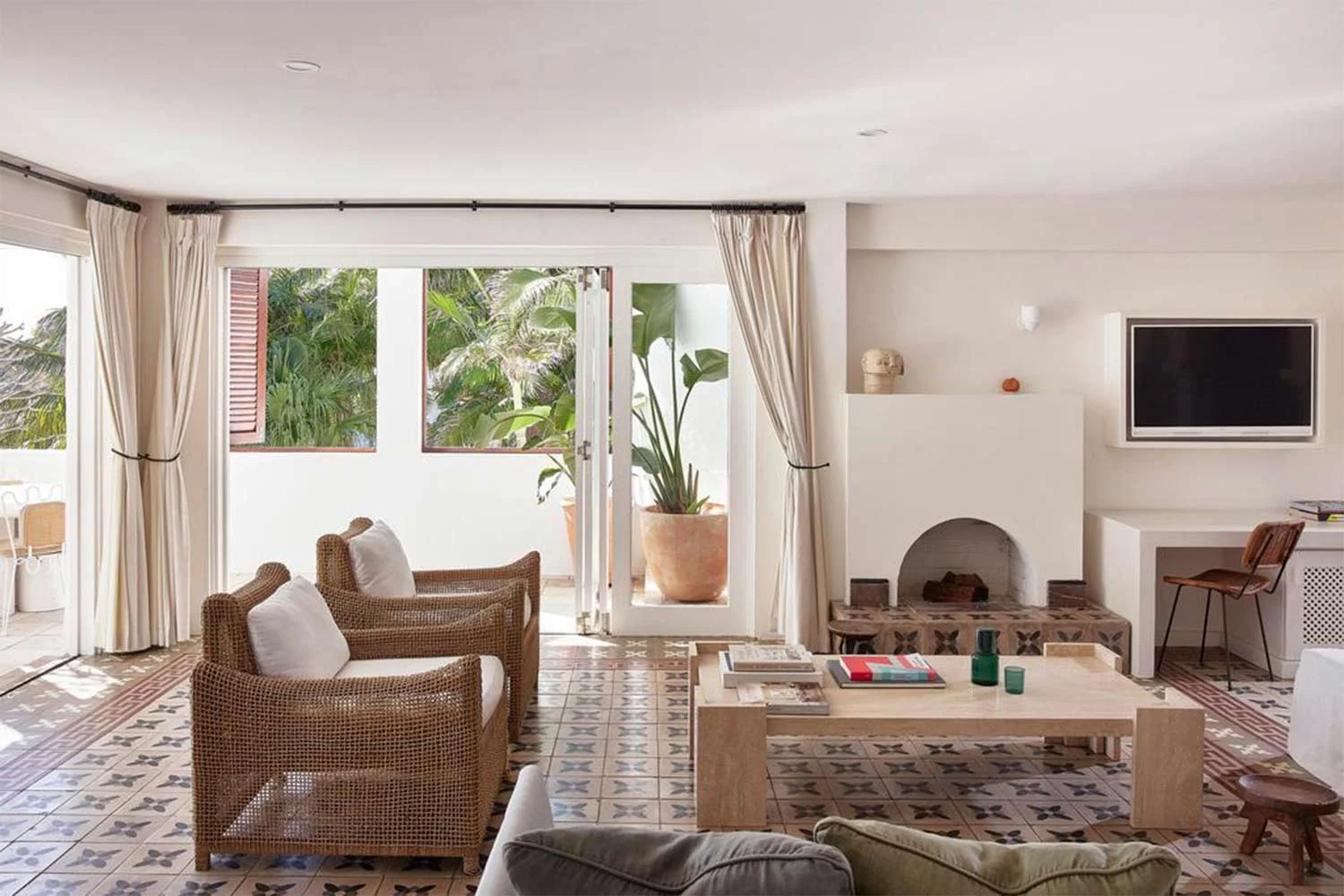
When it comes to first impressions, hotel interior design plays a vital role in influencing a guest’s perception within moments of arrival. Yet, thoughtful design does more than create a visually appealing space; it helps build a distinctive brand identity that reflects the hotel's values, personality, and level of service. Every design element contributes to a cohesive experience that weaves together comfort, trust, and emotional connection, from the lobby to the guest rooms and beyond.
Well-executed hotel interiors enhance guest satisfaction by turning a simple stay into a memorable experience that encourages loyalty and positive word of mouth.
Core Elements of Exceptional Hotel Interiors
Exceptional hotel interiors are defined by their ability to balance form, function, and feeling with seemingly effortless precision. Yet there is a method to perfecting this. We explore key hotel spaces to explore how thoughtful design transforms the best of them into memorable, inviting environments.
Hotel Lobby Design
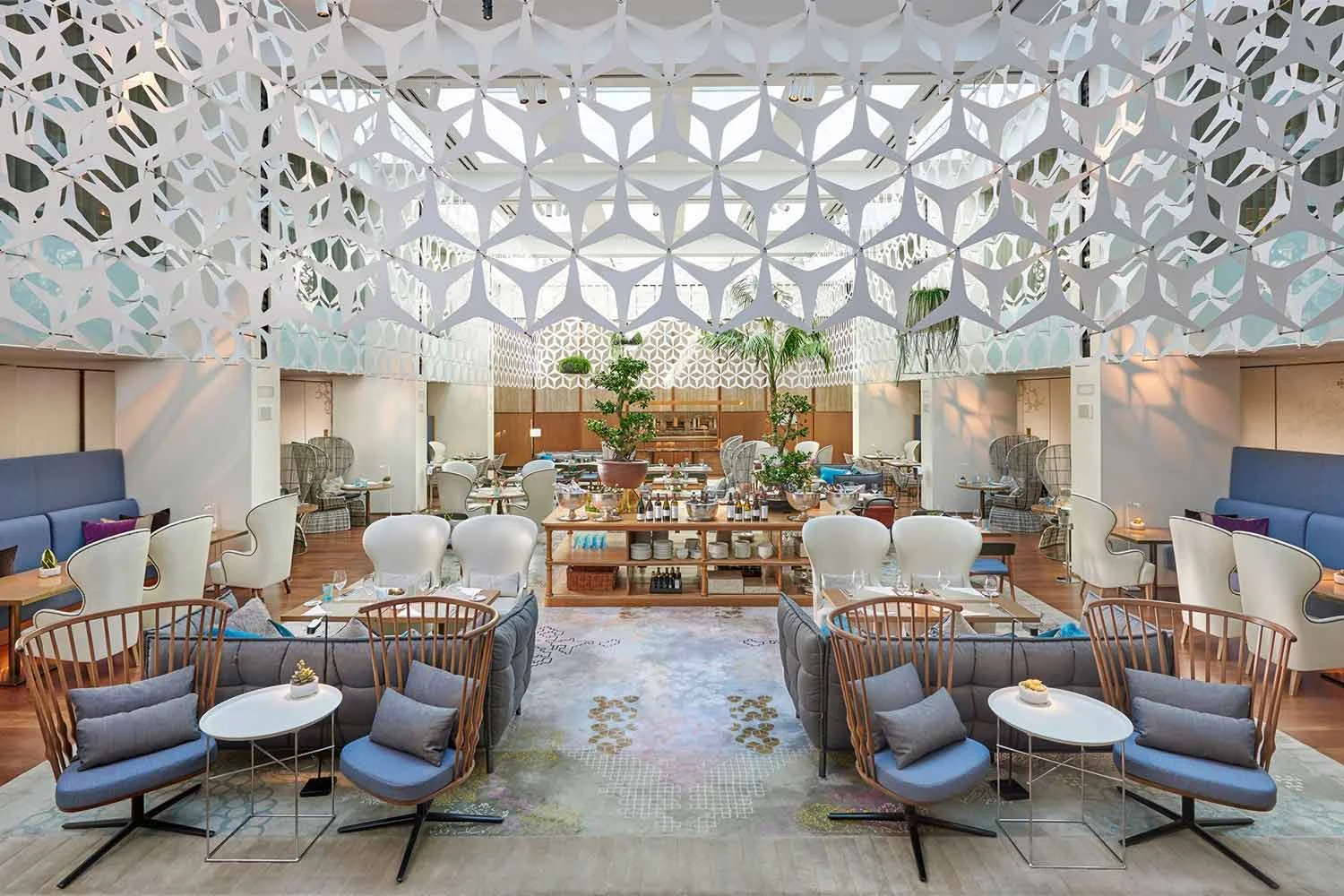
The hotel's brand identity is established when guests enter the lobby, making it an essential space to perfect. To do this, luxury hotel interior design combines high-quality materials, considered lighting, and an intuitive layout. A sense of local culture can also add authenticity and personality to modern hotel interiors, creating a deeper emotional connection between guests and their surroundings. Setting the tone for the guest experience, the best hotel lobbies create a welcoming atmosphere that effortlessly blends striking visual impact with comfort.
An example is the Mandarin Oriental in Barcelona (pictured above), exquisitely designed by Spanish designer Patricia Urquiola. It combines mirrored ceilings, delicate latticework, and soft cream and blue furnishings unfolding beneath a dramatic central atrium.
Guest Room Design
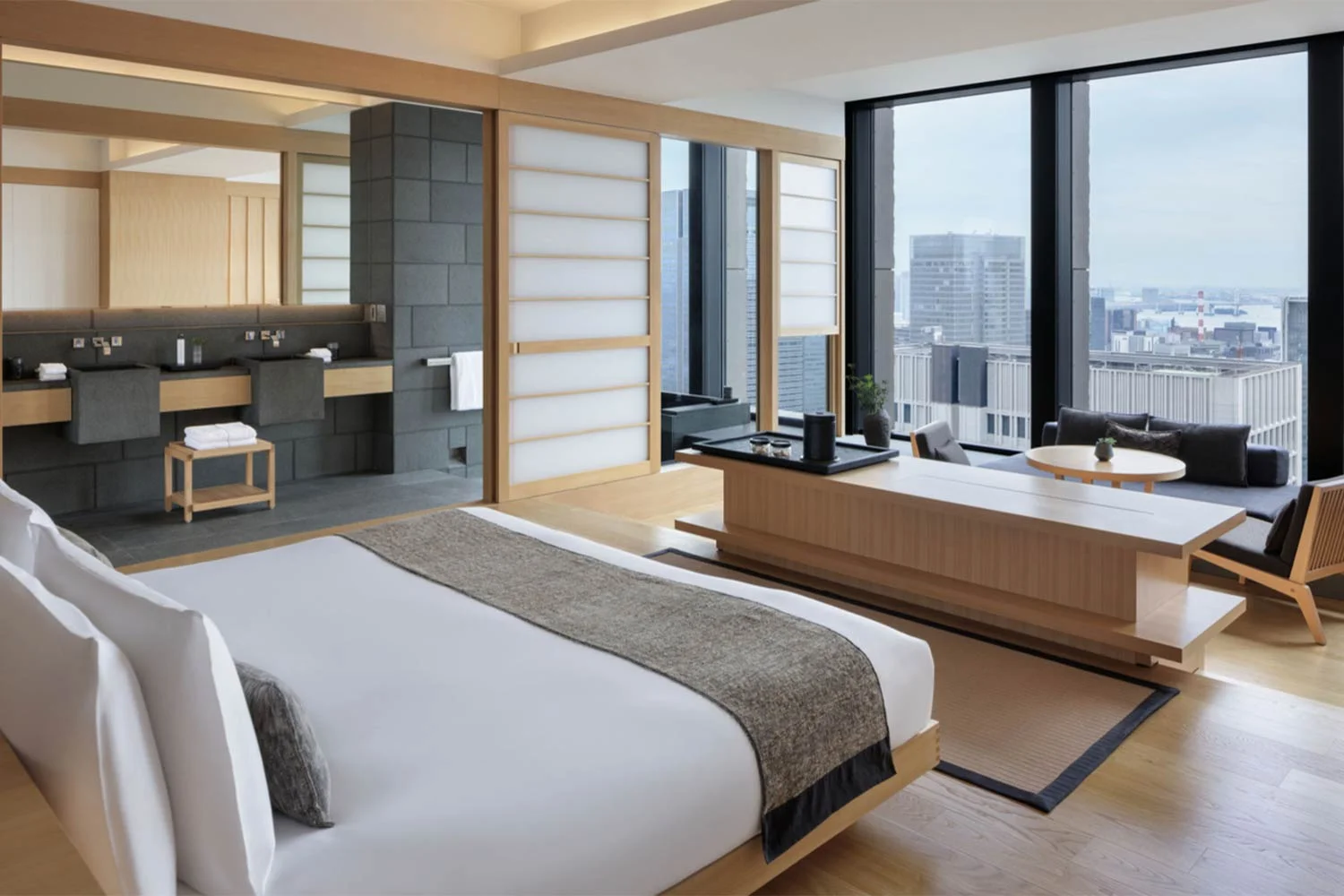
Unsurprisingly, guest rooms are pivotal to any hotel interior design. They should achieve a balance of layout, comfort, and convenience. Smart technologies should be seamlessly integrated so as not to overwhelm the space. In modern hotel interiors, the guest room design should assume a heightened and more luxurious role, offering a place to rest and recuperate and a sanctuary that anticipates guests' needs.
More personalised experiences involve tailoring services and experiences to accommodate specific preferences. Take the guest room design of Aman Tokyo (seen above), for example. Inspired by traditional Japanese residences, the rooms feature clean-lined timber screens, washi paper walls, and deep soaking tubs with panoramic views of the city skyline. Every detail is considered, from adjustable lighting and climate controls to curated amenities based on guest preferences. The result is a tranquil, modern sanctuary that integrates technology while embodying Aman’s signature blend of local authenticity and understated luxury.
Restaurant and Lounge Areas
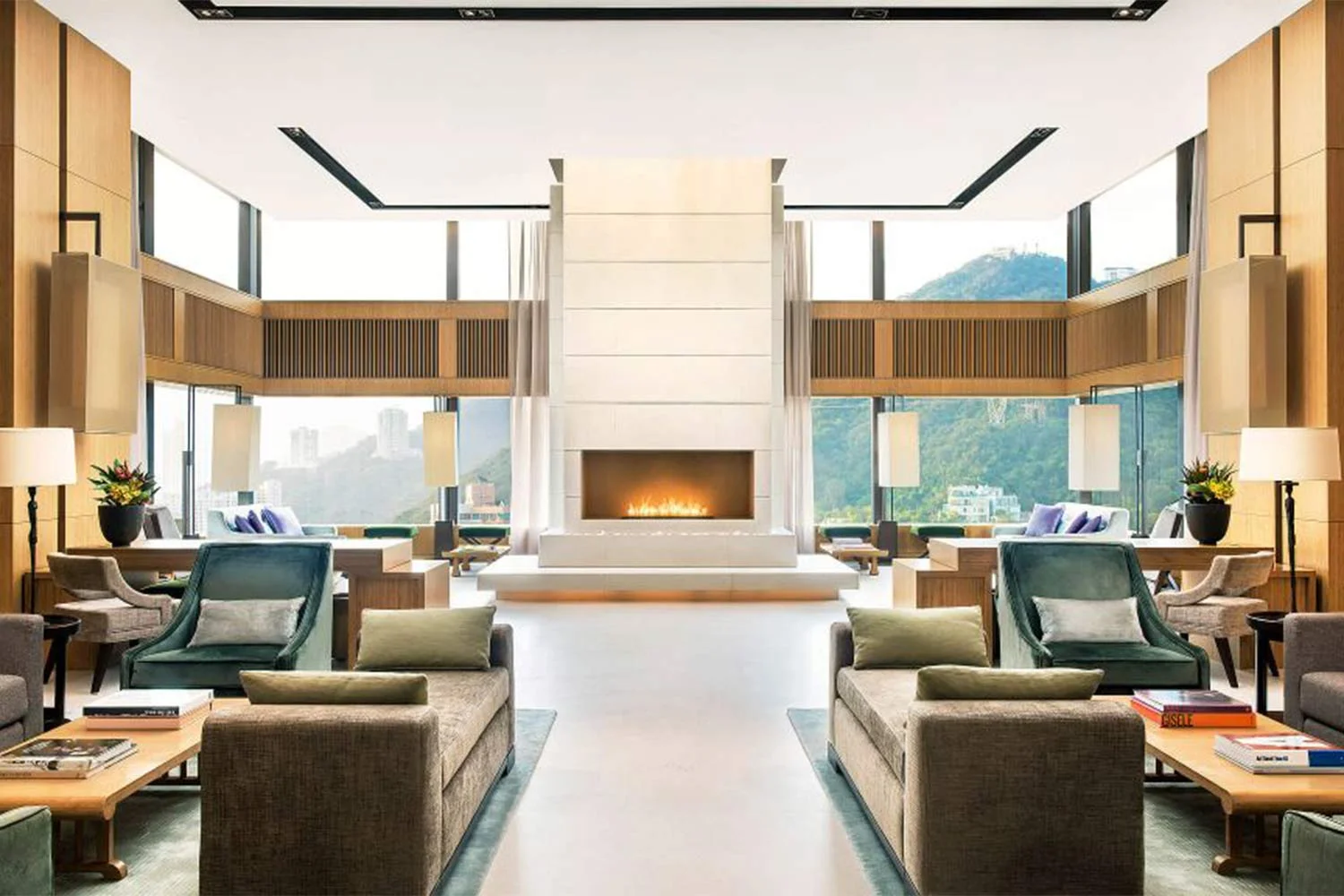
Luxury hotel interior design is incomplete without an indulgent, inviting dining and lounge area. The most successful of these spaces expertly balance functionality with atmosphere, with furniture, lighting, and sound design all playing crucial roles in enhancing the experience.
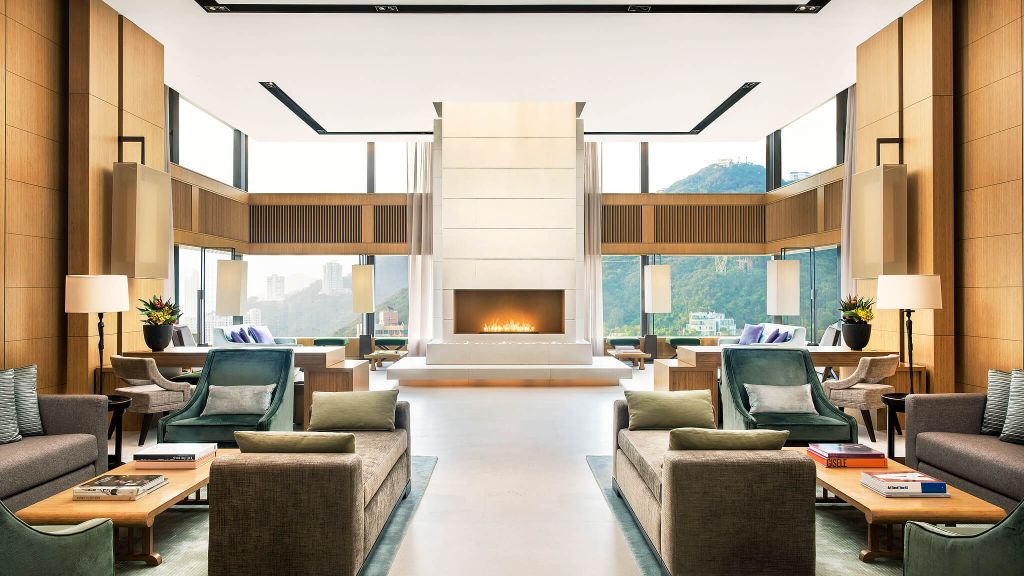
The objective is often a contemporary yet relaxed environment, something the most thoughtfully designed spaces appear to cultivate effortlessly. Furniture plays a key role in this balance, offering tactile comfort while reinforcing the overall design narrative through form, materiality, and placement. For instance, at The Upper House in Hong Kong (pictured above), low-profile seating, warm-toned wood, and curated textures create a soothing spatial rhythm.
Sound design is often overlooked as a key element in hotel interiors, yet subtle audio cues play a decisive role in shaping a distinctly calming ambience. At The Upper House, a carefully composed soundscape of soft instrumental music and ambient tones shifts throughout the day, creating a serene, sensory experience that complements the hotel’s minimalist interiors and tranquil atmosphere.
Lighting, too, plays a pivotal role in hotel interior design. Layered lighting schemes that blend warm ambient illumination, precise task lighting, and gentle decorative accents create a dynamic and inviting atmosphere. This thoughtful combination ensures that spaces are functional and visually appealing, adapting seamlessly from bright, energising daylight hours to relaxing, cosy evenings. Carefully balancing these different light sources enables designers to highlight particular architectural features, enhance textures, and evoke the desired mood.
Spa and Bathroom Areas
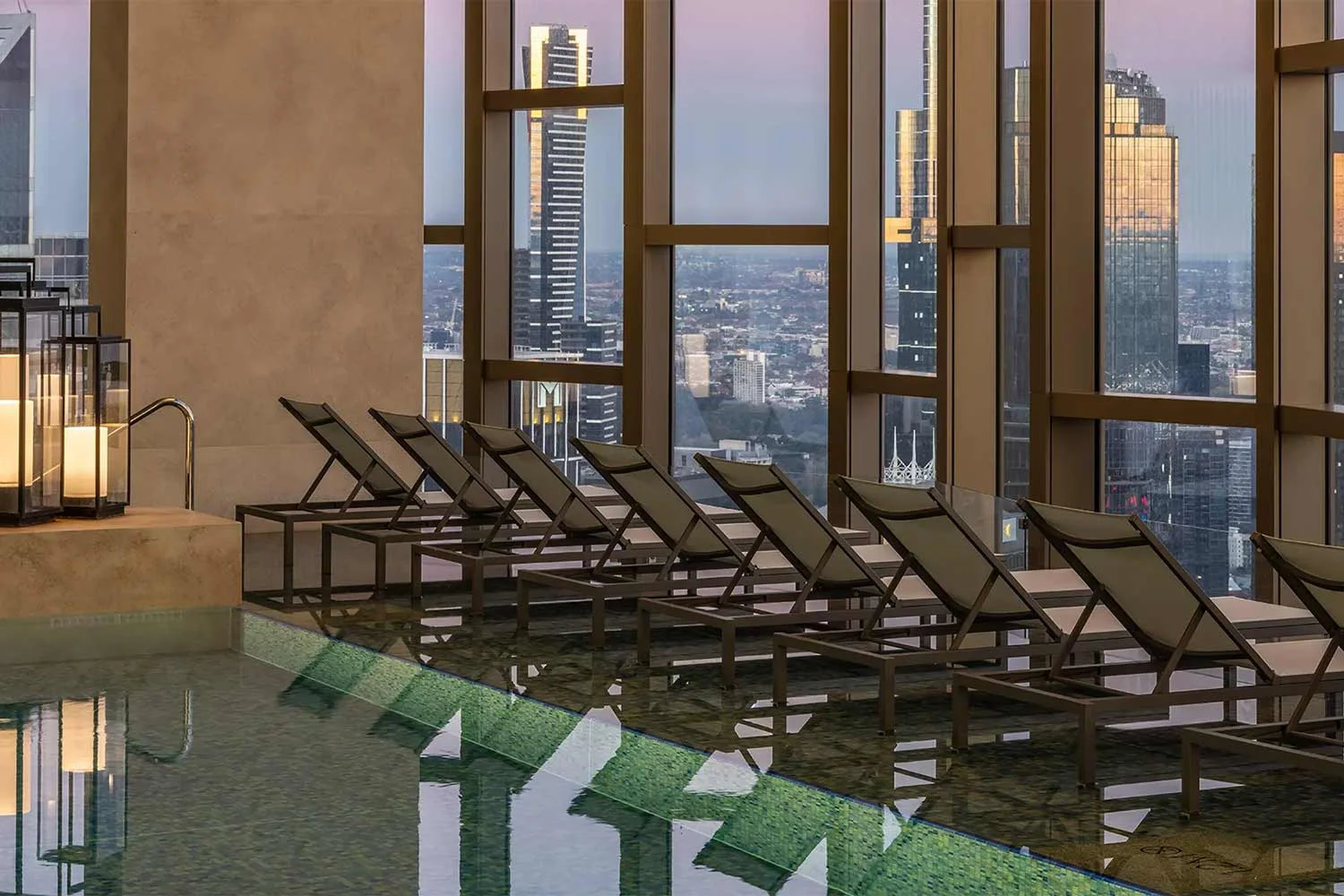
A well-designed bathroom or spa area is a hallmark of opulent hotel interiors. These spaces do more than meet practical needs; they offer moments of escape and indulgence. The most successful designs strike a careful balance between function and tranquillity, with material choices, lighting, and spatial flow all contributing to a deeply restorative experience. Clean, luxurious, and minimal, these spaces promote a soothing atmosphere that uses natural materials and lighting to their advantage.
Take The Ritz-Carlton in Melbourne. This hotel’s spa embraces marble surfaces, warm wood accents, and carefully layered lighting, creating a serene sanctuary that epitomises modern luxury hotel interior design.
Hotel Interior Design Trends 2025
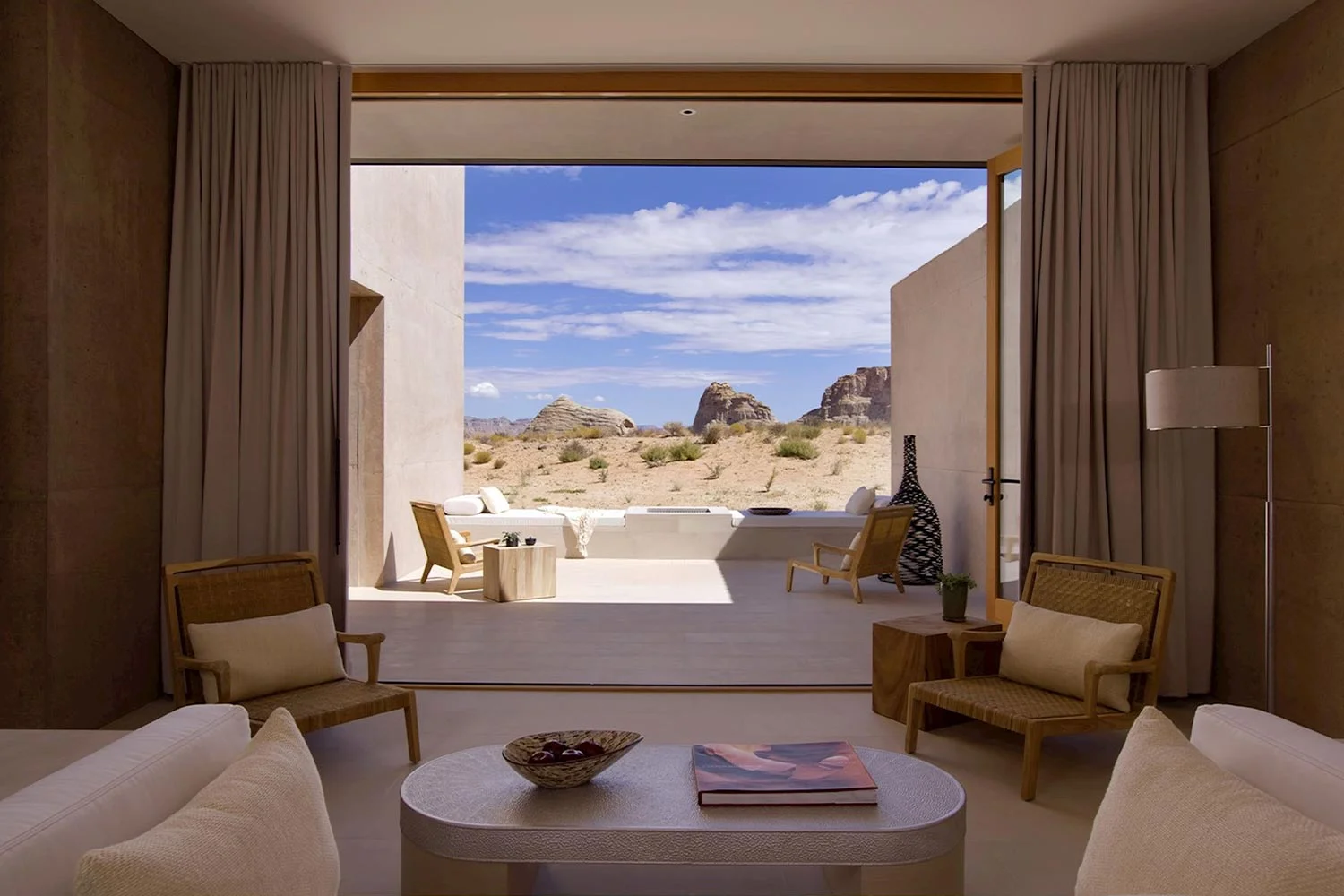
With increasing awareness around the health of our planet, it’s perhaps no surprise that sustainability and eco-materials will be at the forefront of modern hotel interiors in 2025. Biophilic design and its deepened connection to nature are becoming a central theme, promoting well-being while reducing environmental impact.
Zero-waste bathrooms are designed with waste prevention in mind and feature innovative fixtures such as refillable cosmetics dispensers, biodegradable toiletries, and chemical-free cleaning products. Complementing this is the sleep-enhancing use of blackout systems, which block external light and can be paired with automated controls to significantly reduce in-room electricity use overnight.
Another trend is incorporating smart technology for increased comfort and efficiency, such as sensor taps, heated towel rails or heated ladders with timers, and app-controlled lighting and ventilation systems.
Local culture and artisan touches are another trend we’re seeing more of in 2025, with hotels increasingly incorporating regionally sourced materials, handcrafted furnishings, and locally inspired artwork to create a stronger sense of place and authenticity.
In addition, room personalisation has been introduced as a boutique hotel interior idea, whereas voice-activated rooms allow guests to customise temperature and lighting. An example is Aloft Hotels; their appropriately named Project: Jetson experiment enables guests to control these settings via an iPad through a custom Aloft app.
Inspirational Hotel Interiors
So, what characteristics define inspirational hotel interiors worldwide, and what sets them apart? These spaces often go beyond aesthetics, offering a thoughtful balance of design, atmosphere, and cultural connection. Their success lies not only in visual appeal but also in the lasting impressions they create through architectural innovation, locally inspired touches, and a seamless blend of comfort, functionality, and identity.
Ett Hem, Stockholm, Sweden
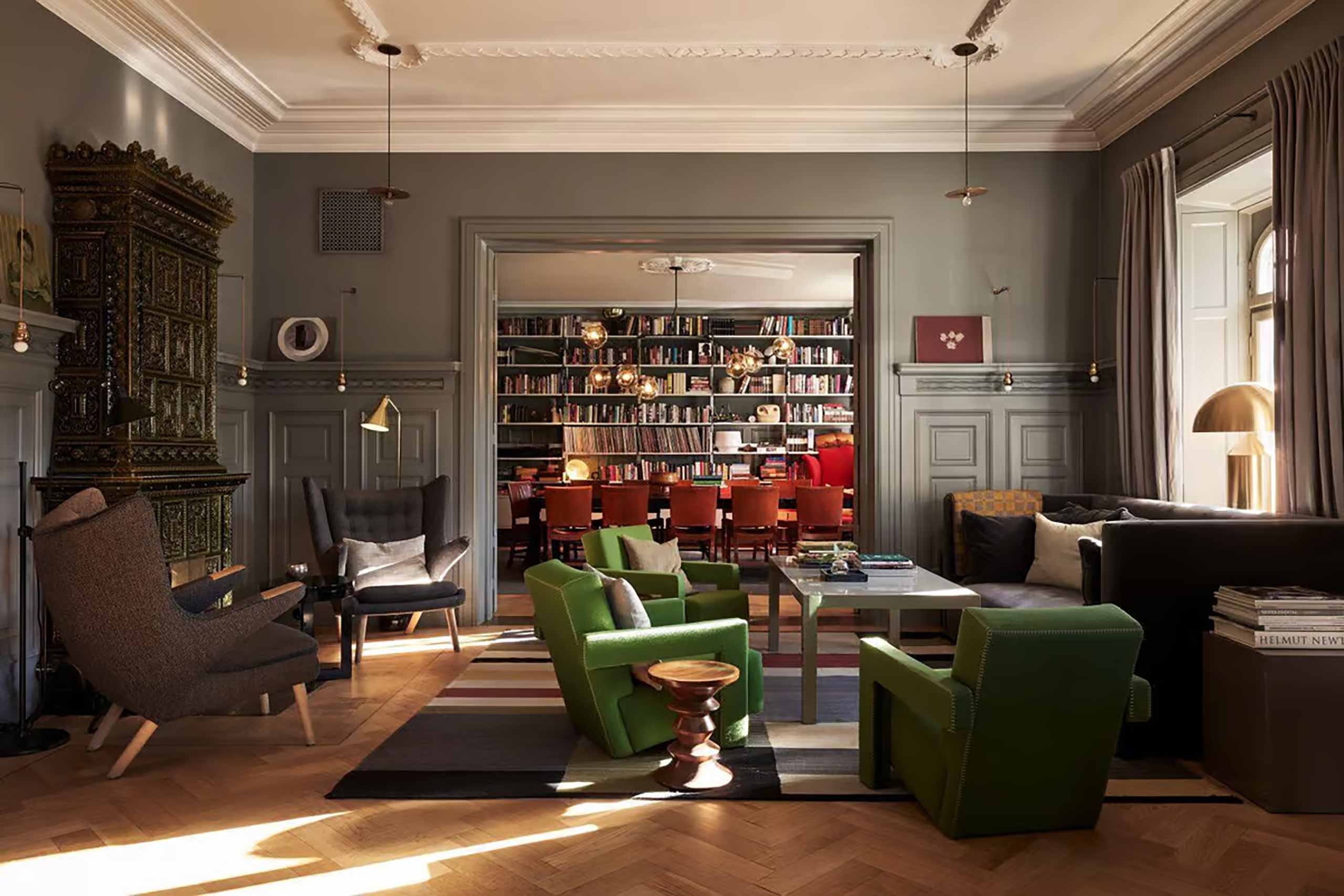
Feeling more like a private home than a hotel, Ett Hem in Stockholm, Sweden, is renowned for its intimate and deeply personal atmosphere. This warmth is created through a carefully curated mix of antique furniture, natural textures, and idiosyncratic touches, like bookshelves in the lounge and living areas. A welcoming, open-plan kitchen invites guests to wander in, pour a glass of wine, or enjoy a homemade snack, just as they might in a friend’s home. Designed by Ilse Crawford, the space embodies quiet luxury, encouraging guests to slow down and settle in, beautifully blurring the line between hospitality and home.
This attention to detail extends throughout the property, with each room thoughtfully designed to reflect lived-in comfort. Soft lighting, cosy fabrics, and subtle colour palettes create a calming retreat, allowing guests to unwind and feel at ease during their stay.
Atlantis, The Palm, Dubai
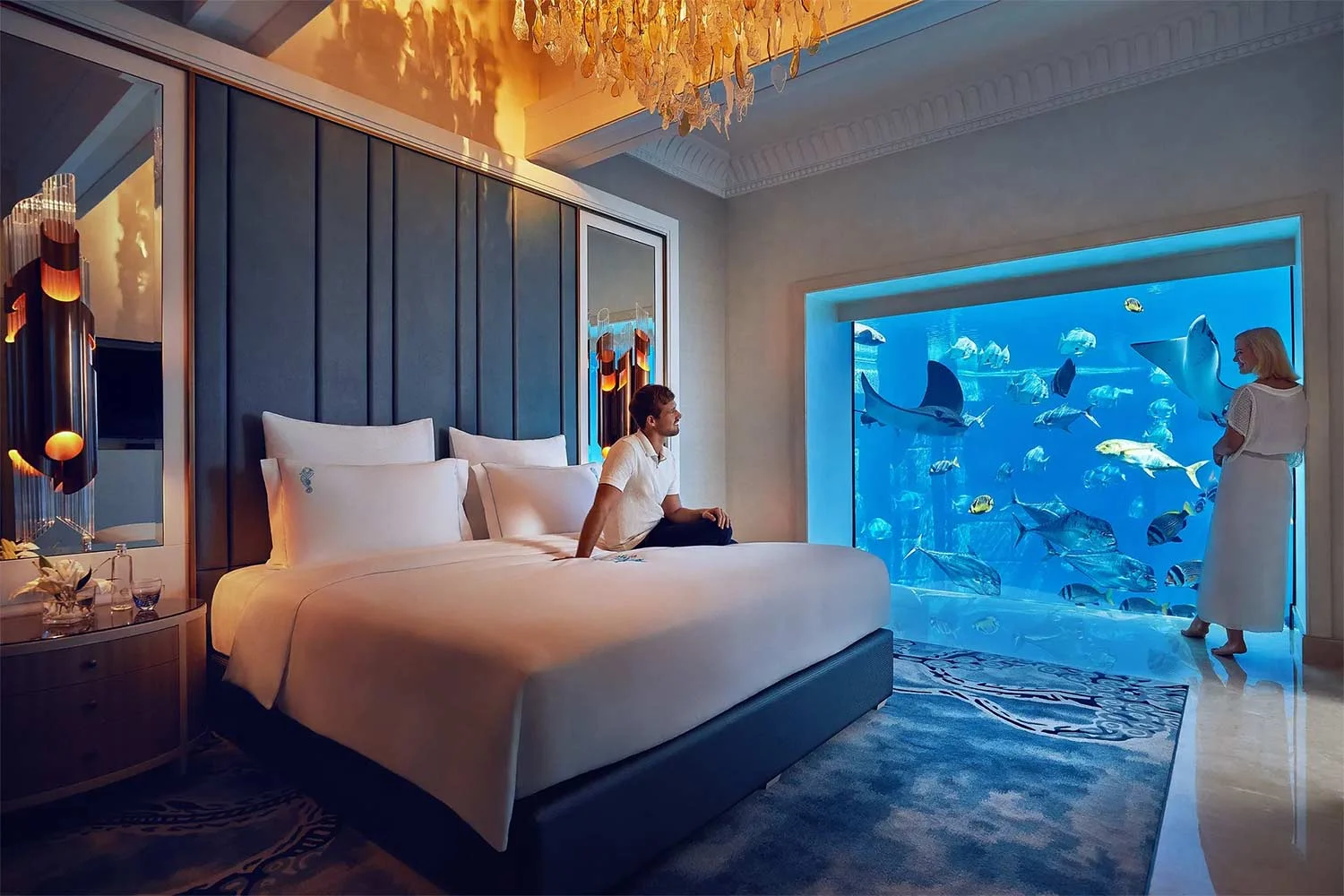
Shifting from subtle to extravagant, no blog on inspirational hotel interiors would be complete without a stop in Dubai. Atlantis, The Palm is a standout, drawing on the myth of Atlantis to deliver an opulent, otherworldly theme brought to life with astonishing detail.
Its signature underwater suites are nothing short of breathtaking. Floor-to-ceiling windows immerse guests in a vibrant aquatic world, offering an unforgettable view of marine life. This luxury hotel interior isn’t just about spectacle; it creates a sense of wonder, allowing guests to feel part of the underwater magic.
Designing Memorable Hotel Interiors
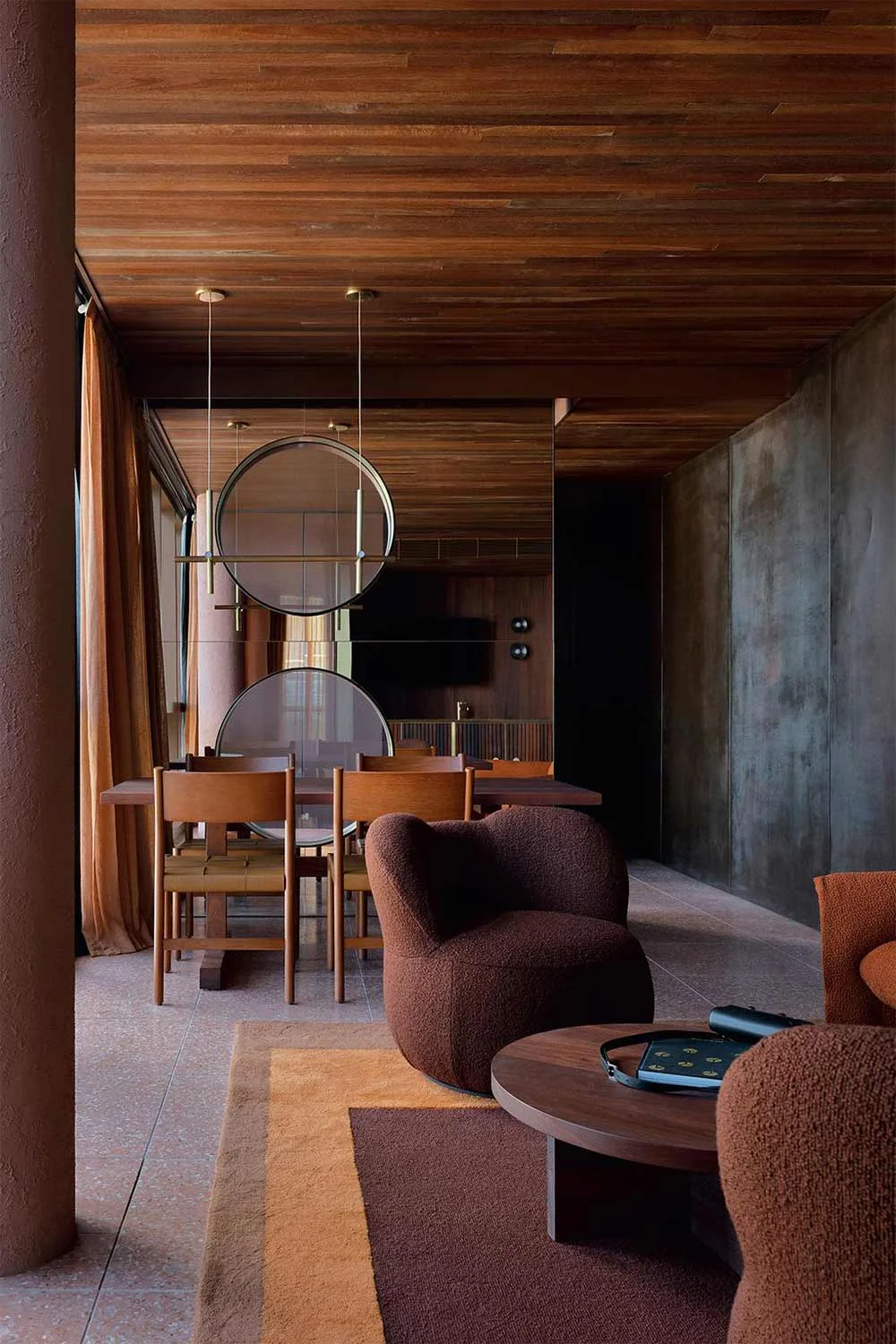
From the natural, homely, and intimate to the lush and extravagant, successful modern hotel interiors require a careful balance between hospitality and the core principles of interior design. Cohesiveness in branding and aesthetics, while ensuring accessibility and user flow, is key. As we have learned, lighting, scent, and sound also play crucial roles in creating the appropriate ambience. Additionally, incorporating local customs and cultural elements can contribute to a more authentic and memorable guest experience, fostering a deeper connection between the space and its surroundings.
It’s a tricky balance, but when done correctly, it can result in some of the most awe-inspiring architecture.
For further architectural inspiration, check out the following:
Belvedere: Bringing Hollywood-Style Luxury Living to the Gold Coast
The Lakehouse: Organic Architecture Meets Vibrant 70s Flair
How to Design Your Perfect Home Library