Our Range





























How Is Tapware Made? Inside the ABI Process
A tap may appear deceptively simple, but behind every finished piece is an intricate manufacturing process involving precision engineering, specialist craftsmanship, and rigorous quality control.
Every new ABI tap is conceived and designed by our in-house Research and Development Team in Australia before being manufactured by specialist partner factories in Guangdong, China. It’s a deliberate approach that combines Australian design expertise with generations of manufacturing expertise and world-leading production capabilities.
Throughout production, our 90-strong Guangzhou-based team works alongside our manufacturing partners to oversee every stage and maintain the quality standards our products are known for.
In this article, we'll take you behind the scenes to follow the complete journey of an ABI tap, from initial concept to final inspection, and show exactly how taps are made.
How Are Taps Made?
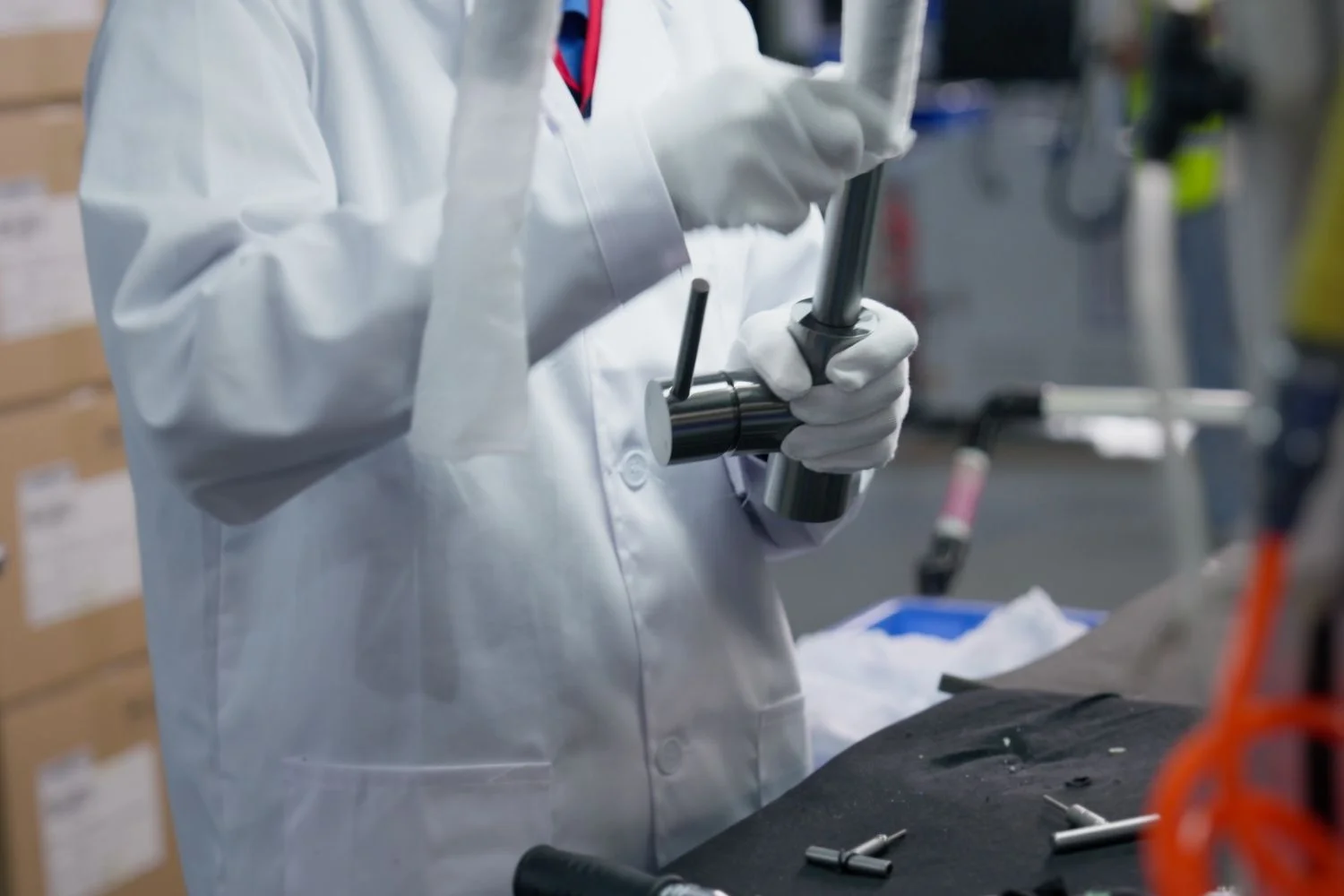
A finished tap may look like a single piece of metal, but it's a precisely engineered assembly of dozens of individual components.
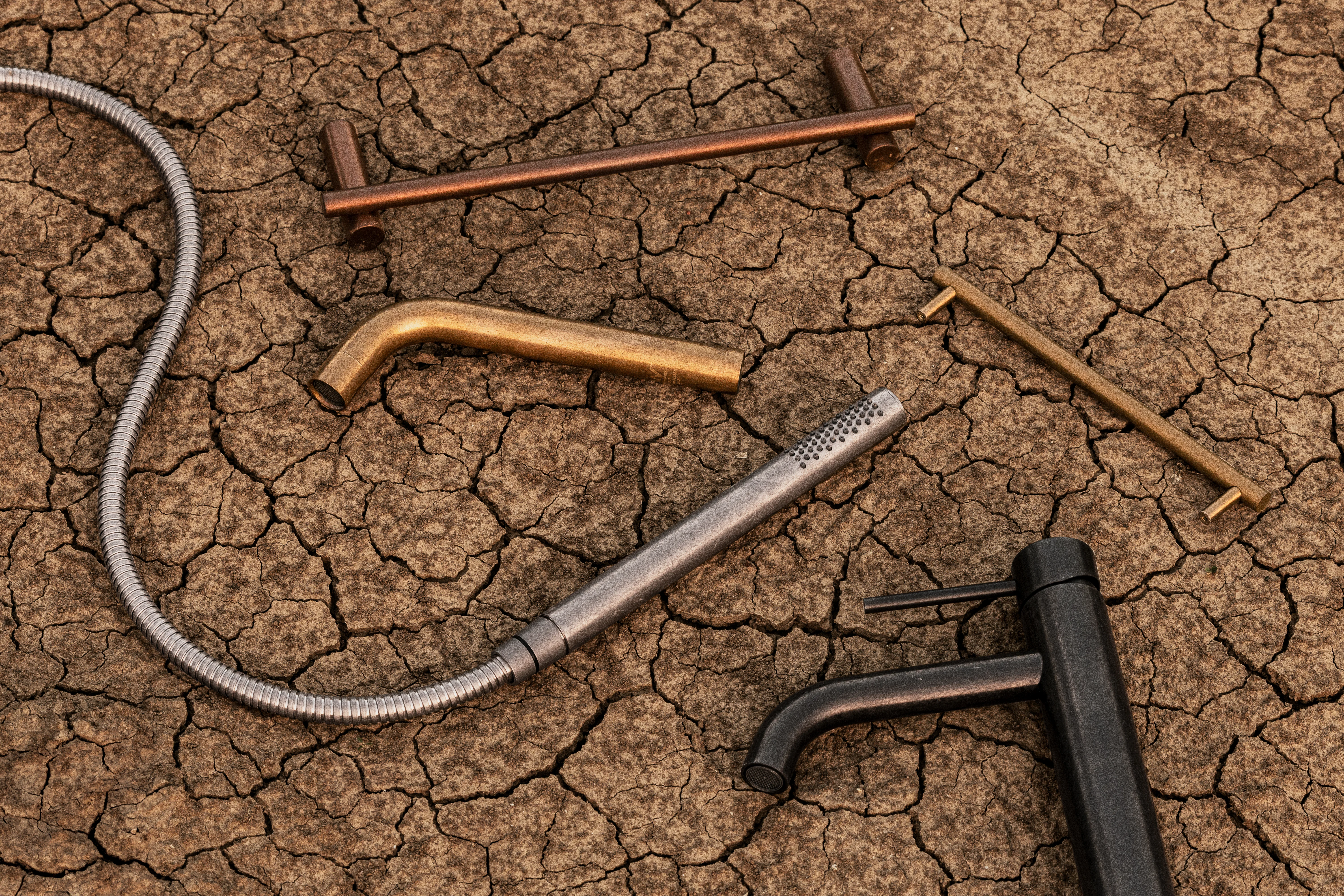
At its core is the tap body, made from solid brass or 304 or 316 grade stainless steel, alongside a ceramic cartridge that controls water flow, precision seals that prevent leaks, an aerator that shapes the water stream, and the exterior finish that gives the tap its final appearance. Each component is manufactured, inspected, and tested independently before being brought together during final assembly.
“When a new batch of components arrives at our warehouse, we start with material verification — confirming the raw material meets specifications. We also check wall thickness and overall dimensions against the drawings. Once those pass, we move through further dimensional inspection and a visual check for casting defects. Only after all that does the batch get cleared for production.”
— Arial Li, QC Lead, Guangzhou
Although different specialists are involved throughout production, the sequence itself never changes. Every tap begins with design and engineering in Australia before moving through casting, machining, surface preparation, finishing, assembly, testing, and finally shipping.
Manufacturing takes place across a network of specialist factories throughout Guangdong, China, each dedicated to a particular stage of production. Some facilities focus exclusively on casting molten brass, others specialise in precision CNC (Computer Numerical Control) machining or stainless steel fabrication. Once the individual components are complete, they are brought together at our Zhongshan facility, where the final surface finish is applied, the tap is assembled, and every unit undergoes quality testing before packing.
Overseeing the entire process is our Guangzhou-based team of more than 90 specialists, who work closely with our manufacturing partners to coordinate production, inspect components at every stage, and verify that every product meets ABI's quality standards before it leaves the factory.
The following sections take you through each stage of the process, from the first design sketches to the final quality inspection, showing exactly how an ABI tap is made.
Designing a Tap in Australia

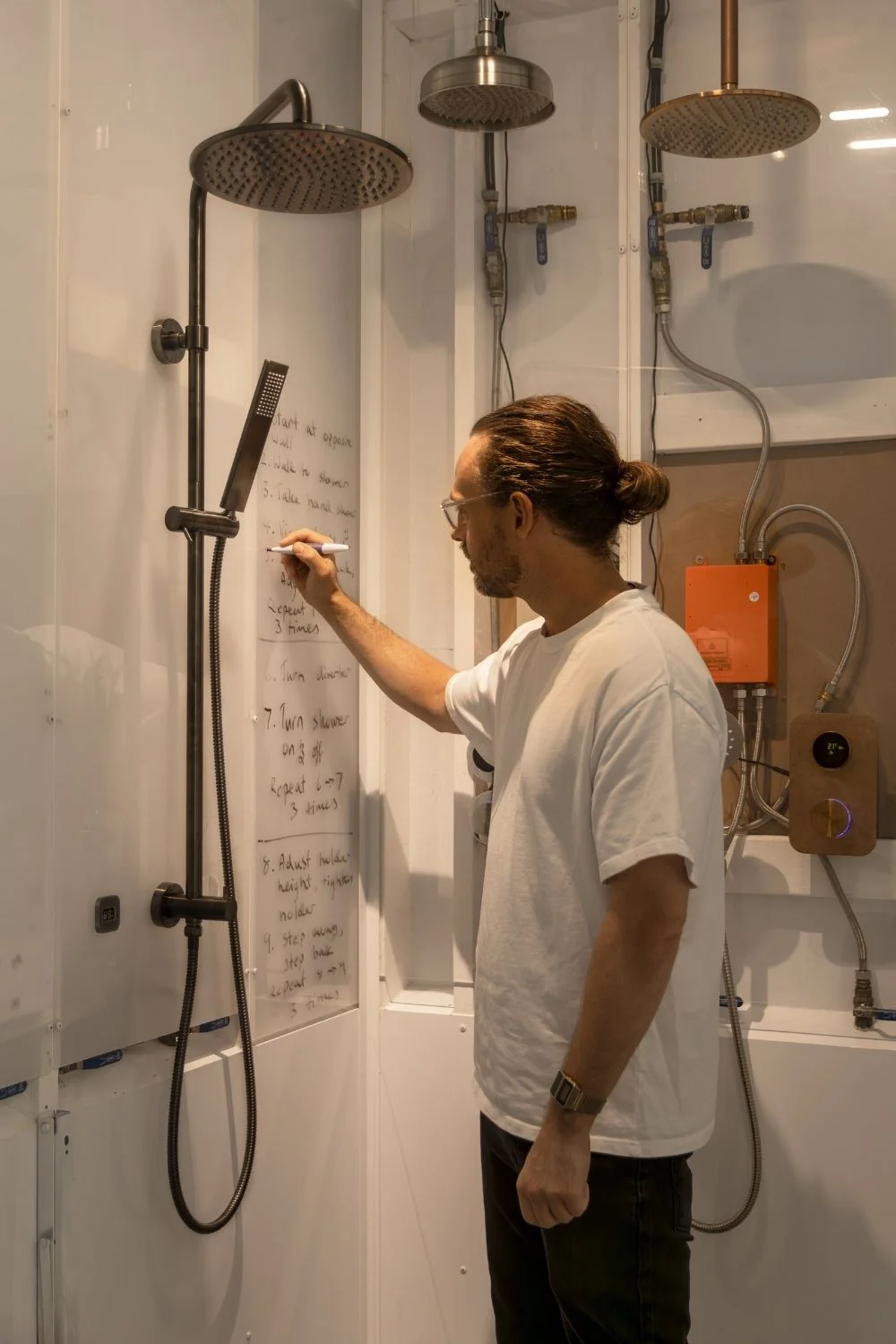
Every new ABI tap has been designed by our in-house Research and Development Team in Australia since 2022.
“Good design shouldn’t be expensive. Our team is instrumental in making that possible, refining every element from the outset and ensuring each component is designed for purpose. By eliminating unnecessary materials, optimising the structure, and rigorously validating performance, we can use resources more efficiently while creating taps that don’t compromise on quality, durability, or accessibility.”
— Rhys Beal, Head of Research & Development
Designing a tap involves far more than creating an attractive silhouette. Before a product can be manufactured, every detail must be engineered, from its proportions and internal waterways to the materials it's made from, the cartridge it uses, and the finish applied to its surface. Each decision influences the next, meaning the design process balances aesthetics, functionality, durability, and manufacturability simultaneously.
Some of the key decisions made during this stage include:
Brass Wall Thickness
The thickness of the tap body is carefully engineered to provide strength and durability, ensuring enough material for precision machining processes, including bending, forming, welding, and more. Getting this balance right helps ensure the tap performs reliably for years to come.
Handle Feel
The cartridge hidden inside the tap plays a major role in how the tap feels to use. It controls how far the handle turns, the level of resistance you feel, and how smoothly the water flow and temperature are adjusted. ABI specifies high-quality ceramic disc cartridges, selected for their smooth operation, precision, and long-term durability. While the cartridge is hidden from view, it's one of the most important components in determining the everyday experience of using the tap.
Surface Finish
The finish isn't chosen at the end of production; it's determined during the design phase because it influences how the tap is manufactured. For example, PVD finishes require the brass body to undergo additional preparation before coating, so the manufacturing process must be planned around the intended finish from the very beginning.
Casting the Brass Body
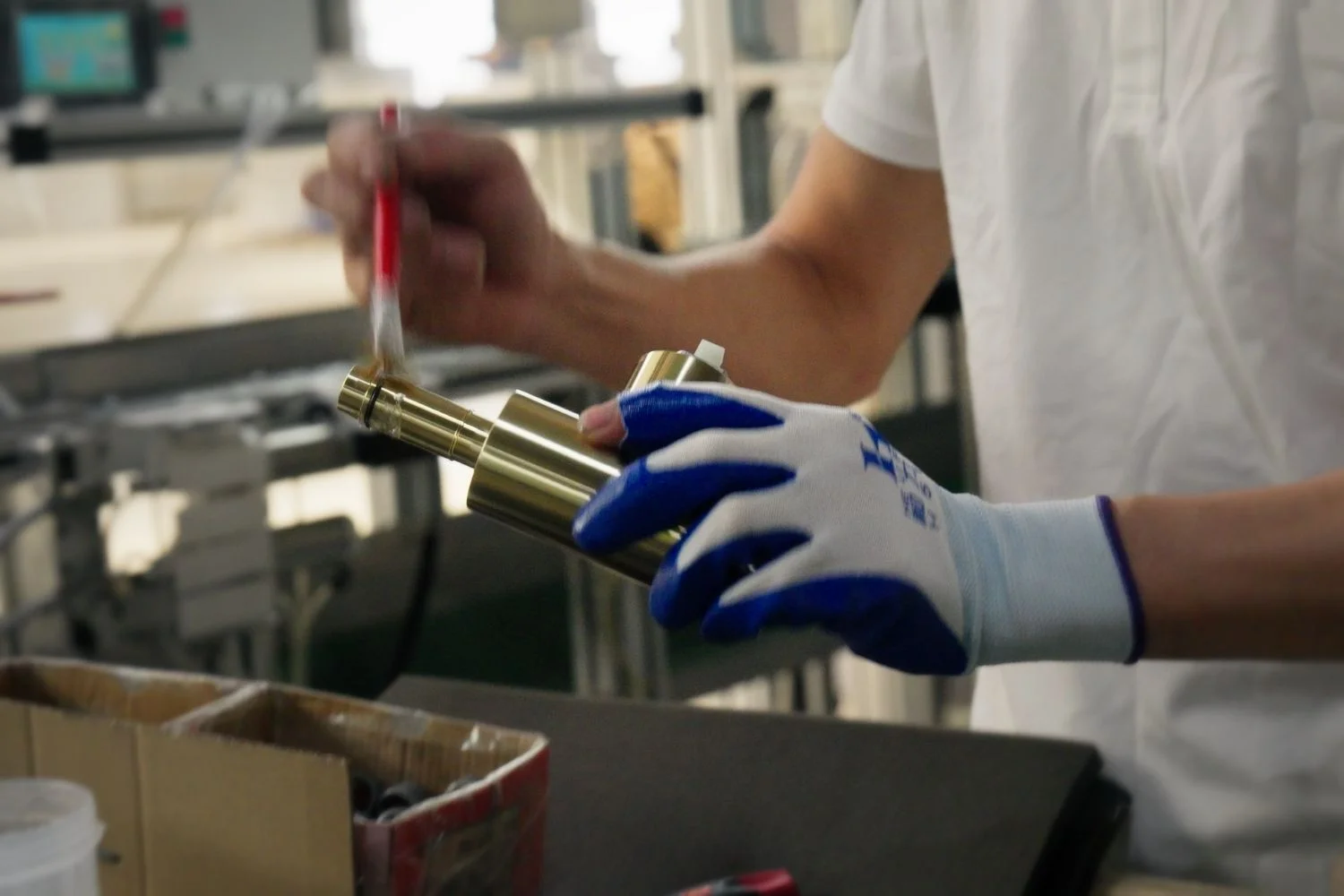
With the design finalised, production begins with casting, the process that transforms raw metal into the first physical form of the tap.
Brass is heated until it becomes molten, then carefully poured into a precision mould that forms the tap body's overall shape. Casting is well-suited to complex forms like tapware, allowing intricate internal and external features to be created in a single piece. Once poured, the metal is left to cool and solidify before it can be removed from the mould and prepared for the next stage of manufacturing.
Several key factors are carefully controlled throughout this process:
- Casting method: The tap body is manufactured by gravity die casting, in which molten brass is poured into a reusable steel die under gravity. This method produces a high-quality surface finish and the complex internal waterways required for tapware.
- Brass alloy: The tap body is cast from a CW511L lead-free brass alloy designed for strength, durability, and suitability for potable water applications.
- Pouring temperature: The molten brass is poured into the steel die at a temperature between 950°C and 1100°C.
- Cooling process: The casting is left to cool naturally for approximately six hours, allowing it to solidify fully before being removed from the mould.
- Trimming: Once the casting has cooled naturally, the excess metal left behind by the pouring channels is removed with a shot-blasting machine. This process also cleans the brass casting, removing residual sand and oxide scale, preparing the body for machining.
At this stage, the tap body still looks quite different from the finished product. Its surface is rough, excess metal remains attached, and none of the precise openings, threads, or internal waterways has been machined. Those refinements come next.
Machining the Brass Body
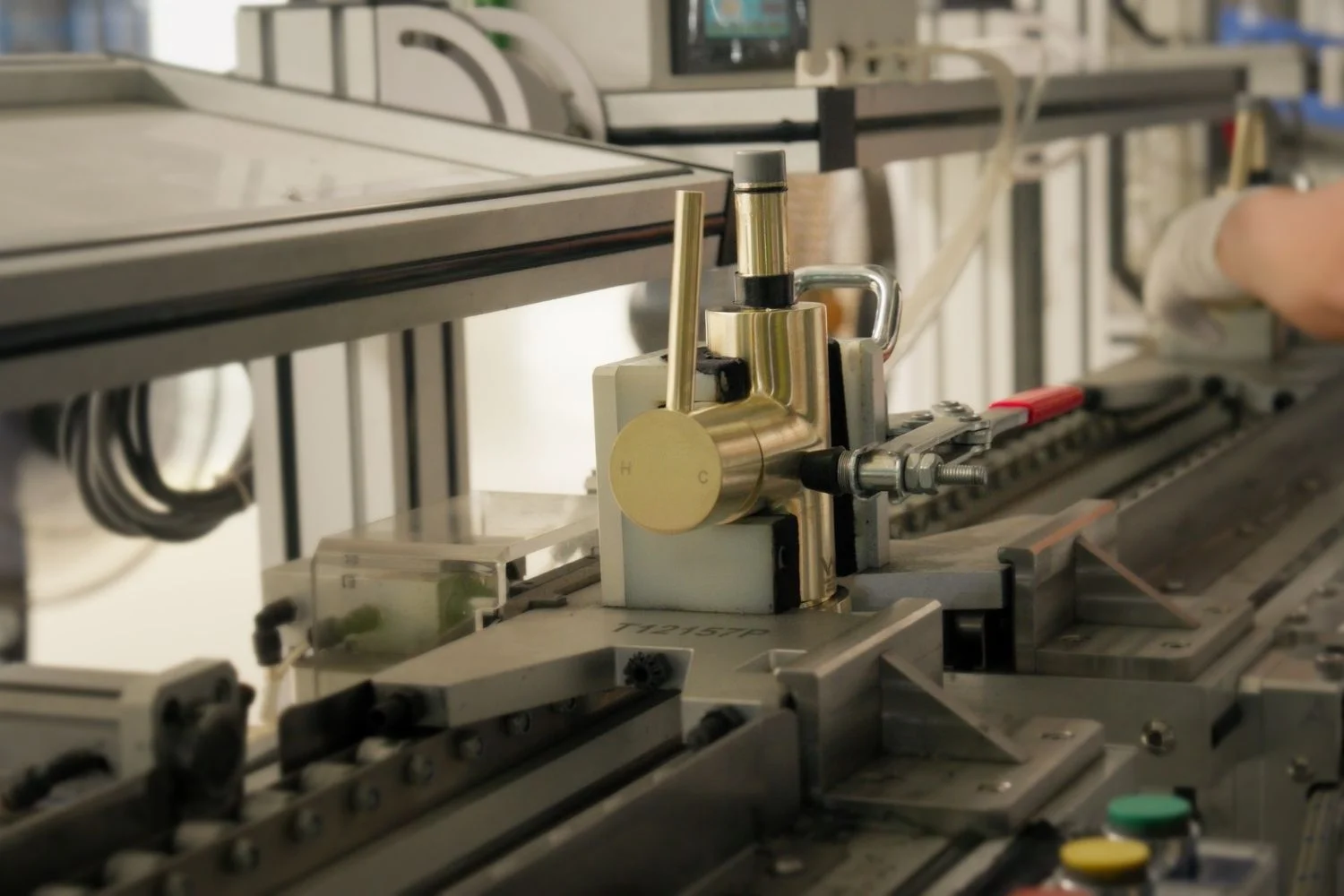
Once the brass body has cooled, it moves to machining, where the rough casting is transformed into a precision-engineered component. Computer-controlled CNC (Computer Numerical Control) machines remove the outer layer of material, within a 5-10 mm range, to create the tap's final shape with exceptional accuracy.
Working directly from the original design files, these machines ensure that every tap body is produced consistently, regardless of the number manufactured. This level of precision is essential, as even the smallest variation can affect how the internal components fit together and how the tap performs once installed.
During machining, the tap body is gradually refined. The internal waterways that carry water through the tap are cut, openings are created for the cartridge and fittings, and the threaded connection points for the water inlets and spout are precisely formed. Every surface that interacts with another component is machined to exact dimensions, allowing the tap to assemble correctly and operate reliably.
This stage also requires extremely tight manufacturing tolerances. Each feature is machined to within ±0.05 mm - ±0.1 mm, ensuring every cartridge, seal, and fitting aligns exactly as intended.
By the end of machining, the rough casting has become a precisely engineered tap body, ready for its surface finish and final assembly.
Applying the Finish
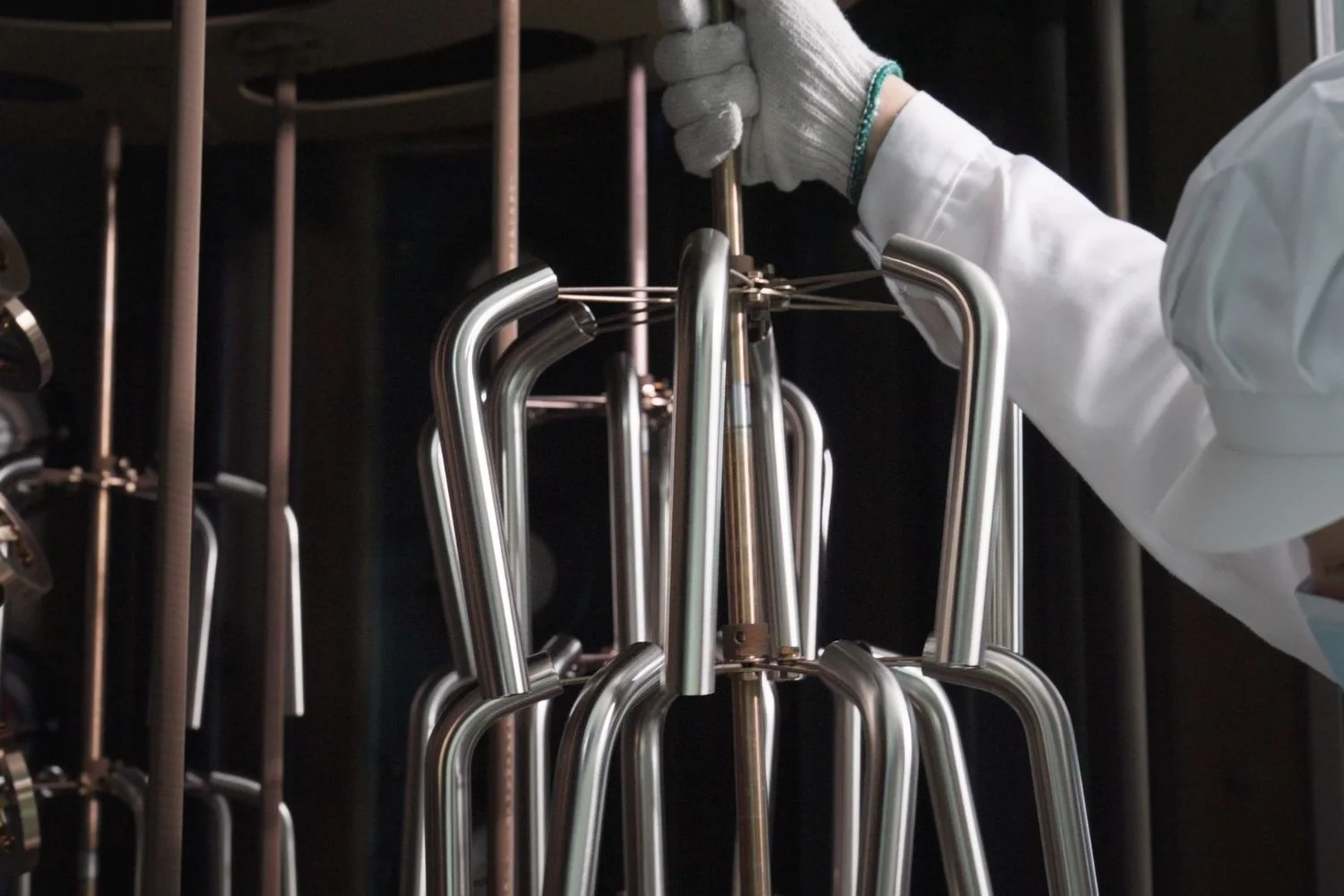
With machining complete, the tap body is thoroughly cleaned and prepared for its final surface finish. While the finish gives the tap its distinctive colour, it also serves an important functional purpose: protecting the surface from everyday wear, corrosion, and tarnishing.
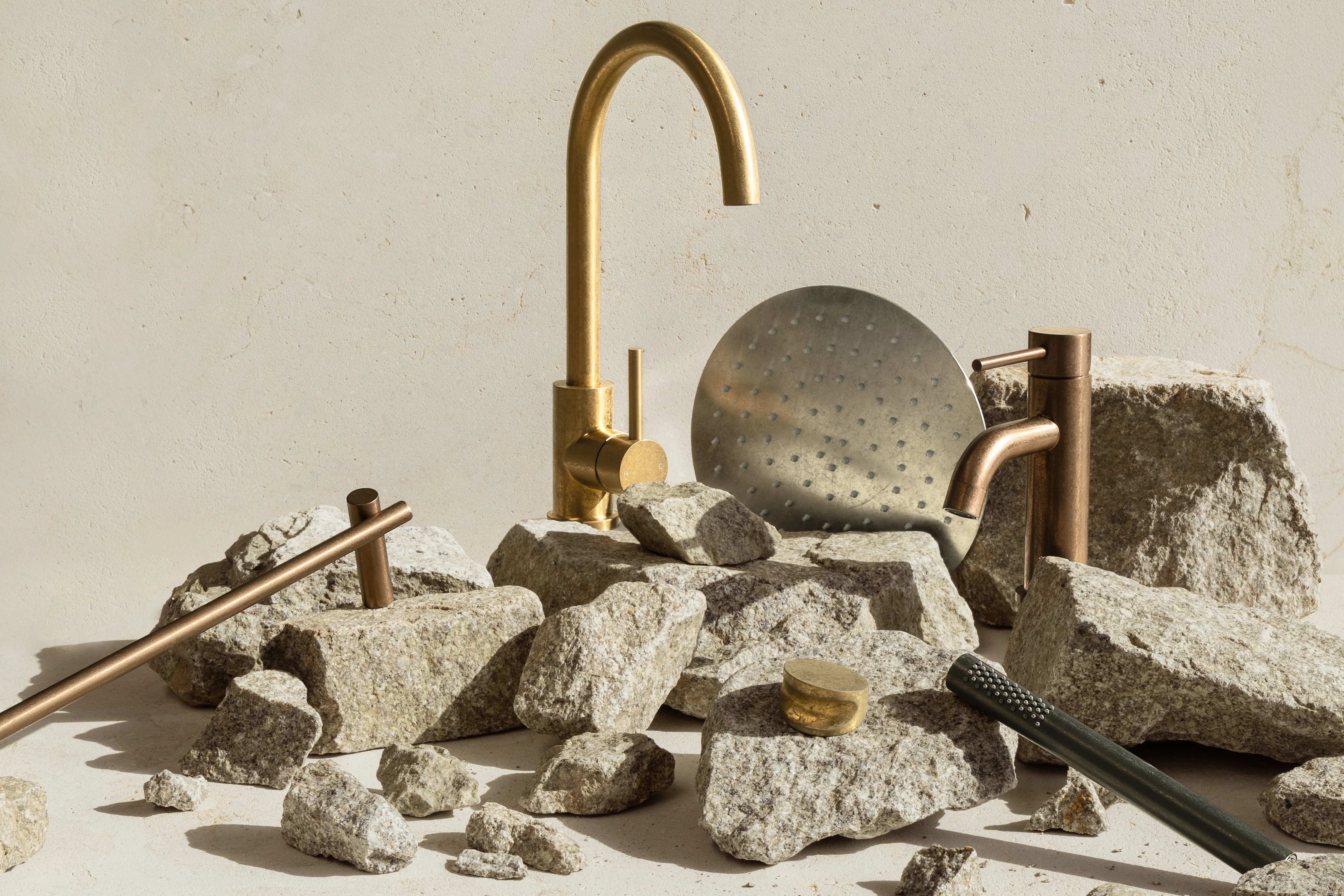
Different colours and materials require different finishing technologies. Depending on the product, ABI uses one of three specialist finishing processes:
PVD (Physical Vapour Deposition)
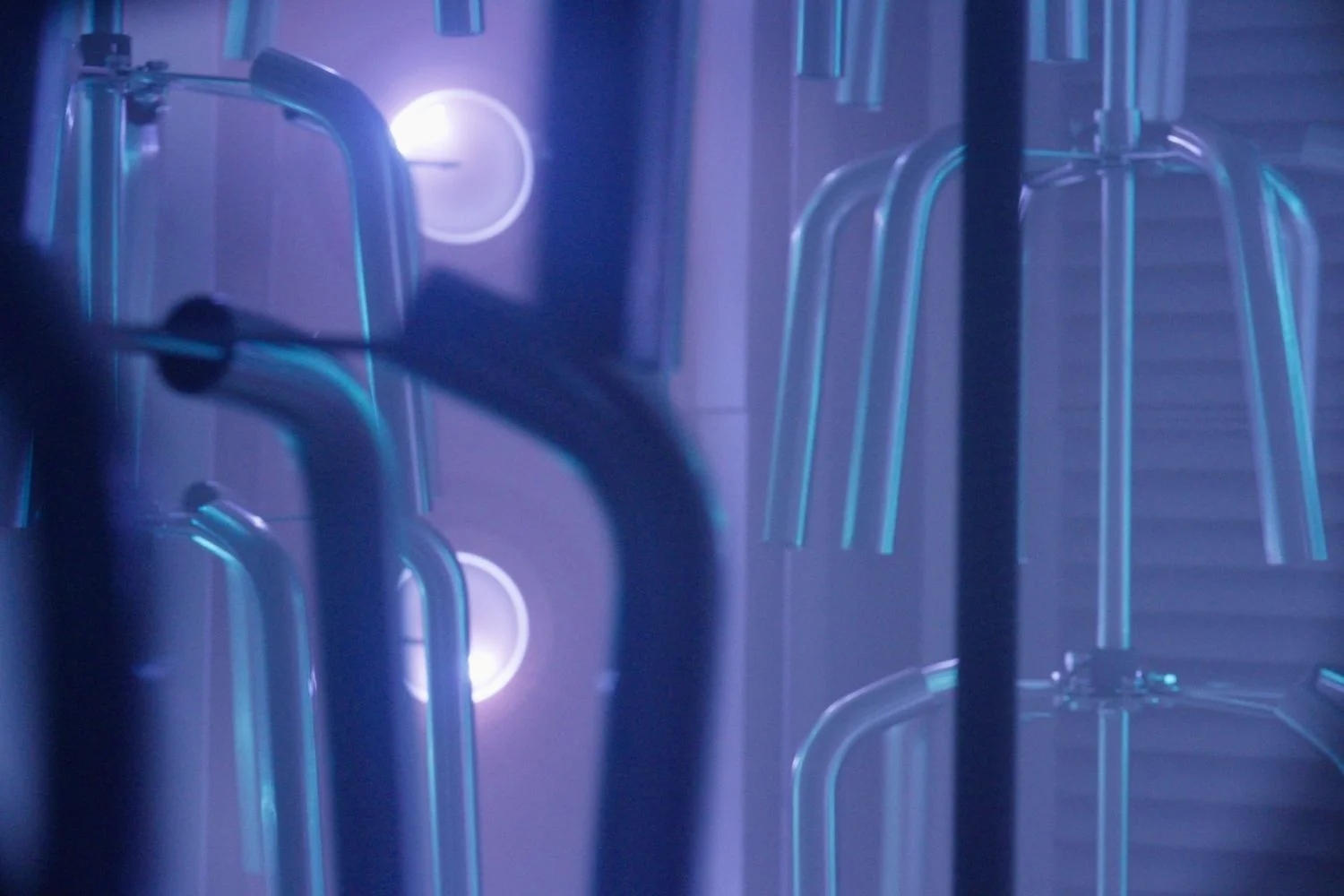
PVD is used for most of our coloured tapware finishes and is carried out in-house at our ISO 9001-certified facility in Zhongshan. During this process, the coating metal is transformed into an ultra-fine vapour inside a sealed vacuum chamber before bonding at a molecular level with the tap's surface.
Rather than sitting on top like paint, it forms a thin, dense layer that's far harder and more tightly bonded than a conventional coating, creating a highly durable surface that resists scratches, corrosion, and everyday wear. Before the PVD process begins, brass components are plated to provide a smooth, corrosion-resistant base, then meticulously cleaned to ensure the coating bonds correctly. It’s used for the following finishes:
- Brushed Brass
- Brushed Copper
- Brushed Nickel
- Brushed Gunmetal
- Matte Black (most products)
- Antique Aurum
- Antique Bronze
- Antique Slate
Because PVD forms an integral part of the surface rather than simply coating it, it offers significantly greater durability than many traditional finishing methods, such as conventional electroplating or powder coating.
Proprietary Tumbling Method
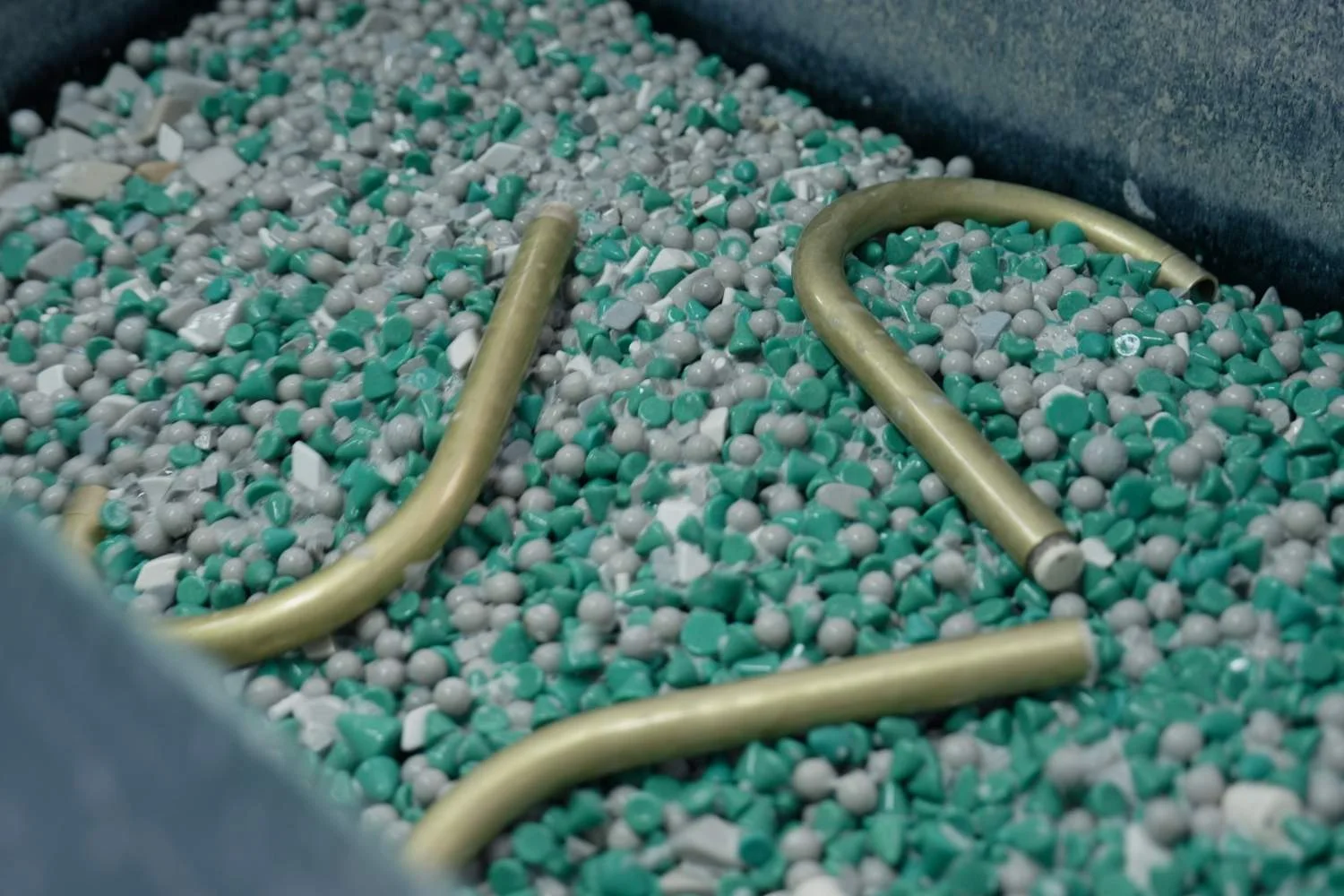
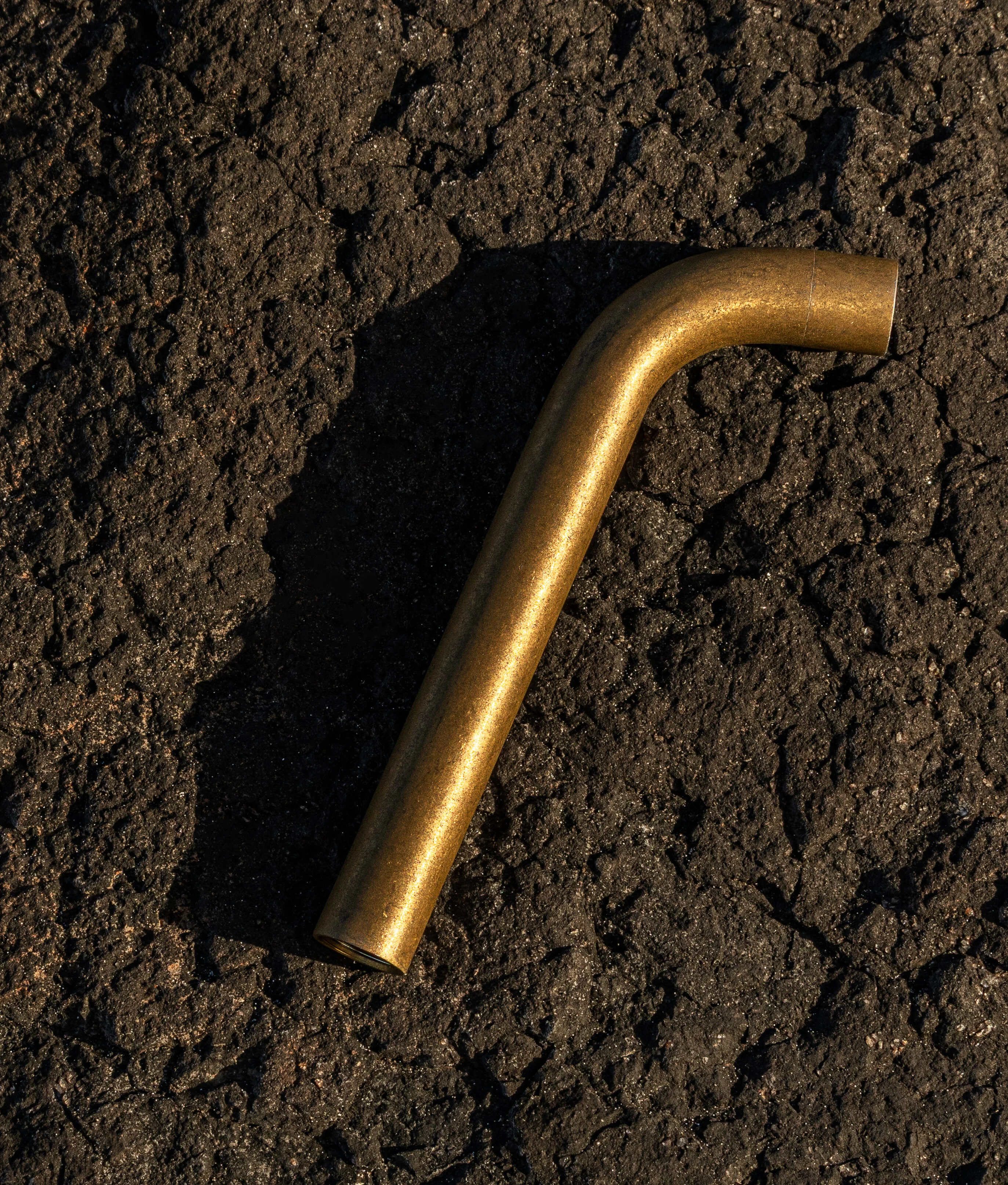
Some finishes require an additional step before the final surface treatment is complete. This is the case for our Antique Collection, which undergoes ABI's proprietary tumbling process to create its distinctive aged appearance.
Each component is placed in a vibratory machine filled with small abrasive stones and ceramic materials, which gently soften the surface and create subtle tonal variation. The result is a finish with greater depth, texture, and character, giving every piece an authentic, time-worn aesthetic while retaining the durability of its underlying finish.
Our proprietary tumbling method is used across:
- Tumbled Aged Brass
- Antique Aurum
- Antique Bronze
- Antique Steel
- Antique Slate
Because the tumbling process naturally affects every piece differently, no two products are completely identical. These subtle variations are an intentional part of the finish, giving each tap its own unique character.
AEA (Advanced Electroplating Application)
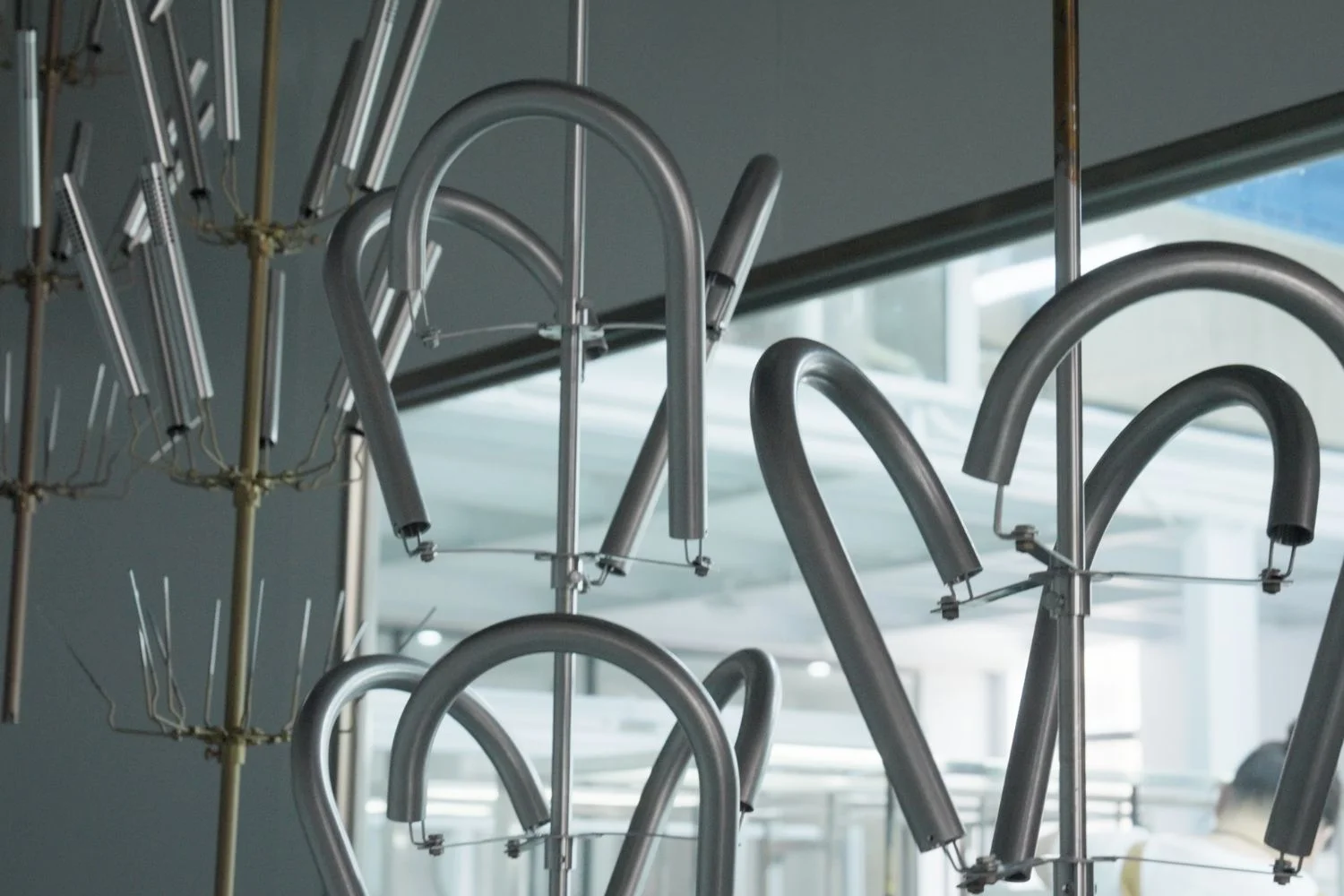
AEA is used for our Chrome finishes and selected Matte Black products. During this process, layers of chromium, nickel, or a coloured alternative are electroplated onto the tap's surface using an electrical current. This creates a smooth, durable finish with excellent resistance to corrosion, tarnishing, and everyday wear, while delivering the bright, reflective appearance associated with chrome.
PSLT (PrimeShield Lacquer Technology)
PSLT is applied to our white solid brass and stainless steel products. A durable powder coating is electrostatically applied to the surface before being cured at high temperatures, creating a hard-wearing protective finish. The result is a smooth, easy-to-maintain surface that offers excellent resistance to corrosion, chipping, and everyday use.
Surface finishing is one of the final manufacturing stages, but its success depends on everything that comes before it. Any imperfections left behind during casting or machining would remain visible once the finish is applied, making the quality of the underlying brass body just as important as the coating itself.
If you'd like to learn more about how PVD works, how it's tested, and why it's known for its durability, explore our dedicated guide to PVD finishes.
Installing the Cartridge: The Heart of the Tap
While the tap body provides the strength and appearance, the cartridge is what makes the tap work. Hidden inside the handle, it's the component responsible for opening, mixing, and shutting off the water every time the tap is used.
Because the cartridge performs this action thousands of times over its lifetime, it has one of the greatest influences on how a tap feels and performs years after installation. A high-quality cartridge delivers smooth handle movement, reliable water control, and long-term durability, which is why ABI sources cartridges from specialist manufacturers rather than producing them in-house.
Each cartridge is carefully matched to the tap during assembly, then installed into the precision-machined body and secured to create a watertight seal. The surrounding seals and O-rings prevent leaks, while the aerator fitted to the end of the spout regulates the water stream, creating a smooth, consistent flow while helping the tap achieve its required water-efficiency rating.
Key specifications include:
- Sourcing: Cartridges are sourced from specialist manufacturers and specified on a model-by-model basis to suit each tap's design, handle movement, and flow requirements.
- Performance testing: Cartridges are independently tested to the European EN 817 standard for 200,000 operating cycles to verify long-term durability and performance.
- Installation method: The cartridge is fitted into a precision-machined seat within the tap body and secured in place.
- Aerator: Sized to deliver ABI’s target flow rate under the WELS scheme.
By the time the cartridge, seals, and aerator are installed, the tap has all the components required to function. The final stage is to prove they work together through a series of rigorous assembly checks and quality tests before the product leaves the factory.
Assembly and Testing
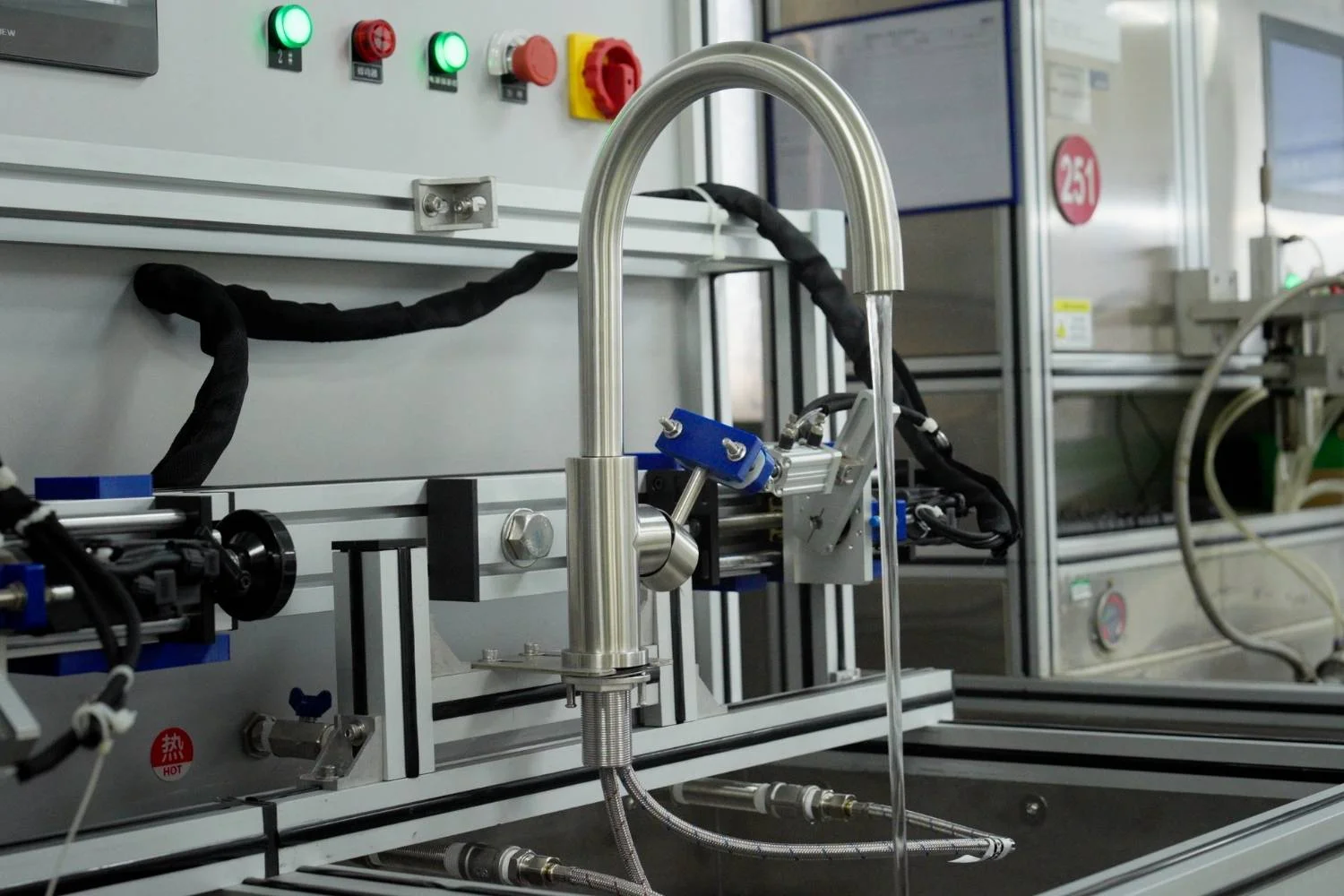
With every component complete, the tap moves into its final stage of production. This is where the individual parts become a finished product, and where months of design, engineering, and manufacturing are verified through a comprehensive series of inspections and performance tests.
Assembly and quality control are overseen by ABI's Guangzhou-based team of more than 90 specialists, including 22 dedicated quality inspectors. Every product undergoes independent quality checks: first by the manufacturing facility’s quality team, then by ABI’s inspectors, before it’s approved for shipment.
“When a finished tap arrives at our inspection station, we start with the functional tests — cartridge smoothness, seal integrity under pressure, and water flow through the aerator. If it doesn't work, nothing else matters. Once it passes, we check the thread fit and handle rotation angle. Then we inspect the surface finish, looking for pinholes in the plating, uneven polishing, scratches, or any colour deviation, and verify that the WaterMark and H and C markings are all present and clearly legible. Finally, before packaging, we confirm that every fitting, hose, and installation component is present and properly protected. Every tap has to pass all these stages before it gets the green light.”
— Arial Li, QC Lead, Guangzhou
During assembly, each component is fitted in a precise sequence, beginning with pre-assembly of the handle and nozzle, followed by laser marking of the main body. The cartridge and handle are then installed. Once they're in place, the bend pipe, spout, and hoses are fitted, before the product undergoes water and air leak testing and is prepared for packaging.
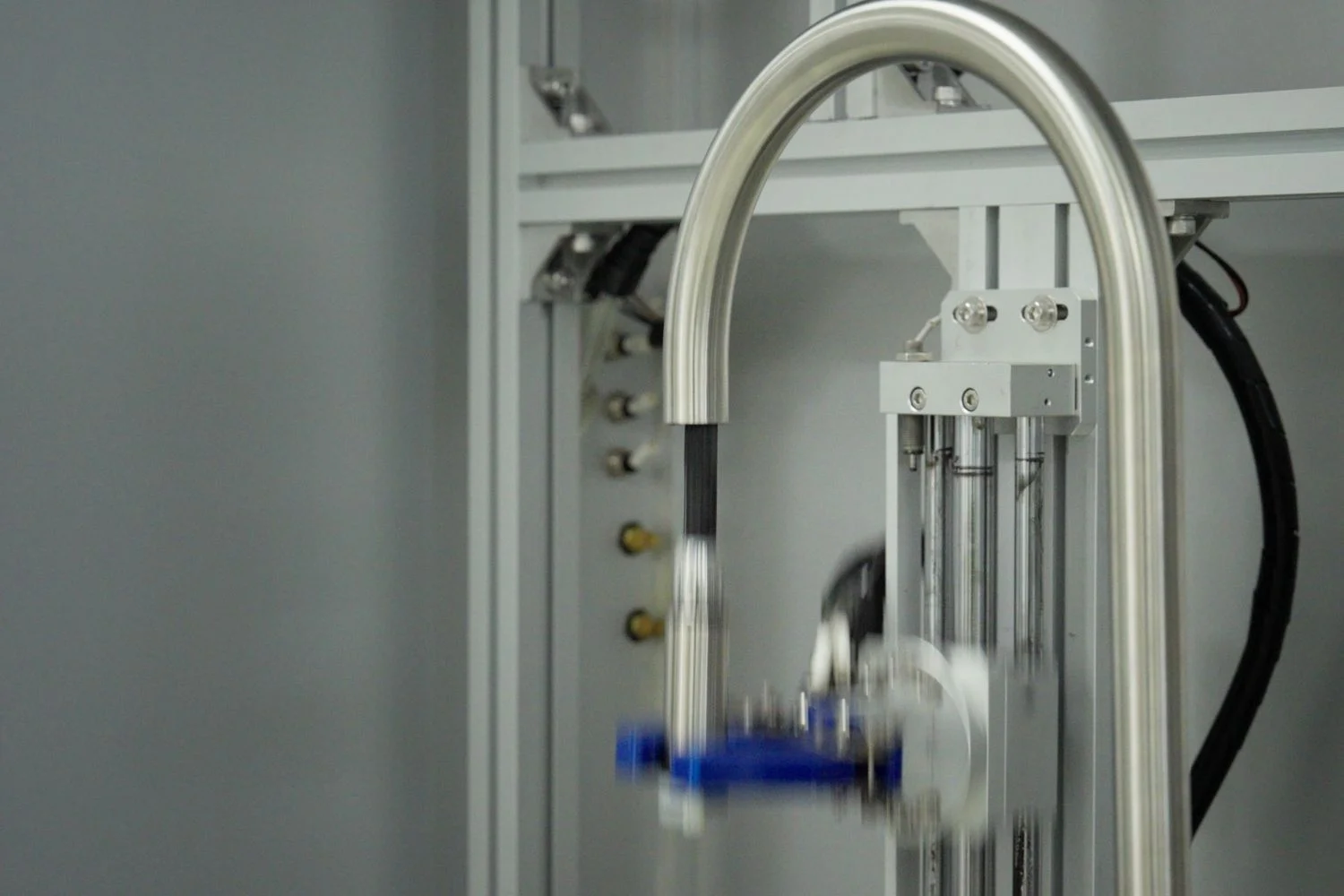
No single test can verify the quality of a tap, which is why every product is assessed across multiple performance areas. Some tests confirm the tap won't leak, others measure the durability of the finish or verify the cartridge can withstand years of daily use. Together, they ensure every tap performs as intended before leaving the factory.
Learn more about the testing and quality control behind every ABI product on our Product Quality page.
| Test | What It Involves | |
| Leak Test | Air and water are passed through the assembled tap to verify that the body and seals remain watertight. | |
| Endurance Test | Rather than relying solely on supplier test results, we conduct in-house endurance testing using specialised machinery to simulate tens of thousands of everyday usage cycles, and abrasive testing to assess how finishes hold up over time. We hold our tapware to an internal standard that goes beyond typical industry testing, working backwards from the warranty period to design products that are built to outlast it. Running these tests ourselves also gives us the performance data to confidently set our warranty terms based on our own testing and standards. | |
| Salt Spray Test | Finished components are exposed to a controlled salt mist for 48 hours to assess their corrosion resistance. For acidic conditions, components are tested for 24 hours. | |
| Abrasion Test | The finish is repeatedly rubbed to evaluate its resistance to everyday wear and scratching. To pass, it must withstand 10,000 cycles. | |
| Cartridge Cycle Test | Cartridges are tested to the EN 817 standard to verify long-term performance under repeated operation. | |
| Dimensional Inspection | Critical dimensions are measured against the technical drawings, with each batch sampled under AQL 2828 to ensure every component falls within specification. | |
| Visual Inspection | Every completed tap is inspected by hand against a product-specific quality checklist. |
ABI’s quality process covers three stages: incoming raw materials, in-house processing, and the finished product, with a dedicated QC team overseeing each. Raw materials that fail quality checks are returned to the supplier rather than reworked, while every product undergoes two full inspections during production: once after processing and again when complete.
If a defect is isolated to an individual product, that product is removed. If the same issue is identified across multiple products within a batch, the entire batch is rejected, regardless of how minor the defect may be.
It’s a standard the team has upheld even when an issue only becomes apparent later.
“We had a batch of brushed nickel faucets that looked perfect during initial inspection — the finish was consistent, the colour was uniform, and everything passed. But after sitting in our warehouse for some time, we noticed a slight yellowing on the surface. It wasn't obvious — unless you're someone who inspects products day in and day out, you probably wouldn't spot it. But our team did.
We pulled all the inventory, re-inspected every unit, and returned the entire batch to the supplier. It was a costly decision, but for us, consistency in finish is non-negotiable — even if only an experienced eye can tell the difference.”
— Arial Li, QC Lead, Guangzhou
By the time an ABI tap leaves the factory, it has passed through multiple layers of inspection designed to confirm not only that it functions correctly but also that it meets the same standards of appearance, durability, and performance expected of every product that carries the ABI name.
How It Gets to You
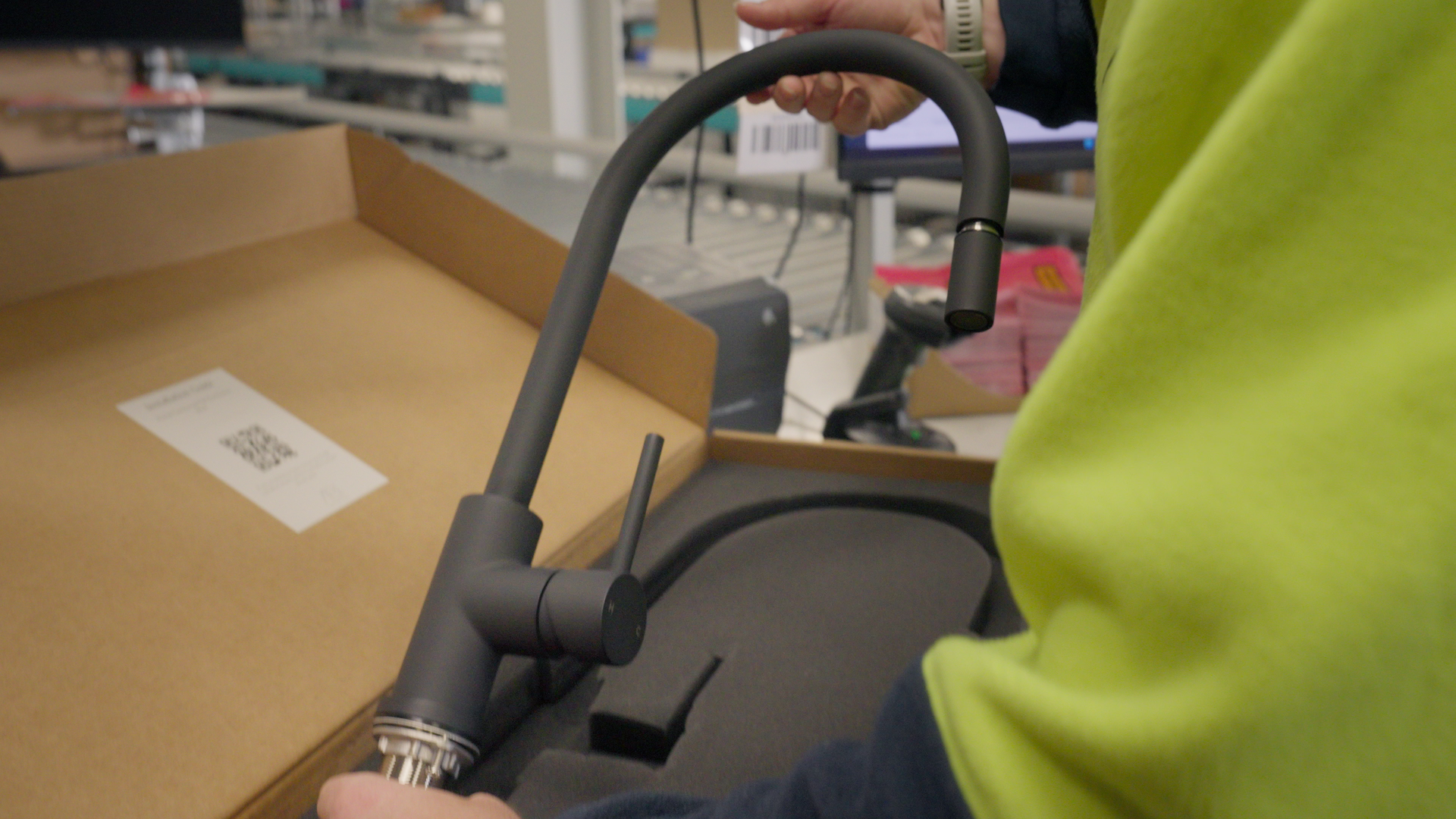
Once a batch has passed its final inspections, each tap is packed in recyclable materials and prepared for its journey to Australia. The packaging itself is also tested, including shake testing, to confirm it can protect the product throughout handling and transit. From there, the tap is shipped to Australia, stored in our own warehouse, and dispatched directly to customers.
The support doesn't end once your tap is installed. ABI Interiors offers up to Lifetime additional warranty on the structure and cartridge of eligible tapware, for as long as you own and live in the home where it was first installed, across both residential and non-residential applications, providing long-term confidence in the quality and performance of our products. Warranty periods vary depending on the product, finish, and application. If you’d like to learn more about how to be eligible for the Lifetime warranty, explore our full Additional Warranty terms and conditions.
By the time an ABI tap reaches your home, it has moved through every stage of the process: designed in Australia, manufactured by specialist partners across Guangdong, finished and tested at our Zhongshan facility, inspected by our Guangzhou-based team, and checked again before shipment.
At ABI, quality isn't a single step in the process. It's built in at every stage: the materials we choose, the precision of each machined part, the expertise of the people overseeing production, and the checks every ABI tap passes before it reaches your home.
For more information on the standards and craftsmanship behind ABI tapware, read these blogs:
The 2026 Lead Free Plumbing Law: What Every Australian Renovating Right Now Needs to Know
Electroplating vs PVD Coating: What’s the Difference, and Which Finish Is Better?
Sources
- Standards Australia: AS 3718:2021 Water supply – Tapware (third edition; supersedes AS/NZS 3718:2005; incorporating Amendment No. 1:2024)
- NCC / ABCB: AS 3718:2021 in the National Construction Code
- ABCB: WaterMark Certification Scheme
- ABCB: Schedule of Products: Tapware
- NCC / ABCB: Lead free plumbing products
- NCC / ABCB: Update: Transition to lead free plumbing products (2026)
- BSI: BS EN 817:2024 Sanitary tapware – Mechanical mixing valves (PN 10) – General technical specifications
- Standards Australia: AS 2345-2006 Dezincification resistance of copper alloys
- WELS: Water Efficiency Labelling and Standards Scheme