Our Range



























What is a Pot Filler, and Do You Need One?
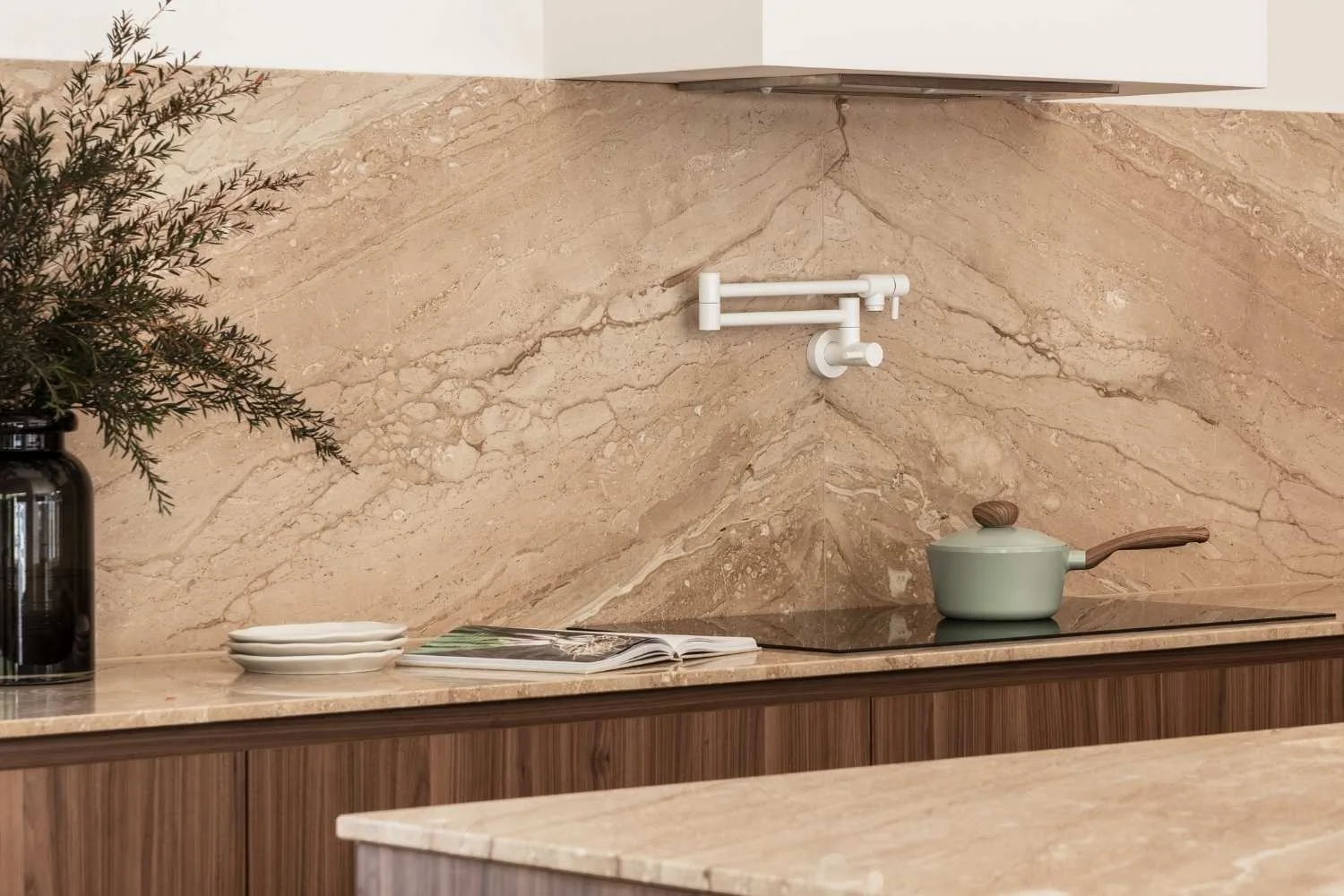
Walk into almost any luxury kitchen today, and you'll likely spot one thing above the stove: a slender, wall-mounted tap gracefully arched over the cooktop. Pot Filler Taps have evolved from a niche feature in professional kitchens to a genuine staple of high-end residential design, prized as much for their sculptural presence as for their function.
So what is a pot filler in a kitchen, exactly? In simple terms, it's a dedicated tap installed directly above the stovetop, letting you fill large pots with water directly without hauling them back and forth from the sink. Originally developed for commercial kitchens, where oversized stockpots and industrial ranges made every trip to the sink impractical, the pot filler has since become a feature of the home kitchen, valued as both a functional addition and a style statement.
That dual identity is exactly why pot fillers provoke debate among designers and homeowners alike. Are pot fillers worth it? For some, the answer is an easy yes: if you regularly cook large batches, stocks or sauces, having water on tap right where you need it eliminates a genuinely annoying chore. For others, the tap becomes more decorative than functional, especially in kitchens where the stove sits only a few steps from the sink. It's this tension between form and function that makes pot fillers one of the more polarising additions to a modern kitchen, and one worth careful thought before committing.
Are Pot Fillers Practical?
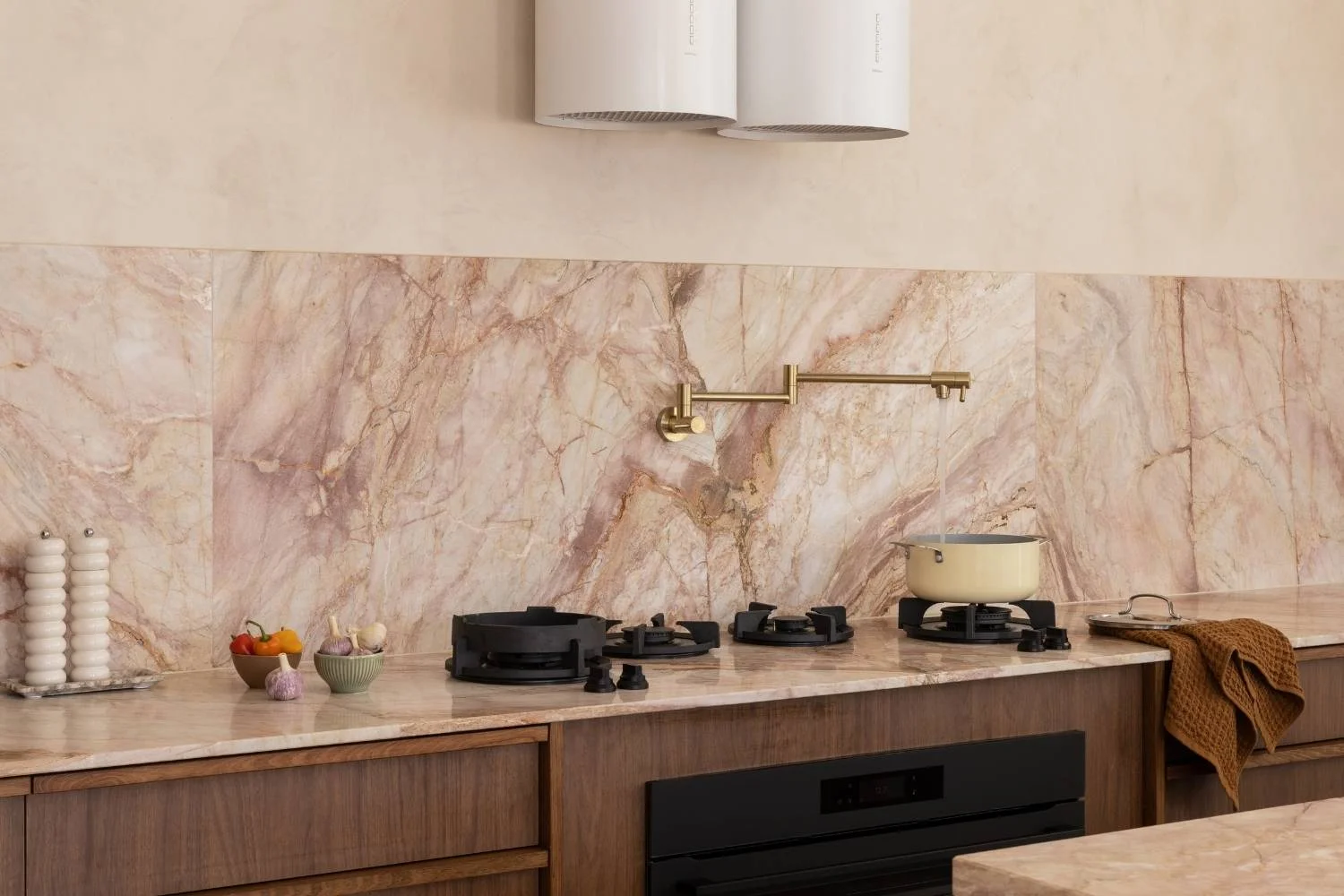
To determine whether a pot filler is more of an aesthetic feature than a practical necessity, it’s important to consider both its benefits and limitations in the context of your household.
| Benefits | Drawbacks |
| Easier filling of heavy pots | Additional plumbing requirements |
| Improved cooking workflow | Extra fixture to clean |
| Convenience for frequent cooks | Not essential in compact kitchens |
| Reduced lifting and carrying | Requires thoughtful placement |
| Particularly useful in larger kitchens | Expensive price point |
Which Kitchens Benefit Most from Pot Fillers?
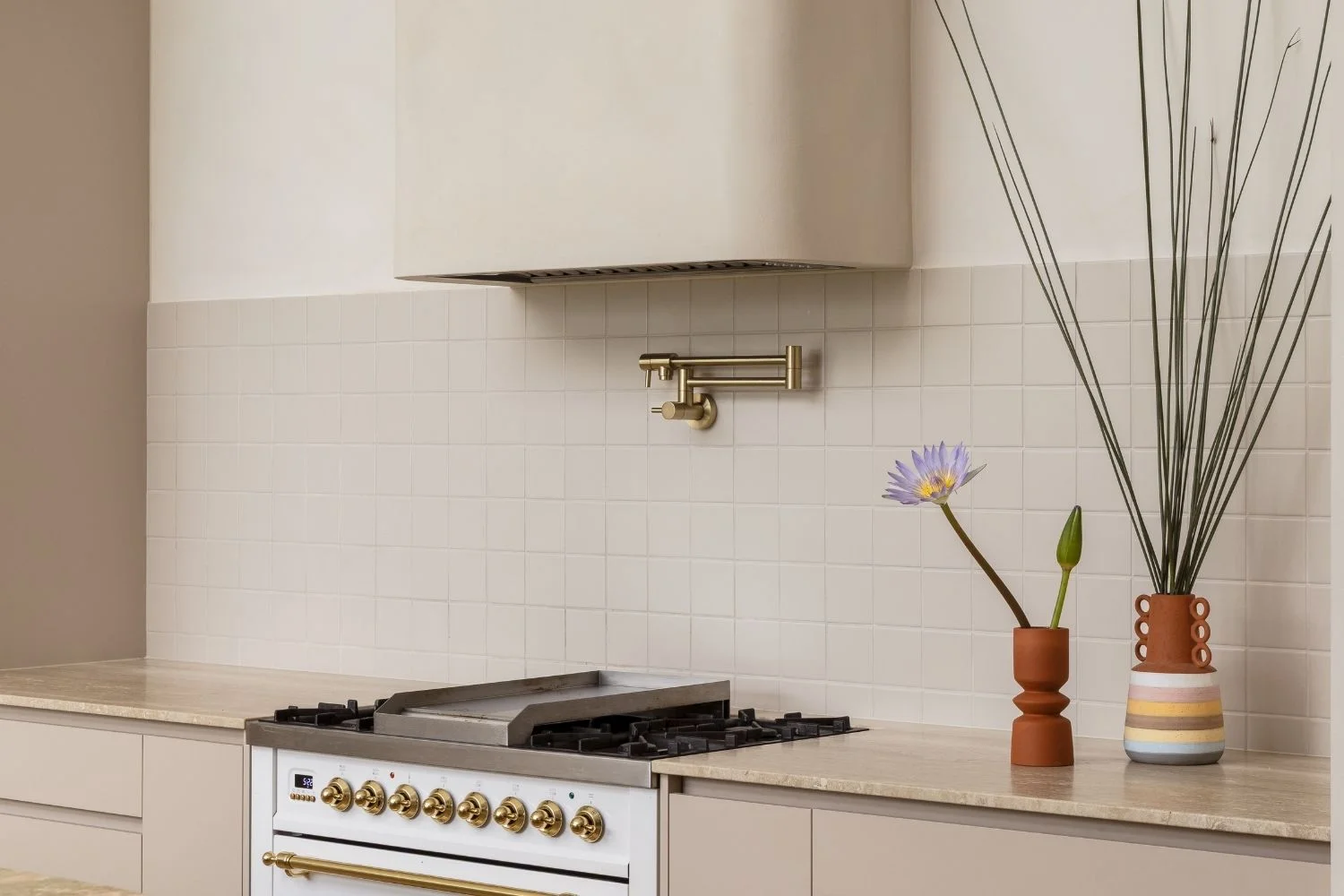
Not all kitchens benefit from a pot filler. Because it's plumbed to a single fixed point above the cooktop, a pot filler’s value depends on how far the cooktop is from the nearest sink. The best-fit scenarios are usually large or open-plan kitchens or layouts where the range sits against a wall on the opposite side of the room to the sink. In these setups, a pot filler removes a long walk with a heavy, full pot.
Kitchens designed for entertaining benefit in a different way. When the cooktop faces into an open living or dining space, being able to fill a pot without turning your back on guests keeps the host in the room and the conversation going.
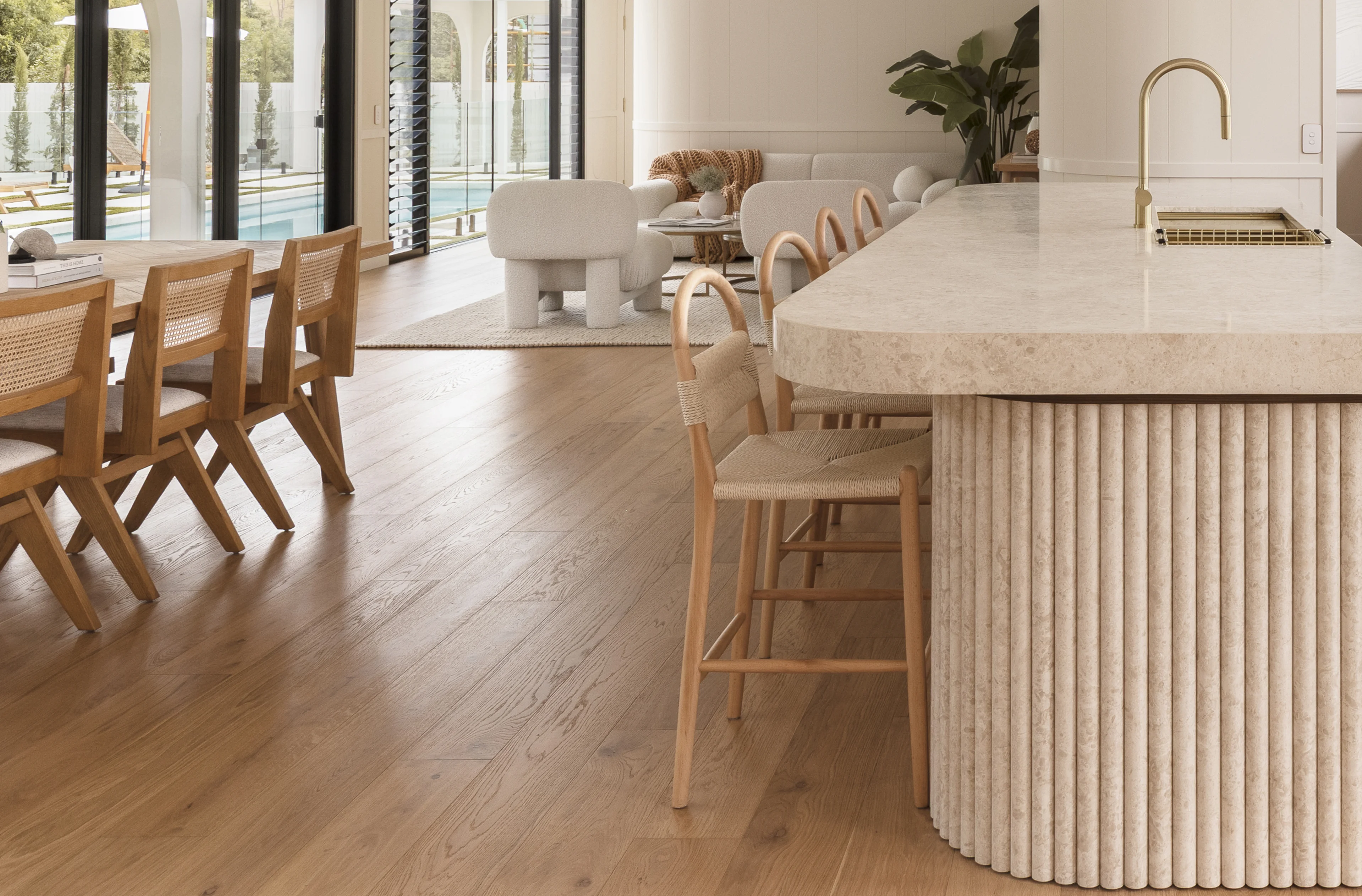
The same logic extends to statement kitchens with layered detailing, where the pot filler is chosen as much for its contribution to the overall look as for its function. Alongside tapware, hardware, and lighting, it becomes another considered fixture, even in moments when it isn't strictly necessary.
As mentioned, it also suits households that cook in volume or anyone who regularly fills stockpots, pasta pots, or canning vessels. In a compact or galley kitchen, where the stove and sink already sit within a step or two of each other, a pot filler adds cost and plumbing complexity without solving a real problem.
What to Know Before Installing a Pot Filler
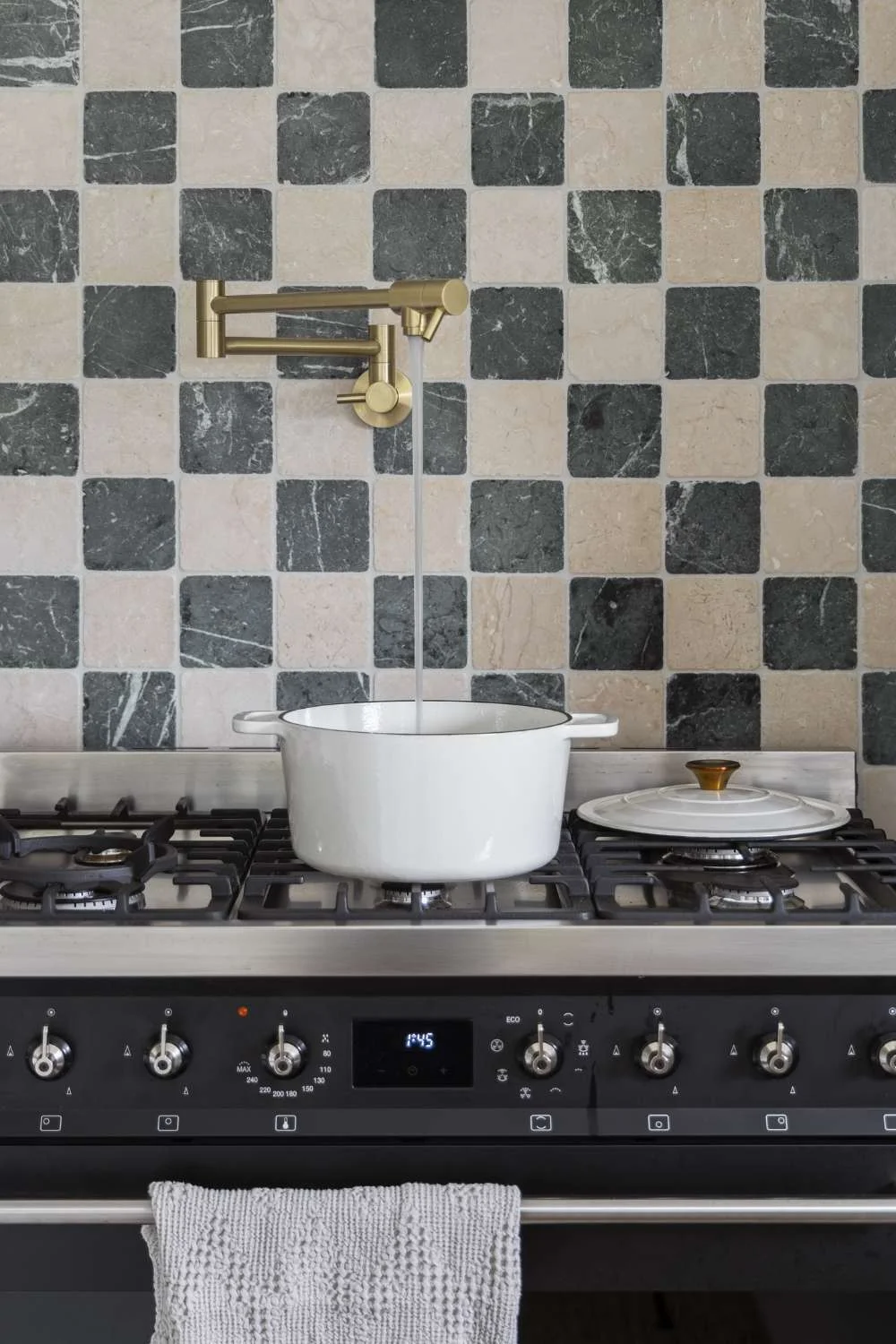
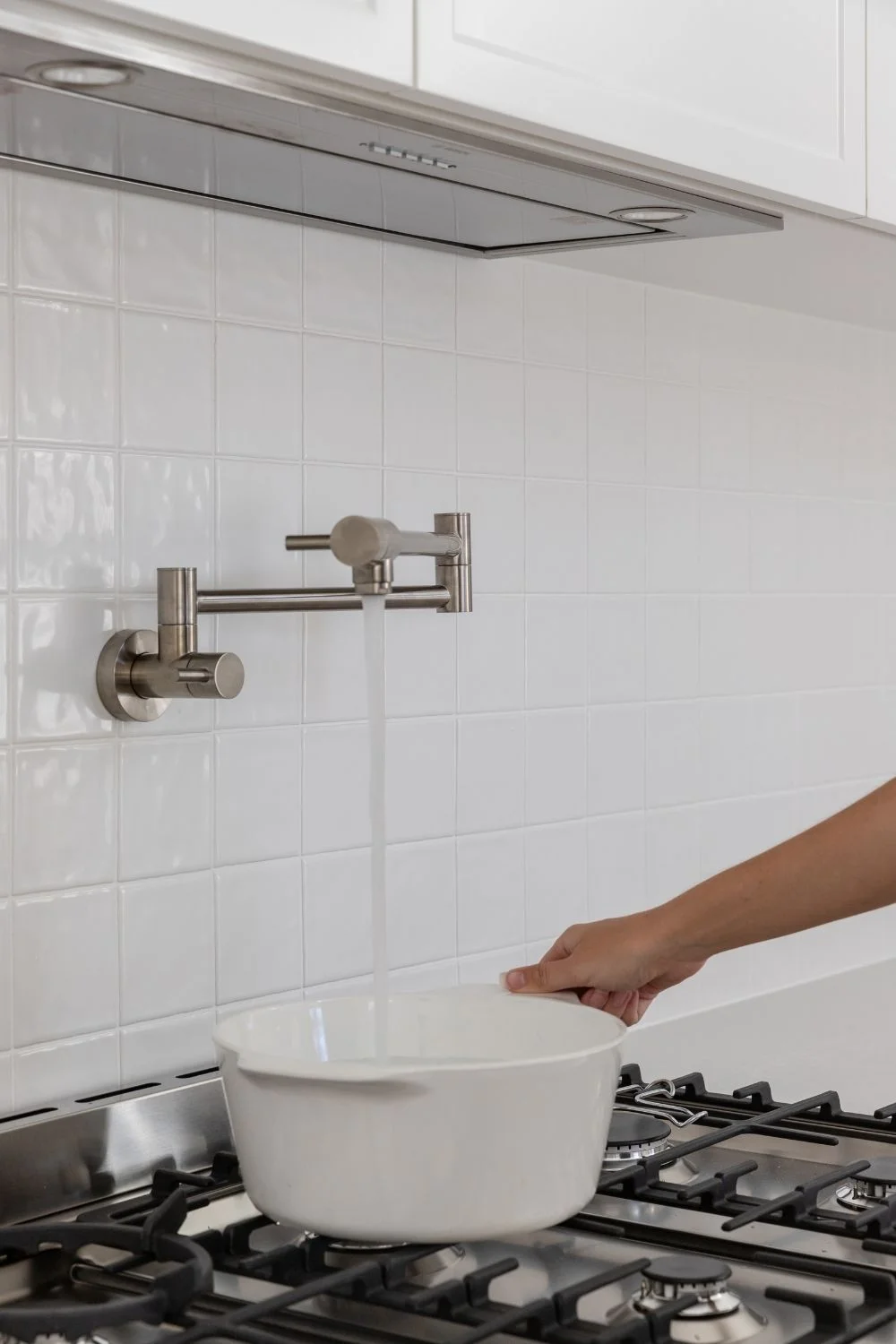
So you've decided to go ahead with installing a pot filler. Before it goes on your kitchen wish list, there are a handful of practical considerations worth working through with your builder or plumber.
Water Requirements
Water line requirements come first. A pot filler needs its own dedicated water supply run directly to the wall behind the cooktop, rather than tapping into the sink's existing line. While the water empties into a pot rather than a sink, it's still worth discussing drainage with your plumber, as a floor waste is often recommended.
That water line also has to travel through the wall itself, which is where wall-plumbing considerations come into play. Because the pipework runs behind cabinetry and, in many cases, behind a splashback, it needs to be planned and roughed in before walls are closed up and finishes are applied. Retrofitting this into an existing kitchen usually means opening up tiling or cabinetry to get pipework where it needs to go, which adds cost and disruption that isn't necessary if the plumbing is planned upfront.
Placement
Placement height matters just as much as the plumbing itself. Pot fillers are typically installed around 300 to 350mm above the cooktop, high enough to clear a large stockpot but low enough that the tap stays within comfortable reach. Mounting it too high makes the tap awkward to operate, while mounting it too low risks the arm catching on pots.
Reach and articulation are worth checking against your actual cooktop, not just the tap's specification sheet. Most pot fillers extend between 500 and 600mm from the wall via a folding, articulated arm, and that reach needs to comfortably cover every hob you intend to use it over, including the one furthest from the wall. A tap with too short a reach undermines the point of installing one in the first place.
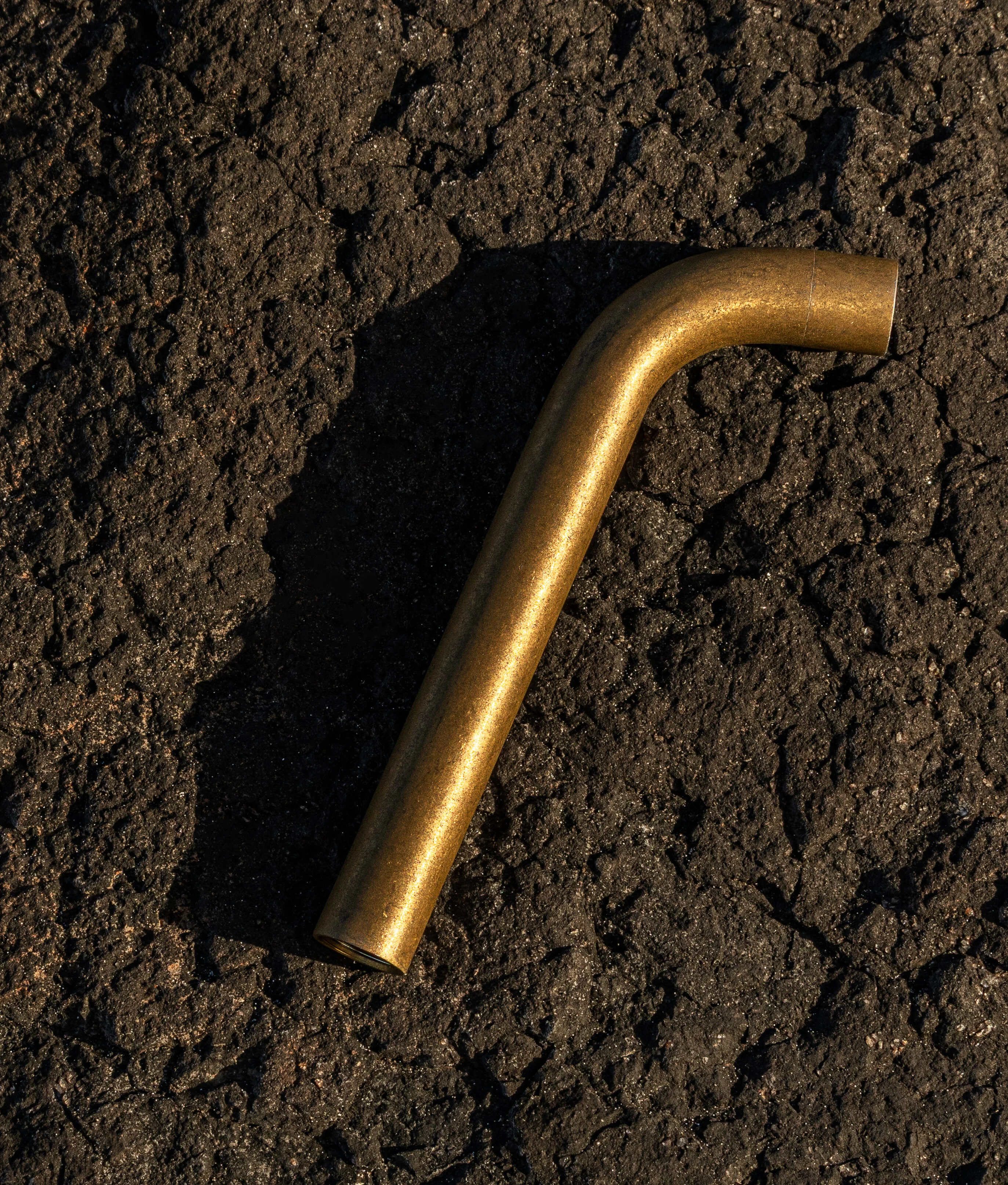
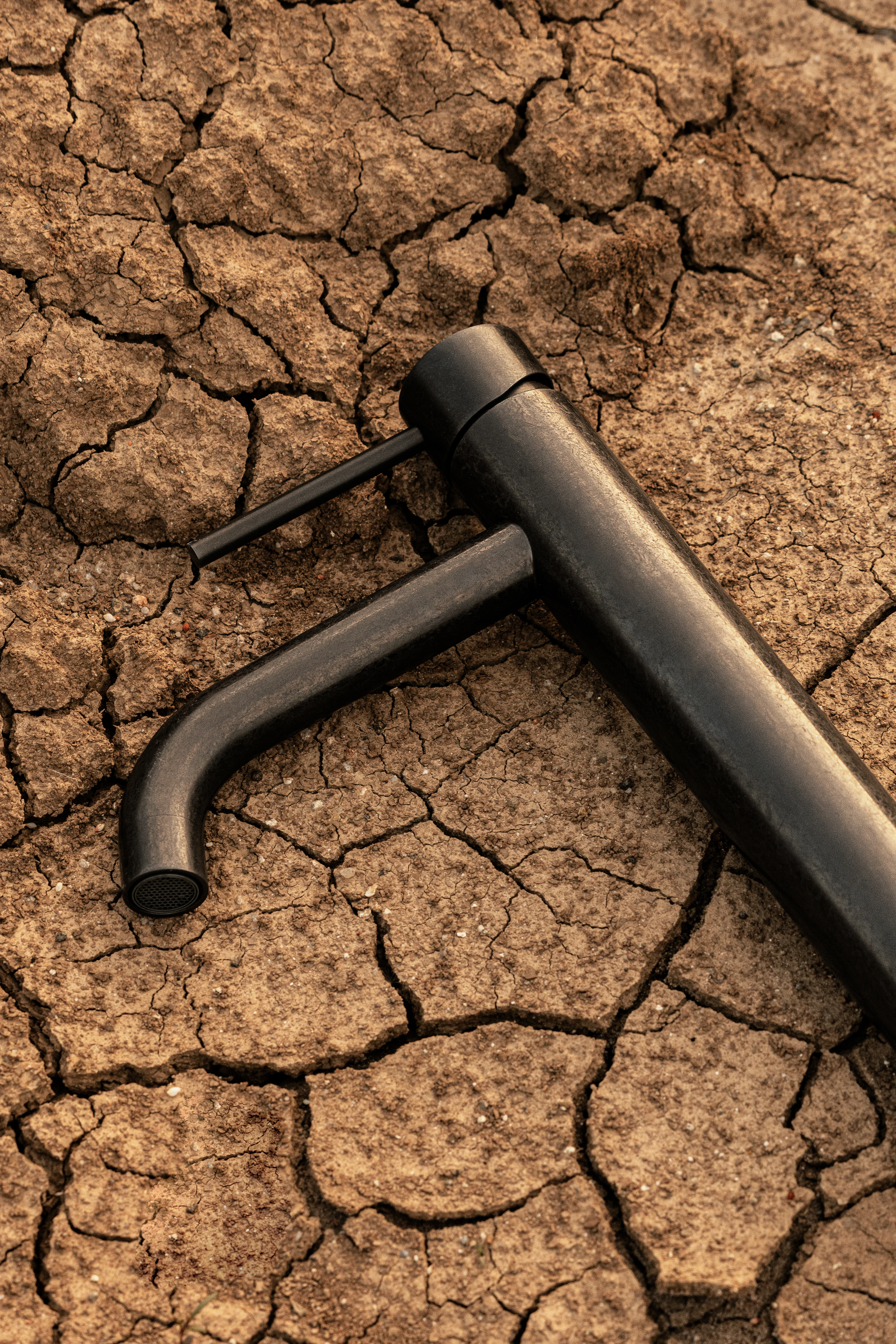
"Our pot fillers are made from solid brass, which gives them both the elegant, sculptural finish people want above the stove and the peace-of-mind durability that comes with a solid brass construction," says ABI Interiors Product Design Manager Alexandra French.
"The wall-mounted arm is compact and easily foldable, designed as a smart solution to an everyday task rather than just a design flourish. It also reaches most hobs and delivers water at an increased flow rate."
Horizontal placement is important as well. It’s not just about how far the tap reaches but also where it sits across the width of the cooktop. Positioning it over the hob you are most likely to use for large pots, rather than simply centring it on the cooktop, usually provides the greatest practicality.
This is also where wall-mounted and island cooktops differ: a traditional pot filler requires a wall for plumbing, meaning an island cooktop without a wall behind it is generally not suitable. In these situations, countertop-mounted models that extend from the back or side of the cooktop may be worth discussing with your plumber as an alternative.
Splashback Suitability
Splashback compatibility is often overlooked until the plumbing and tiling are already underway. As a pot filler is usually installed through the splashback, its placement should be considered early alongside the splashback material, pattern and any joins. Careful planning helps the tap feel like an intentional part of the design rather than a later addition.
All of this underlines the importance of timing. Pot fillers are, by far, the easiest to install during a new build or a full kitchen renovation, when plumbing, cabinetry and splashbacks are still open to change. Adding one after the fact is possible, but rarely straightforward, so if there's even a chance you'll want one, it's worth flagging early with your builder or plumber so the rough-in can happen before everything else is locked in.
Kitchen Styles that Suit Pot Fillers
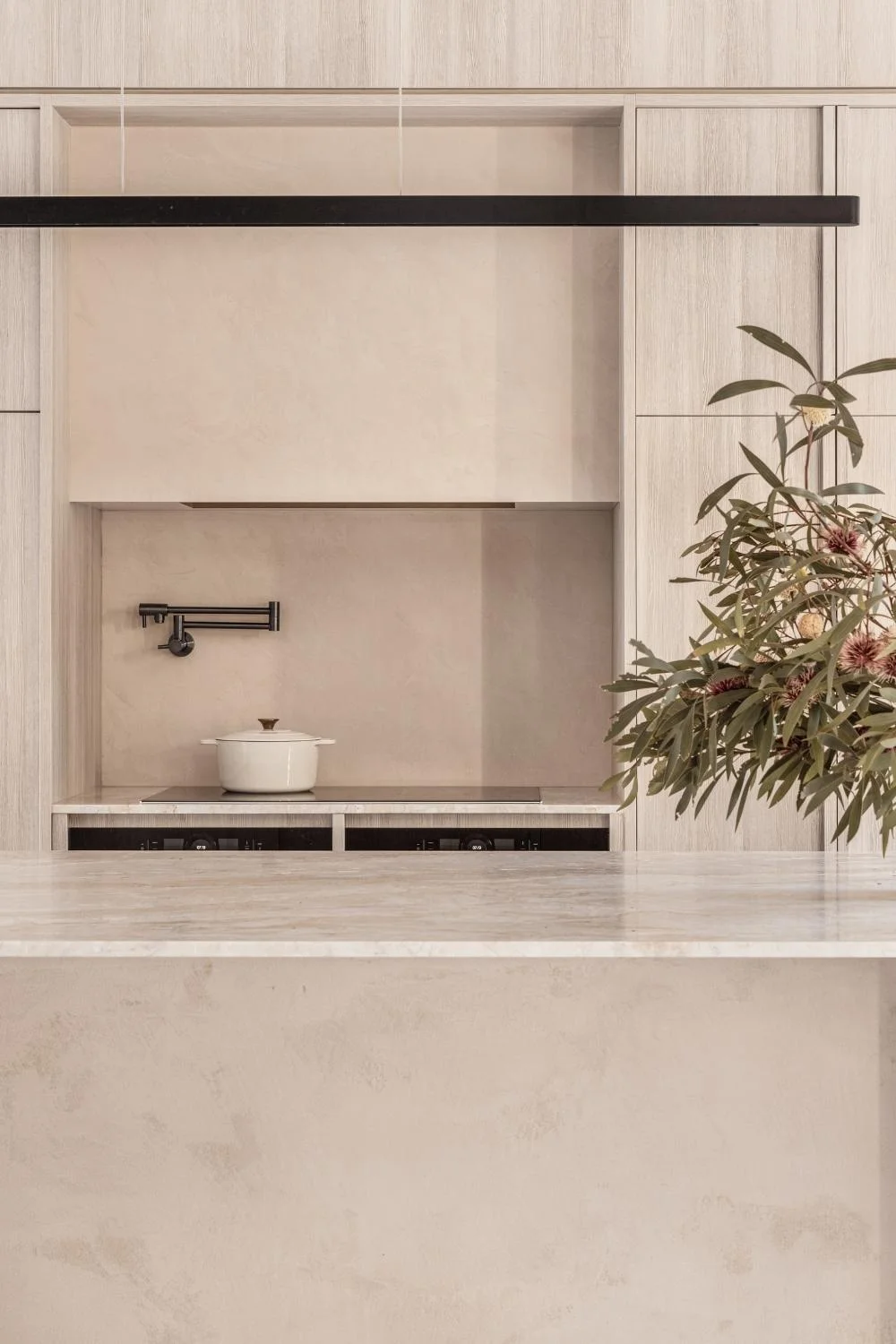
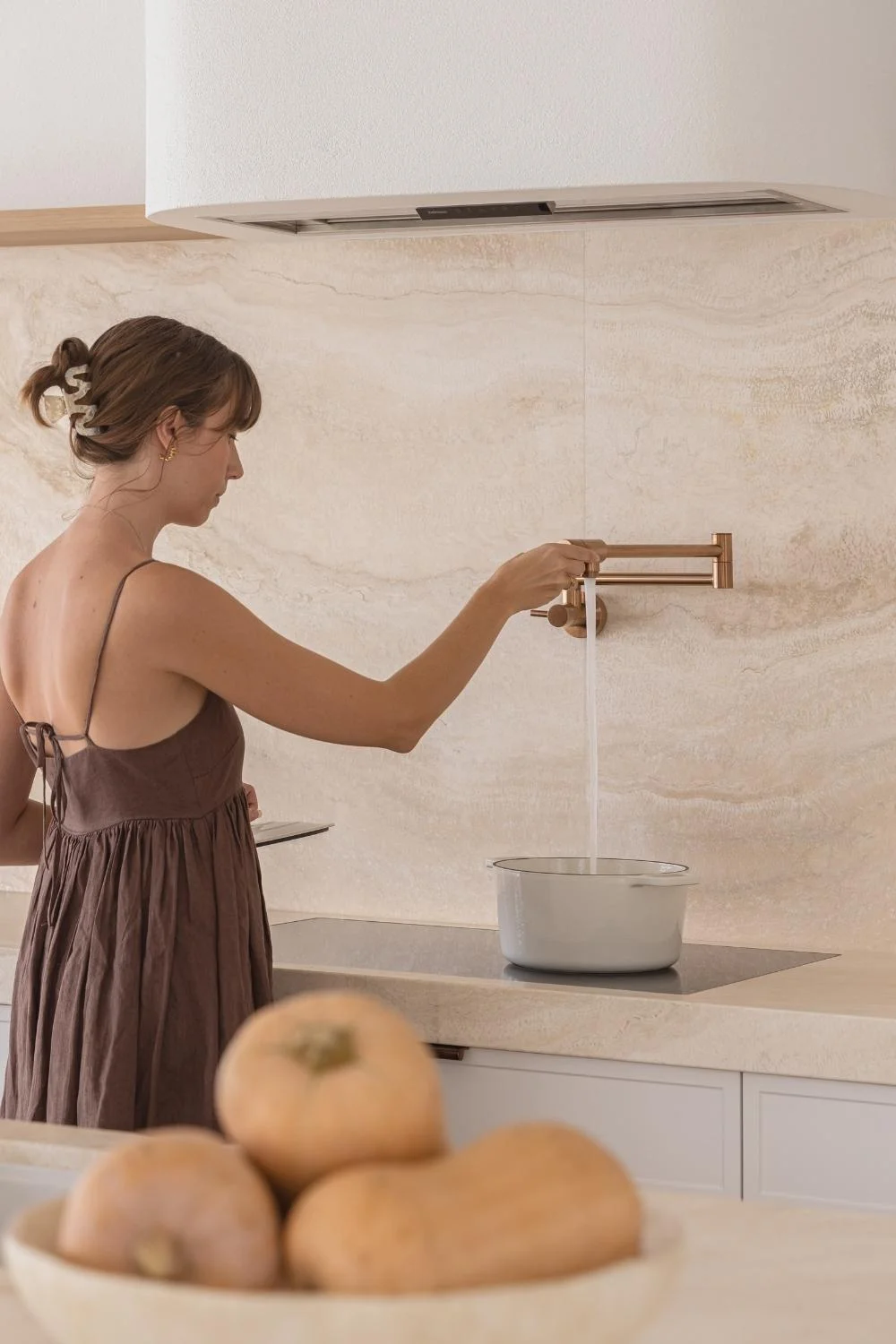
Pot fillers work across a broad range of kitchen styles, largely because the tap takes its cue from the finish rather than any one design language. In contemporary and European-inspired kitchens, where clean lines and understated materials tend to lead, a pot filler in brushed nickel or chrome sits quietly in the scheme, reading as functional hardware rather than a feature in its own right.
Farmhouse kitchens lean the other way, often pairing the tap with tumbled aged brass or brushed brass to emphasise the traditional character that defines the style, especially alongside butler's sinks, shaker cabinetry and natural stone.
In a minimalist kitchen, a pot filler's finish stands out, as there's little else competing for attention. Here, a brushed gunmetal or brushed brass tap can act as a single point of contrast against pared-back cabinetry, while brushed nickel keeps the look more seamless and low-key. In every case, the finish does more work than the form: the same tap can register as classic, industrial, or understated depending purely on which finish you choose.
Do Smaller Kitchens Need a Pot Filler?
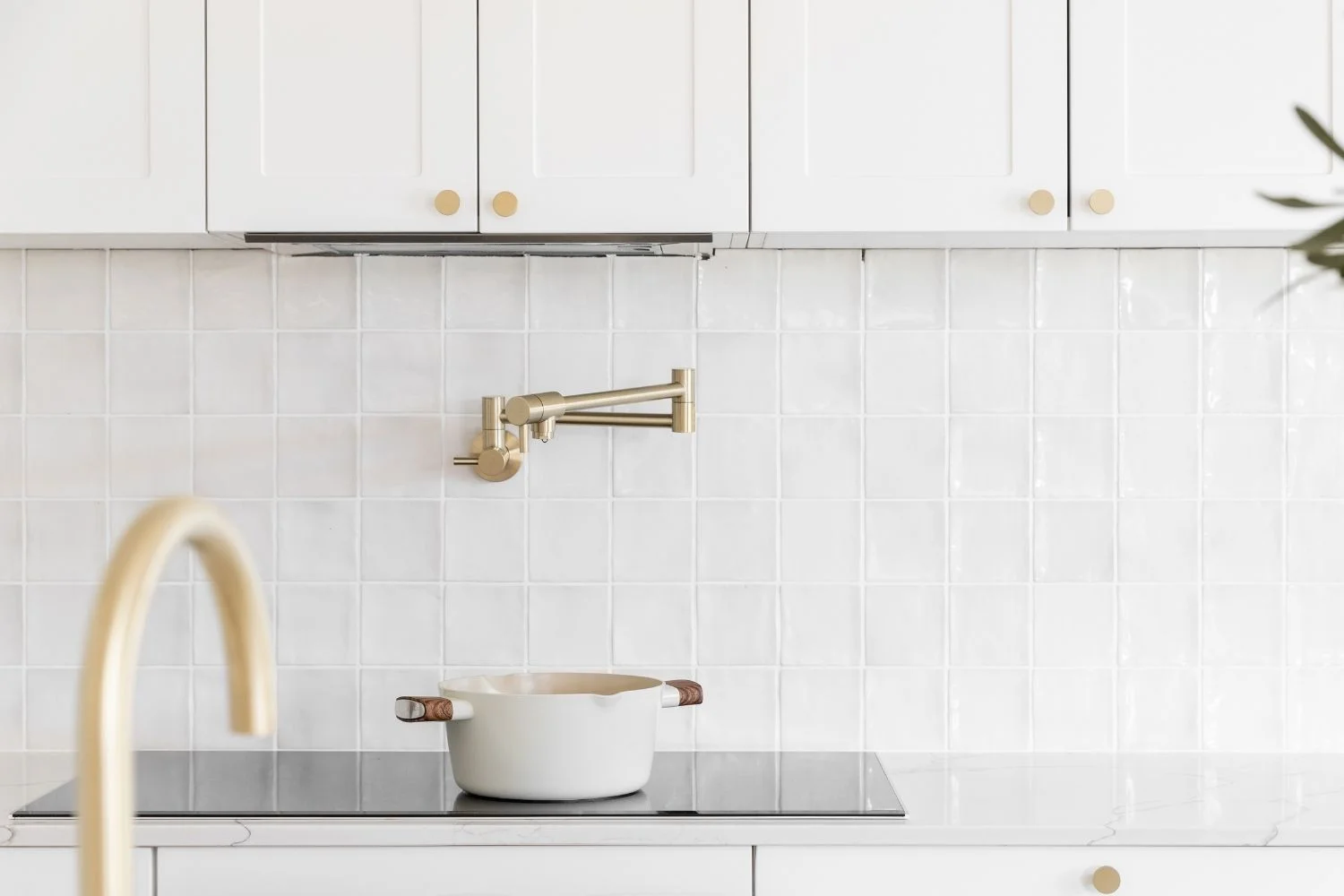
A pot filler isn't necessary in every home, especially in smaller kitchens. Compact layouts naturally shrink the work triangle between stove, sink and fridge, so the walk from cooktop to tap that a pot filler is designed to eliminate is often only a step or two. This makes the practical benefits more limited, so the decision often comes down to whether the look is worth the extra plumbing and cost.
In many smaller kitchens, that trade-off tips toward simplicity: one less fixture on the splashback, one less thing to clean and maintain, and a cleaner sightline in a space where every element carries more visual weight. Leaving the splashback uninterrupted can be a deliberate choice in its own right, letting a single standout feature, whether that's a striking tile, a statement sink mixer, or a bold splashback material, become the natural focal point instead.
Selecting a Finish that Complements your Kitchen
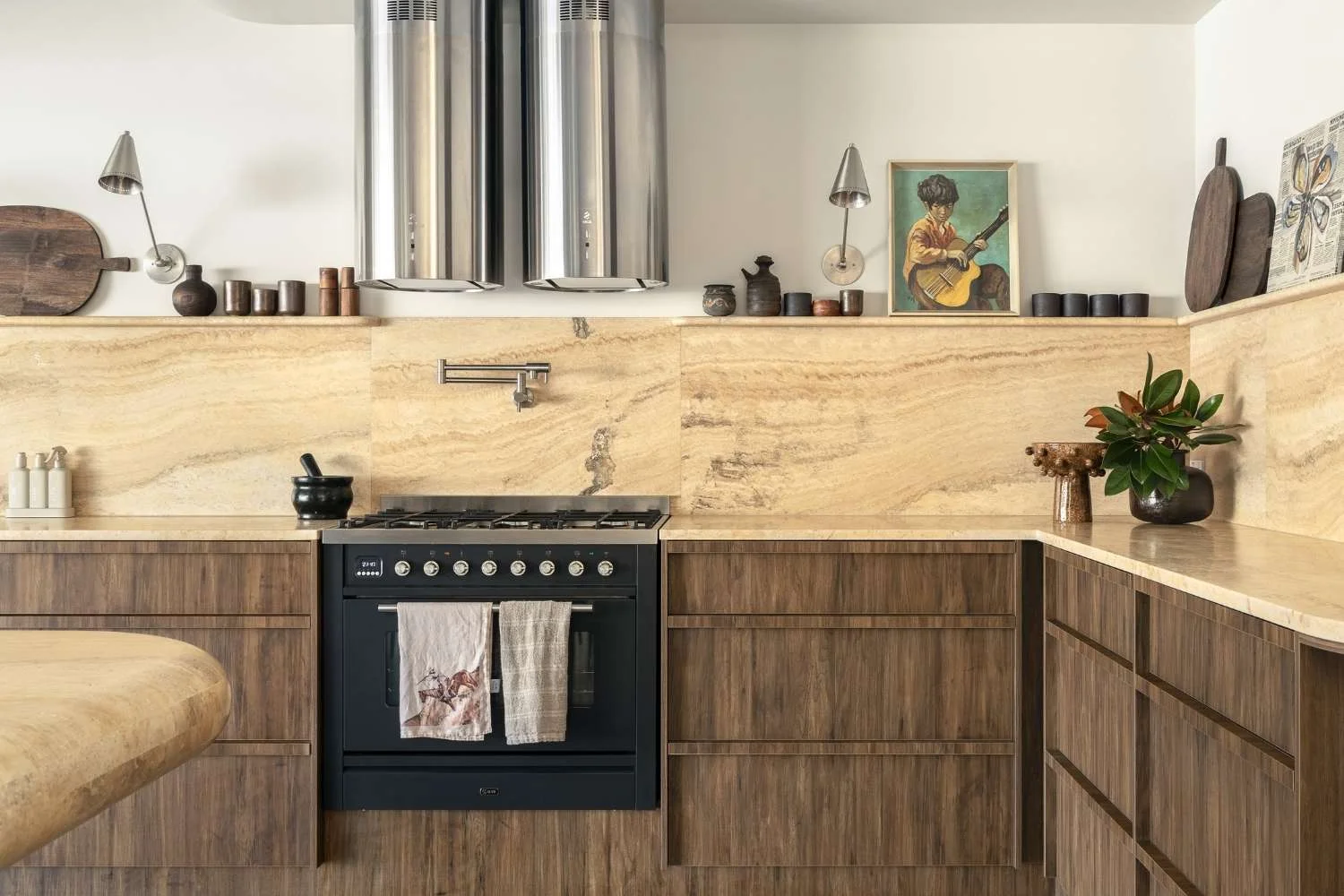
A pot filler should be considered as part of the overall kitchen design. Matching or closely coordinating it with sink taps and mixers, cabinet handles and any other kitchen tapware creates a sense of intention across the space, whereas mismatched metals, even good ones, can read as accidental rather than considered. This doesn't mean every fixture needs to be identical, but they should sit within the same tonal family.
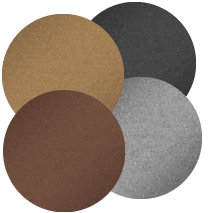
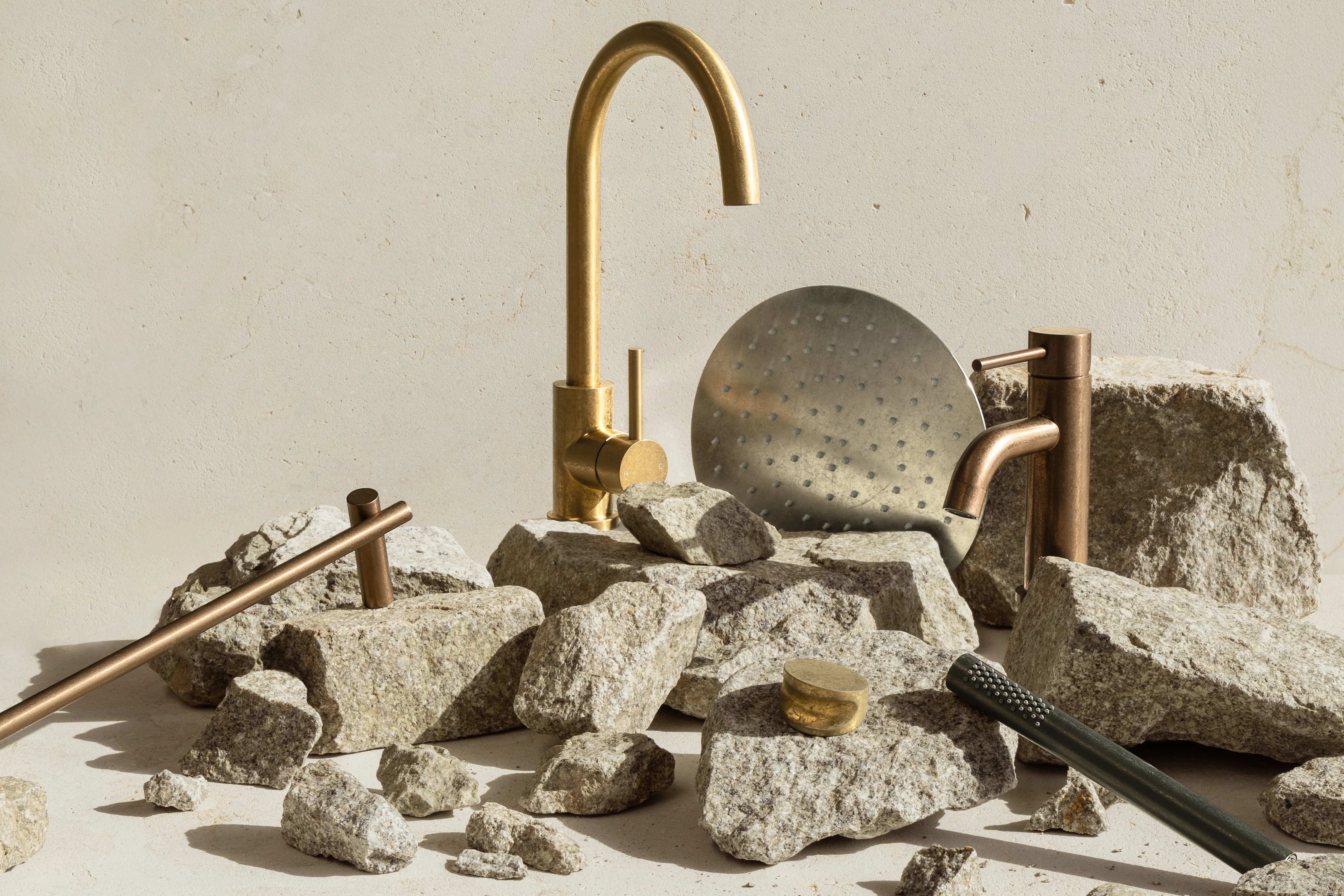
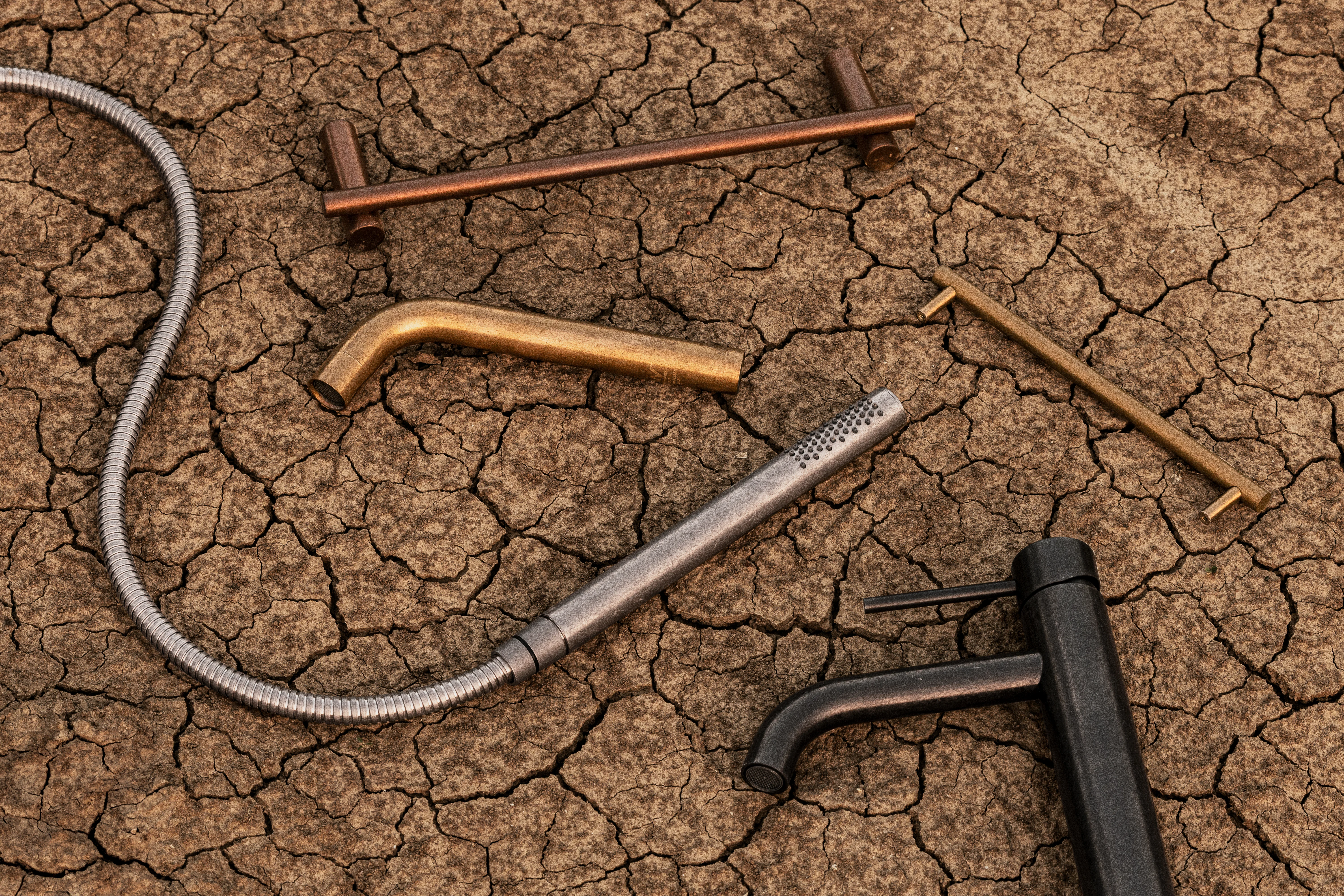
That tonal family usually comes down to warm versus cool. Brushed brass, antique brass and brushed copper sit on the warmer end, pairing naturally with timber cabinetry, stone benchtops and earthy palettes. Brushed nickel, stainless steel and gunmetal sit cooler, working well against whites, greys and more contemporary material choices. Once you've decided on your kitchen's style, it's easier to choose a pot filler, mixer, and cabinet handles that complement each other rather than feel like unrelated decisions.
As we have learned, choosing a pot filler comes down to layout, cooking habits, and finish. But in the right setup, it alleviates the pressure of a chaotic kitchen, bringing order and convenience while cutting the trips to the sink that risk spills. At their best, pot fillers sit at the intersection of practicality and architectural detailing: a considered addition that can even add value to your home.
For further inspiration, read these blogs:
How to Choose the Best Tapware for Your Bathroom or Kitchen
Brass vs Stainless Steel Tapware: Which is the Best Choice for Your Home?